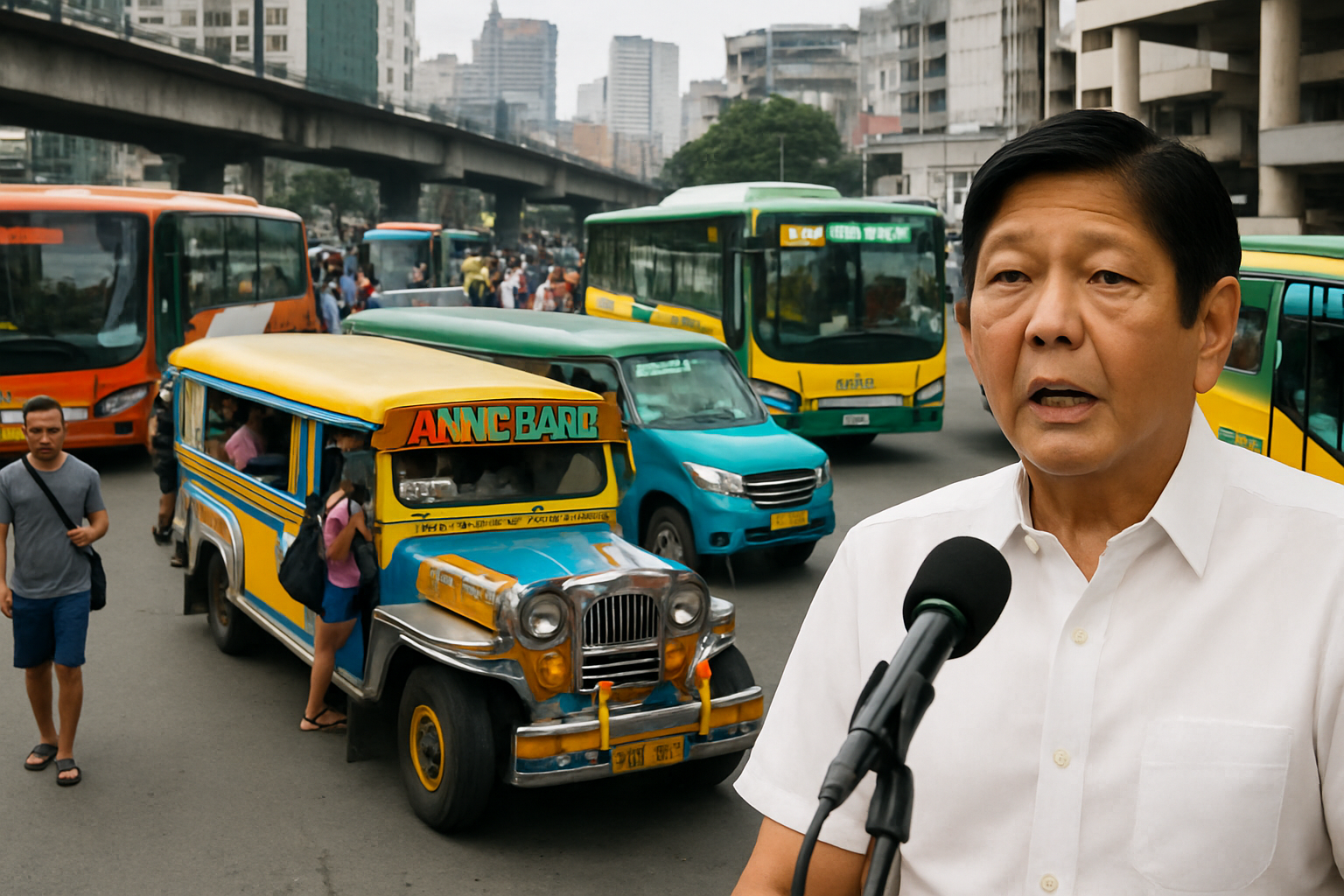
President Ferdinand Marcos Jr. suspended planned fare increases for jeepneys, buses, and transportation network vehicle services (TNVS) just hours before their scheduled implementation on March 19, 2026, responding to mounting public concerns over cost of living pressures exacerbated by ongoing Middle East conflicts.
The dramatic last-minute reversal came after the Land Transportation Franchising and Regulatory Board (LTFRB) had already announced higher fares for nearly all modes of public transportation on Tuesday, March 17, following months of deliberation over rising operational costs for transport operators.
Presidential Decision Amid Global Crisis
In a video message released Wednesday evening, President Marcos explained his decision to intervene directly in the fare increase process, citing the broader economic pressures facing Filipino families.
"Sa aking palagay dahil nga may problema pa rin tayo dahil sa giyera sa Middle East ay sabi ko siguro hindi ito ang panahon para magtaas ng pamasahe para sa ating mga kababayan."
— President Ferdinand Marcos Jr.
(In my view, since we are still facing problems because of the war in the Middle East, I said this may not be the right time to raise fares for our fellow citizens.)
The suspension affects millions of daily commuters across the Philippines who rely on jeepneys, buses, and ride-hailing services for their transportation needs. The LTFRB had previously approved fare increases for provincial buses and was set to implement comprehensive fare adjustments across all public transportation modes.
Context of Rising Transportation Costs
The Philippines, like many countries globally, has been grappling with rising fuel costs and inflationary pressures. The ongoing conflicts in the Middle East have contributed to volatility in global oil markets, with crude oil prices experiencing significant fluctuations throughout early 2026.
Transport operators had been pushing for fare adjustments to offset increased operational costs, particularly fuel expenses that represent a substantial portion of their operating budgets. The LTFRB's initial approval of the fare increases reflected these economic realities facing the transportation sector.
However, the President's intervention demonstrates the government's recognition that Filipino families are already stretched thin by various economic pressures, making additional transportation costs potentially burdensome for ordinary citizens.
Support for Transport Operators
While suspending the fare increases, President Marcos acknowledged the challenges facing public utility vehicle (PUV) drivers and operators who have been "reeling from the high cost of fuel." The administration has committed to exploring alternative forms of support for the transportation sector to help offset their increased operational expenses.
The government is expected to announce specific assistance programs for transport operators in the coming weeks, potentially including fuel subsidies or other financial support mechanisms that would help maintain affordable public transportation while ensuring the sustainability of transport operations.
Historical Context and Political Implications
This transportation policy decision comes during a period of heightened political tensions in the Philippines, with ongoing impeachment proceedings against Vice President Sara Duterte and various economic challenges facing the administration. The President's quick response to public concerns over fare increases demonstrates his administration's sensitivity to cost-of-living issues that directly affect millions of Filipinos.
The timing of the suspension—just one day before implementation—also highlights the dynamic nature of policy-making in response to both global economic conditions and domestic political pressures. The Middle East conflicts referenced by the President have indeed created ripple effects throughout the global economy, affecting fuel prices and supply chains worldwide.
Regional Transportation Challenges
The Philippines' transportation challenges mirror those faced by many Southeast Asian nations dealing with the intersection of global economic pressures and local transportation needs. Recent infrastructure investments, including new bus rapid transit systems and transportation modernization programs, are part of broader efforts to improve public transportation while keeping it affordable for average citizens.
The suspension also reflects the delicate balance governments must strike between supporting business operators who face genuine cost pressures and protecting consumers from additional financial burdens during economically challenging times.
Looking Forward
The fare increase suspension provides temporary relief for commuters but highlights the ongoing need for comprehensive solutions to transportation financing challenges. The government's promise of alternative support for transport operators suggests that policy makers recognize the legitimate concerns of both passengers and service providers.
As global economic conditions continue to evolve, particularly regarding energy prices and supply chain stability, the Philippines will likely need to develop more robust mechanisms for managing transportation costs that can adapt quickly to changing circumstances while maintaining both affordability and service sustainability.
The administration's response to this transportation crisis may serve as a template for how governments can balance competing economic pressures while prioritizing the immediate needs of their citizens during periods of global uncertainty.