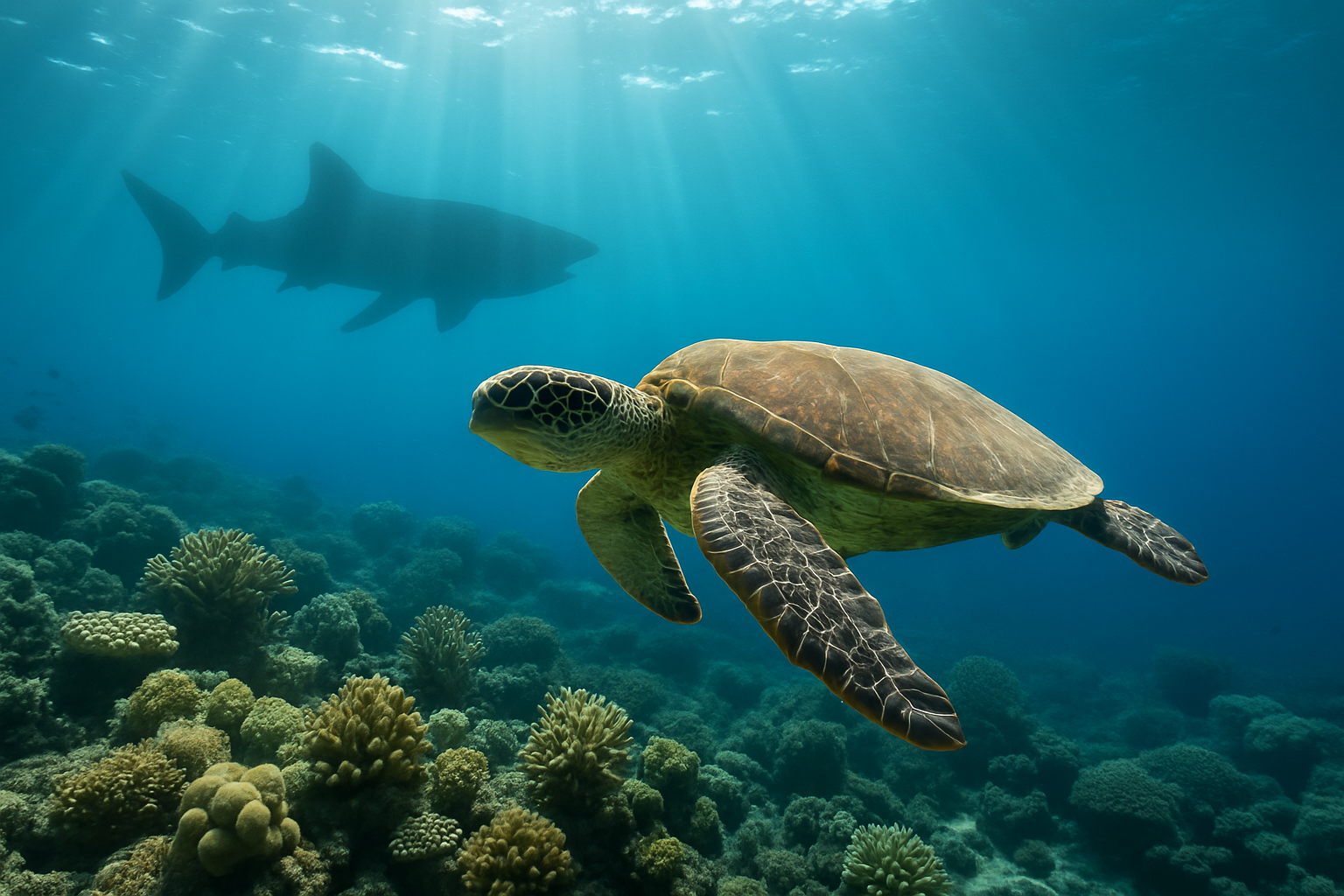
Marine wildlife conservation efforts around the world are demonstrating both remarkable successes and persistent challenges as global temperatures continue their unprecedented rise, with February 2026 marking the continuation of Earth's hottest recorded period in human history.
Recent conservation developments spanning from the Adriatic Sea to the Caribbean highlight the complex landscape of marine protection efforts. The world's second-largest shark species, the basking shark, was recently sighted near the Croatian island of Cres, marking a significant observation in the Northern Adriatic. This sighting represents an encouraging sign for marine biodiversity in European waters, where such encounters have become increasingly rare.
Heroic Rescue Efforts and Community Involvement
In the Caribbean, conservation success stories continue to emerge through community action. Young heroes in Tobago were celebrated after successfully rescuing a trapped leatherback turtle, carefully cutting the rope that had entangled the massive marine animal without causing injury. Using small scissors, they freed the turtle to return safely to the sea, demonstrating how local communities play a crucial role in marine conservation efforts.
These individual rescue efforts represent a broader pattern of community-based conservation that has proven essential for marine wildlife protection. Local engagement has become increasingly vital as traditional top-down conservation approaches face limitations in addressing the scale and complexity of current environmental challenges.
Historic Conservation Milestones
Perhaps the most significant conservation achievement comes from Ecuador's Galápagos Islands, where giant tortoises have returned to Floreana Island nearly 150 years after the species disappeared from the area. Ecuadorian authorities successfully released 158 juvenile tortoises, aged between eight and 13 years, in the first phase of an ambitious rewilding program that plans to introduce a total of 700 tortoises over time.
"Giant tortoises serve as vital 'ecosystem engineers,' helping disperse seeds, regulate vegetation, and support the regeneration of natural habitats, playing a crucial role in restoring ecological balance."
— Ecuadorian Conservation Officials
This historic reintroduction at the UNESCO World Heritage Site represents one of the most ambitious conservation projects in recent memory, addressing the complete elimination of a species that once numbered 20,000 individuals before whaling, devastating fires, and human exploitation caused their local extinction.
Climate Pressures Intensify Conservation Challenges
These conservation successes occur against a backdrop of unprecedented environmental pressure. January 2026 was confirmed as the hottest month in recorded history, extending an alarming streak of 18 consecutive months with global temperatures exceeding 1.5°C above pre-industrial levels. This sustained warming is overriding natural climate variability, including La Niña cooling effects that typically reduce global temperatures.
The implications for marine wildlife are profound. Rising ocean temperatures, acidification, and changing current patterns are disrupting traditional migration routes, breeding cycles, and food webs that marine species have relied upon for millennia. These climate impacts compound existing threats from pollution, overfishing, and habitat destruction.
Technology and Traditional Knowledge Integration
Modern conservation efforts are increasingly demonstrating the importance of integrating cutting-edge technology with traditional ecological knowledge and community-based management. Advanced DNA monitoring, satellite tracking, and environmental sensors provide unprecedented capabilities for monitoring species populations and habitat health.
However, successful programs consistently show that technology alone is insufficient. The most effective conservation initiatives combine scientific innovation with community engagement, traditional stewardship practices, and economic incentives that make protection financially viable for local communities.
Economic Dimensions of Marine Conservation
Conservation efforts are increasingly recognized as economic development engines rather than regulatory burdens. Marine protected areas support eco-tourism, sustainable fisheries, and scientific research collaboration that generates substantial revenue and employment opportunities.
Countries implementing comprehensive marine protection demonstrate greater economic resilience and attract sustainable investment. The Galápagos tortoise reintroduction, for example, positions Ecuador as a global conservation leader while strengthening the islands' eco-tourism sector, which generates substantial revenue supporting both conservation programs and local communities.
International Cooperation Requirements
The transnational nature of marine ecosystems demands unprecedented international cooperation. Ocean currents, fish migration patterns, and pollution plumes cross national boundaries, making unilateral conservation efforts insufficient. Success requires coordinated policy frameworks, shared monitoring systems, and collaborative enforcement mechanisms.
Recent examples include marine partnerships that transform traditional fishing communities into conservation partners, demonstrating how inclusive approaches can align economic interests with environmental protection goals. These models show promise for scaling globally, addressing both conservation needs and social equity concerns.
Persistent Threats and Ongoing Challenges
Despite conservation successes, marine wildlife faces mounting pressures. Plastic pollution continues to impact marine ecosystems, with debris entangling animals and microplastics entering food webs. Chemical contamination, coastal development, and shipping traffic create additional stressors for marine populations.
Implementation challenges include funding sustainability, particularly for developing nations where immediate economic pressures often override long-term environmental considerations. Technical capacity building requires sustained investment in education, training, and institutional development. Climate change disrupts project timelines, requiring adaptive management approaches that can respond to rapidly changing conditions.
Future Outlook and Strategic Significance
The diversity of conservation approaches provides resilience against single-solution dependencies, offering multiple pathways for addressing environmental challenges. From individual rescue efforts to large-scale species reintroductions, each initiative contributes to a broader conservation network.
February 2026 represents a critical juncture for marine wildlife conservation. The choice between reactive crisis management and proactive ecosystem service management may determine whether protection efforts can keep pace with accelerating environmental change. The window for effective conservation action is narrowing rapidly, making coordinated international responses more crucial than ever.
Success stories like the Galápagos tortoise return and community-led turtle rescues demonstrate that effective conservation is achievable with proper planning, community engagement, and international support. However, scaling these successes to match the speed and magnitude of current environmental challenges requires unprecedented cooperation, enhanced coordination, and sustained financial commitments recognizing environmental protection as essential infrastructure for human prosperity and planetary sustainability.
As marine wildlife faces unprecedented challenges from climate change, the conservation community's response will be decisive for the trajectory of global biodiversity protection in the decades ahead. The tools and knowledge exist for comprehensive protection, but success depends on rapid implementation through coordinated international action during this critical environmental decade.