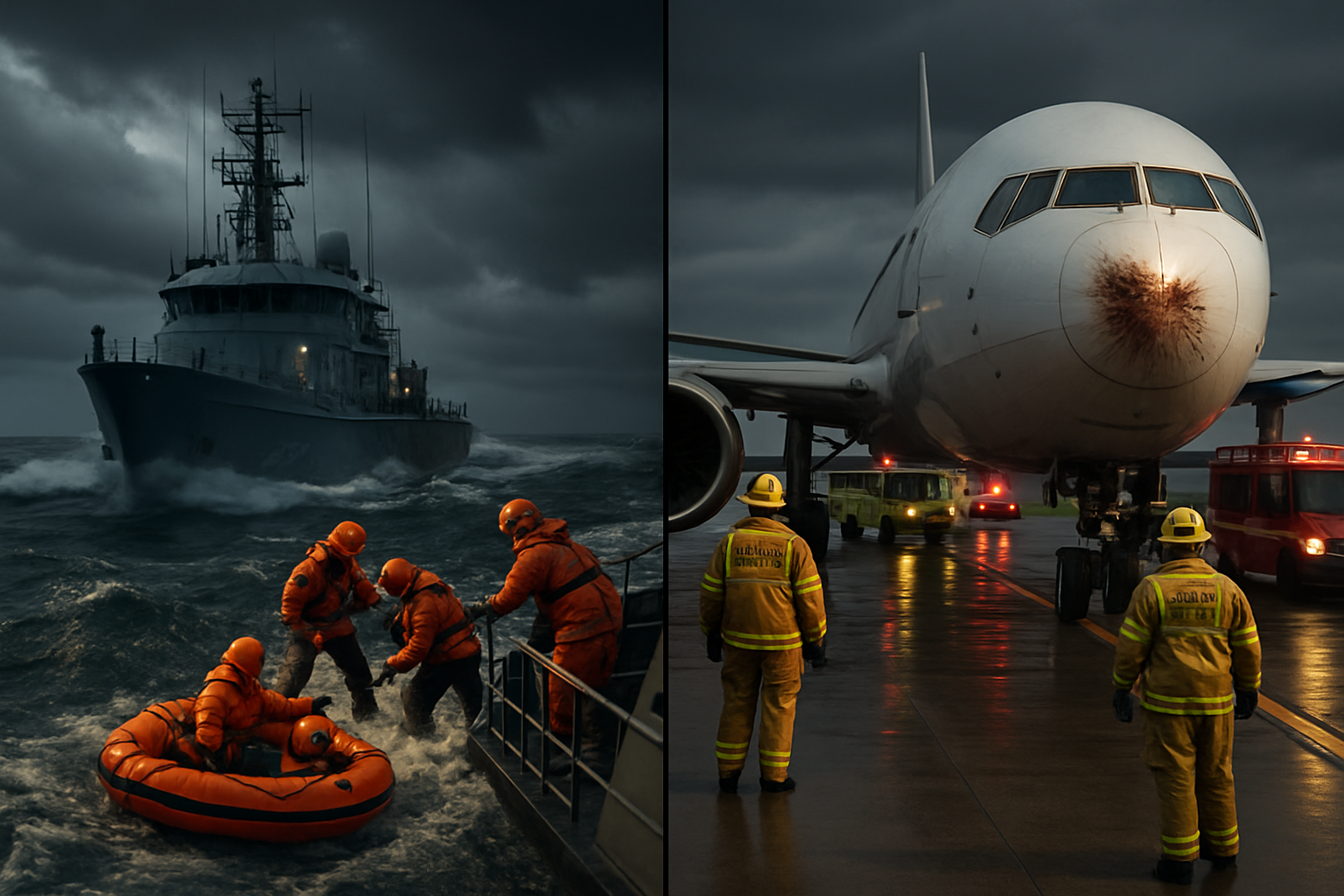
A series of transportation safety incidents across three continents this week has underscored the persistent vulnerabilities in both maritime and aviation sectors, as authorities in Nigeria, Singapore, and Mauritania grappled with emergencies that exposed critical gaps in safety protocols and emergency response systems.
Aviation Sector Faces Multiple Challenges
United Nigeria Airlines experienced a significant bird strike incident at Port Harcourt International Airport that forced precautionary inspections and caused widespread flight delays. The Airbus A320 aircraft was struck during critical flight operations, highlighting the ongoing challenge of wildlife interference with commercial aviation—a problem that continues to plague airports worldwide despite mitigation efforts.
The incident at Nigeria's Port Harcourt International Airport represents part of a broader pattern of aviation safety challenges documented across multiple jurisdictions. Bird strikes remain one of the most unpredictable threats to aviation safety, with even the most sophisticated aircraft vulnerable to wildlife encounters during takeoff and landing phases.
"Wildlife hazards continue to present significant challenges to aviation safety, requiring constant vigilance and improved coordination between airport authorities and wildlife management specialists."
— Aviation Safety Expert
Meanwhile, regulatory enforcement actions have intensified following a major incident involving Air India. Singapore authorities imposed a substantial fine of US$110,350 on the airline following an Airbus incident that officials said "eroded public confidence" in aviation safety standards. The penalty underscores growing international scrutiny of airline operations and the increasing willingness of aviation authorities to impose significant financial consequences for safety lapses.
Maritime Tragedy Highlights Naval Safety Concerns
In West Africa, the Senegalese military reported a devastating naval accident that claimed three lives and left ten personnel rescued after a patrol vessel capsized at the mouth of the Senegal River. The incident occurred around 9:00 AM local time Thursday when the naval patrol boat overturned due to what military officials described as "violent waves" caused by deteriorating weather conditions.
According to the Senegalese Armed Forces' Directorate of Information and Public Relations, the vessel was conducting a routine "liaison" mission in the area when heavy seas overwhelmed the craft. Immediate rescue operations successfully recovered ten survivors, but three military personnel remain missing, highlighting the dangerous conditions naval forces face during routine operations in challenging maritime environments.
The tragedy adds to a growing list of maritime safety concerns documented across global shipping and naval operations throughout early 2026. Weather-related incidents have become increasingly common as extreme weather patterns strain traditional safety protocols and emergency response capabilities.
Systemic Safety Infrastructure Challenges
These recent incidents occur against a backdrop of unprecedented global infrastructure investment exceeding $570 billion, yet they reveal persistent gaps in safety protocols and emergency preparedness. The challenges span multiple domains:
- Wildlife management systems at airports struggling to keep pace with changing migration patterns and urban expansion
- Maritime weather prediction and vessel design inadequate for increasingly violent sea conditions
- International regulatory coordination failing to maintain consistent safety standards
- Emergency response systems strained by the frequency and complexity of transportation incidents
Aviation safety experts point to the need for enhanced international cooperation in sharing safety data and best practices. The bird strike incident in Nigeria and the regulatory action in Singapore demonstrate how safety challenges transcend national boundaries, requiring coordinated responses from the global aviation community.
Weather-Related Transportation Vulnerabilities
The maritime accident in Senegal exemplifies broader vulnerabilities in transportation safety during extreme weather conditions. As climate patterns become more volatile, transportation operators face increasingly challenging operational environments that traditional safety protocols may not adequately address.
Naval and civilian maritime operations are particularly vulnerable to sudden weather changes, with patrol vessels and smaller craft facing heightened risks during routine operations. The Senegal River mouth incident demonstrates how rapidly changing conditions can overwhelm even experienced naval personnel conducting familiar missions.
"Modern transportation safety requires adaptive protocols that can respond to rapidly changing environmental conditions, particularly as weather patterns become more extreme and unpredictable."
— Maritime Safety Analyst
Regulatory Response and Industry Adaptation
The significant fine imposed on Air India by Singapore authorities reflects a broader trend toward stricter enforcement of aviation safety regulations. Regulatory bodies worldwide are increasingly willing to impose substantial penalties for safety violations, recognizing that financial consequences can drive meaningful improvements in operational safety culture.
This enforcement approach represents a shift from purely technical regulation toward comprehensive safety governance that includes accountability measures for airlines that fail to maintain adequate safety standards. The US$110,350 penalty sends a clear message that safety lapses will result in substantial financial consequences.
Industry response has focused on enhanced training programs, improved maintenance protocols, and greater investment in safety technology. However, the persistence of incidents like the bird strike at Port Harcourt International Airport suggests that technological solutions alone cannot address all safety challenges.
International Cooperation Imperatives
The geographic spread of these incidents—from West Africa to Southeast Asia—underscores the need for enhanced international cooperation in transportation safety. Bird strikes in Nigeria, regulatory enforcement in Singapore, and naval accidents in Mauritania all require shared solutions and coordinated responses.
Safety experts emphasize that modern transportation safety challenges cannot be addressed by individual nations working in isolation. Wildlife management, weather prediction, emergency response, and regulatory enforcement all benefit from international data sharing and coordinated best practices.
The development of global safety databases, standardized emergency response protocols, and coordinated research into emerging safety threats represents critical areas for international cooperation. Organizations like the International Civil Aviation Organization and International Maritime Organization play essential roles in facilitating these collaborative efforts.
Technology Integration and Human Factors
While technology continues to advance aviation and maritime safety capabilities, recent incidents highlight the persistent importance of human factors in transportation safety. The successful rescue of ten naval personnel in Senegal demonstrates the value of effective emergency response training and coordination.
Similarly, the professional handling of the bird strike incident at Port Harcourt International Airport reflects the importance of comprehensive crew training and established emergency procedures. Technology alone cannot substitute for well-trained personnel and proven safety protocols.
Future safety improvements will require balanced approaches that integrate advanced technology with enhanced human capabilities, comprehensive training programs, and adaptive protocols that can respond to emerging threats and changing operational environments.
Looking Forward: Safety Innovation Requirements
The transportation safety incidents of February 2026 provide valuable lessons for the global transportation community. They highlight the need for continued investment in safety research, enhanced international cooperation, and adaptive safety protocols that can respond to evolving challenges.
Key areas for future development include:
- Advanced wildlife detection and deterrent systems for airports
- Improved weather prediction and communication systems for maritime operations
- Enhanced emergency response coordination across international boundaries
- Standardized safety reporting and data sharing mechanisms
- Adaptive training programs that prepare personnel for emerging safety challenges
As global transportation volumes continue to grow and operational environments become more challenging, the safety lessons learned from incidents in Nigeria, Singapore, and Mauritania will inform the development of more robust and adaptive safety systems for the future.
The commitment to continuous safety improvement, supported by international cooperation and technological innovation, remains essential for maintaining public confidence in global transportation systems and protecting the millions of passengers and crew members who depend on safe and reliable transportation services worldwide.