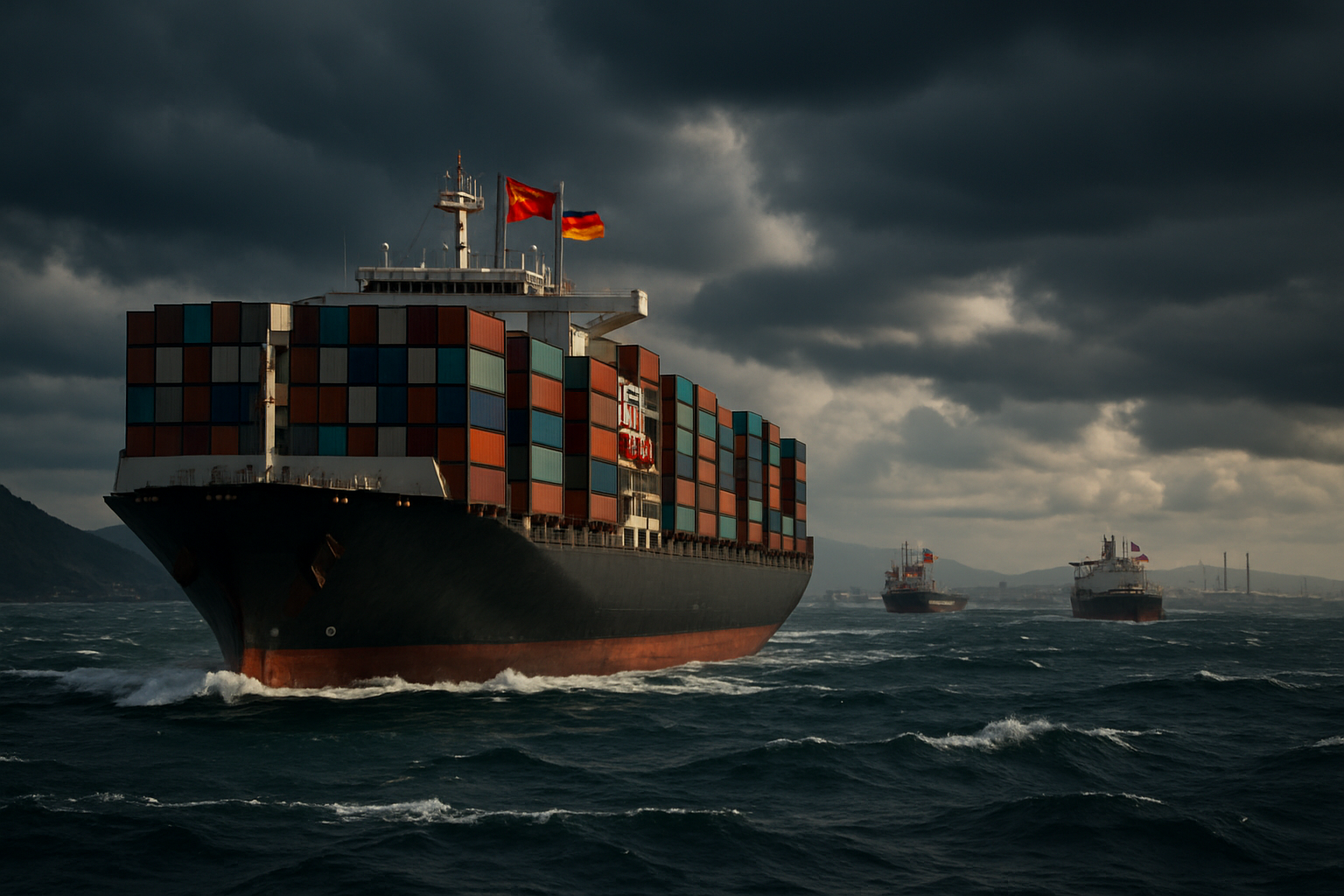
Iran's Revolutionary Guard announced a significant diplomatic exemption for Iraq's shipping vessels through the Strait of Hormuz, potentially unleashing up to 3 million barrels per day of Iraqi oil while maintaining broader restrictions that continue to strangle global energy flows in the most severe maritime crisis in decades.
The declaration came through an Arabic-language video statement from Iran's military spokesman, who emphasized that "brotherly Iraq is exempt from any restrictions we have imposed on the Strait of Hormuz." This development represents the first major crack in Iran's comprehensive blockade of the strategic 21-mile waterway, which handles 40% of global seaborne oil transit.
Strategic Implications for Global Energy Markets
The exemption comes as oil prices have remained volatile above $100 per barrel, with Brent crude having peaked at $119.50 and West Texas Intermediate reaching a record single-day jump of 18.98% to $108.15. The potential release of 3 million barrels daily of Iraqi crude could provide significant relief to strained global markets, though analysts caution that the broader crisis remains unresolved.
Japan faces particularly acute vulnerability, with 95% of its oil imports originating from the Middle East and 70% transiting through the Strait of Hormuz. Tokyo has deployed 80 million barrels from strategic reserves—the first such release since the 2011 Fukushima disaster—as part of the International Energy Agency's historic 400 million barrel emergency deployment across 32 countries.
"The Iranian military said Iraq is exempt from shipping restrictions in the Strait of Hormuz that have strangled global energy flows for weeks. The declaration has the potential to unleash as much as 3 million barrels a day of Iraqi oil cargoes."
— South China Morning Post Report
Bilateral Negotiations Emerge
The Iraqi exemption follows intensive diplomatic efforts by multiple nations seeking passage rights for their vessels. The Philippines secured assurances for safe passage of Philippine-flagged ships through diplomatic channels, with Foreign Affairs Secretary Theresa Lazaro obtaining commitments from Iranian Foreign Minister Seyed Abbas Araghchi.
South Korea has similarly engaged with Gulf envoys, with officials confirming that Seoul is considered a "top priority" nation for ensuring stable energy supplies. Korean officials have pledged to maintain close communication with regional partners to secure resource flows amid the crisis.
These bilateral negotiations represent a significant shift in Iran's approach to the blockade, moving from blanket restrictions to selective exemptions based on diplomatic relationships and regional considerations.
Ongoing Maritime Crisis
Despite the Iraqi exemption, the fundamental maritime crisis persists. Iran's Revolutionary Guard has deployed an estimated 2,000-6,000 naval mines throughout the strait, forcing the United States to destroy 28 Iranian mine-laying vessels. Over 150 oil and LNG tankers worth billions in cargo remain stranded in the Persian Gulf, with major shipping companies Maersk and MSC maintaining suspended operations.
The aviation industry continues to suffer parallel disruption, with over 18,000 flights cancelled worldwide—the most extensive disruption since COVID-19. Eight countries maintain simultaneous airspace closures, creating what experts describe as an "aviation black hole" severing critical Europe-Asia corridors.
Consumer Impact Intensifies
The crisis has triggered unprecedented government emergency responses globally. Pakistan has implemented wartime austerity measures including four-day work weeks for government offices, while Bangladesh continues fuel rationing affecting 170 million people. European nations face acute shortages, with Bosnia-Herzegovina down to just two days of gas reserves.
In Australia, hundreds of fuel stations have run dry across Queensland, New South Wales, Victoria, and South Australia. Energy Minister Penny Sharpe has held crisis talks as petrol prices approach the $3 per liter threshold, prompting a threefold increase in electric vehicle searches.
Sweden faces electricity increases of 10-20 öre and gasoline price rises of 1-2 kronor per liter, with the Malmö region most exposed due to continental European market integration. Ireland continues to grapple with heating oil approaching €2 per liter, which officials have condemned as "brazen rip-offs."
Financial Market Instability
Global financial markets continue to reflect the crisis's severity. Pakistan's KSE-100 recorded its largest single-day decline in history at -8.97%, while South Korea's KOSPI fell 12% triggering circuit breakers and pushing the Korean won to 17-year lows. The crisis has forced PayPal to postpone its $1.1 billion IPO indefinitely due to market volatility.
Central banks, including the European Central Bank and Bank of Japan, are coordinating emergency liquidity measures to prevent financial contagion, though traditional monetary policy tools remain limited in effectiveness against structural geopolitical disruptions.
Nuclear Diplomacy Breakdown
The maritime crisis stems from the complete collapse of US-Iran nuclear negotiations, despite achieving a "broad agreement on guiding principles"—the most progress since the JCPOA framework collapsed in 2018. The fundamental disagreement remained over scope: Iran excluded ballistic missiles and regional proxies as "red lines" while the US demanded comprehensive coverage including missiles, armed groups, and human rights issues.
This diplomatic breakdown led to Operation Epic Fury, the largest US-Israeli coordinated military operation since 2003, followed by Iranian retaliation under "Operation True Promise 4," with Iran's Revolutionary Guard declaring "no red lines remain."
Regional Coalition Strain
The crisis has severely tested the unprecedented Saudi/UAE/Qatar/Egypt diplomatic consensus that had initially supported diplomatic solutions. Iranian attacks on coalition member territories have caused casualties: one civilian killed in Abu Dhabi, UAE; 32 injured in airport strikes in Kuwait; and 8 wounded in Qatar while intercepting 65 missiles and 12 drones using Patriot systems.
Egyptian President Abdel Fattah el-Sisi condemned attacks on "sisterly countries" and warned of "comprehensive chaos" if escalation continues, highlighting the strain on regional stability mechanisms.
Long-term Energy Security Implications
The crisis has exposed dangerous vulnerabilities in global energy architecture dependent on strategic chokepoints. The 21-mile Strait of Hormuz represents a critical single-point failure in modern logistics, with no realistic alternatives capable of handling diverted volume.
Qatar Energy Minister Saad Al Kaabi has warned that Gulf states may declare force majeure "within weeks" if the crisis persists, potentially driving oil prices toward $150 per barrel and threatening to "bring down economies of the world."
"This is the most severe energy security crisis in decades, exposing our over-dependence on single strategic chokepoints."
— Samuel Ciszuk, Energy Analyst
Strategic petroleum reserves provide only temporary relief for sustained disruptions of this magnitude. The crisis has accelerated discussions about fundamental energy architecture restructuring, supply chain diversification, and renewable energy transitions, though such transformations require years or decades for implementation.
Template-Setting Crisis Management
UN Secretary-General António Guterres has described the situation as "the greatest test of multilateral cooperation in crisis management in the modern era." The rapid transition from diplomatic breakthrough to military confrontation demonstrates the fragility of crisis management mechanisms in the multipolar era.
The nuclear governance context adds particular gravity, as the New START Treaty between the US and Russia expired on February 5, creating the first period in over 50 years without nuclear constraints between the superpowers. Iran continues uranium enrichment to 60% purity with over 400kg of weapons-grade material—sufficient for multiple nuclear weapons.
Recovery Prospects Uncertain
Unlike weather-related or technical disruptions, recovery from this crisis depends entirely on military operations resolution and diplomatic normalization. Aviation industries cannot maintain long-term scheduling with multiple airspaces closed, while energy markets remain volatile with critical transit routes blocked.
The success or failure of diplomatic containment will determine whether this remains a manageable regional crisis or escalates into broader Middle Eastern conflict with global implications. The precedent set will influence international approaches to conflict resolution, energy market governance, and nuclear proliferation prevention for decades.
As the crisis enters its critical phase, the Iraqi shipping exemption represents both a potential pathway toward broader diplomatic solutions and evidence of Iran's selective approach to maintaining pressure while avoiding complete regional isolation. The coming weeks will likely determine whether this diplomatic opening expands or remains an isolated exception in an otherwise comprehensive blockade.