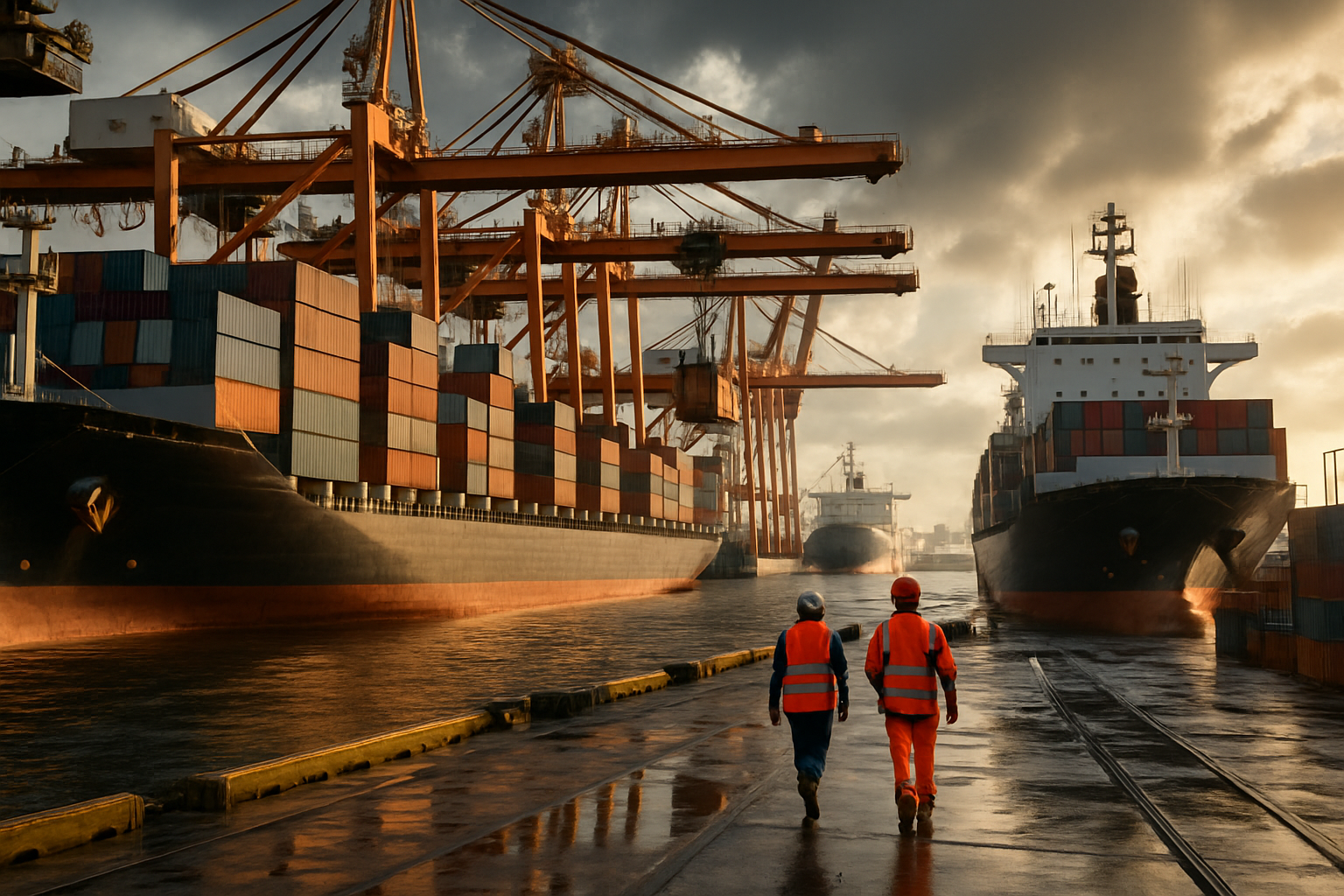
The global maritime industry confronts an unprecedented convergence of operational challenges, from routine ferry service disruptions to sophisticated shadow fleet operations, as international shipping networks adapt to an increasingly volatile operational environment in March 2026.
Two seemingly disparate incidents this week highlight the breadth of challenges facing maritime transportation worldwide. In New Zealand, travelers crossing Cook Strait found themselves stranded after Interislander ferry services were cancelled and rescheduled days later, prompting criticism that such disruptions are "embarrassing" for the country's tourism sector. Meanwhile, in international waters, a fox that stowed away on a cargo ship in Southampton arrived safely in New York, now under care at the Bronx Zoo—a lighter story that nonetheless underscores the complex logistics of modern maritime operations.
Ferry Services Under Pressure
The Cook Strait ferry cancellations represent more than just inconvenience for passengers. These services form a critical link in New Zealand's transportation infrastructure, connecting the North and South Islands for both tourists and freight. When ferry services fail, the ripple effects impact everything from tourism revenues to supply chain reliability.
Ferry operations worldwide have faced increasing challenges in recent years, from aging infrastructure to extreme weather events that have become more frequent and severe. The Cook Strait, known for its rough conditions, presents particular operational challenges that have been exacerbated by climate variability.
Shadow Fleet Operations and Security Concerns
While ferry passengers dealt with schedule disruptions, maritime security experts continue grappling with far more complex challenges. Historical context from industry analysis reveals the scope of what the maritime sector faces: over 600 vessels worldwide operate in Russia's sophisticated "shadow fleet" network, using false documentation and concealed ownership to circumvent international sanctions.
The European Union's 20th sanctions package, implemented in February 2026, introduced comprehensive maritime services bans targeting Russian crude oil exports, including restrictions on insurance, maintenance, port access, and technical support. This represents a dramatic expansion from previous oil import restrictions, with 43 additional vessels added to the sanctions blacklist.
"The maritime services ban represents the most comprehensive enforcement action against sanctions-evading vessels in European waters to date."
— European Commission Official
German investigative reports revealed that one-third of Russia's shadow fleet operates without correct flag state authorization, creating legal enforcement opportunities under international maritime law that EU states have been reluctant to fully utilize. Belgium's historic nighttime seizure of a Russian shadow fleet tanker in the North Sea, conducted with French support and G7/Nordic/Baltic coordination, demonstrated the potential for coordinated international maritime enforcement.
Technology and Surveillance Advances
The maritime industry has responded to security challenges through enhanced technology integration. Advanced satellite tracking, AI-powered monitoring, and real-time analytics now enable better surveillance and coordination across jurisdictions, though implementation remains challenging due to the global nature of maritime commerce.
These technological advances extend beyond security applications. China's maritime technology revolution includes mobilizing shipbuilding capabilities and battery manufacturers like CATL to electrify shipping fleets, leveraging electric vehicle expertise for maritime applications. The initiative supports Beijing's carbon neutrality goals while potentially positioning China as a dominant maritime technology provider.
Supply Chain Vulnerabilities Exposed
The convergence of operational challenges has exposed fundamental vulnerabilities in global supply chains. The Strait of Hormuz crisis in March 2026 demonstrated how single chokepoints can affect 40% of global oil transit, while the Pure Car Truck Carrier (PCTC) market experienced a turning point after extraordinary ordering periods from 2021-2024, now facing subdued demand due to automotive industry regionalization and the shift toward electric vehicles.
Maritime industry transformation has accelerated as companies pursue operational efficiency improvements, route optimization, and diversification beyond traditional cargo types. Greek maritime companies have demonstrated strategic agility through this transformation, with firms like Atlas Maritime pivoting from automotive carriers to crude oil transportation, while Safety Management Overseas S.A. achieved top industry performance rankings with zero detentions over 36 months.
Regional Infrastructure Development
Despite global challenges, significant infrastructure development continues worldwide. Port facilities are investing in improvements to handle diverse cargo types and provide enhanced services to shipping lines navigating volatile markets. Malaysia's Kuching Port Authority announced major infrastructure expansion projects for 2026-2028, including a 220-metre wharf extension designed to accommodate larger vessels as part of Southeast Asian maritime hub strategy.
The Caribbean cruise industry has shown remarkable resilience, with ports like Saint Kitts and Nevis achieving record capacity by simultaneously accommodating six major cruise ships, demonstrating mature infrastructure capabilities and operational excellence in destination management.
Environmental and Safety Imperatives
Environmental regulations continue driving demand for cleaner vessels, making older designs less attractive for long-term investment. The intersection of compliance requirements, technological advancement, and market uncertainty creates unprecedented decision-making challenges for maritime executives.
Safety remains paramount, with incidents like the Nigerian tugboat LEO capsizing off South African coastline killing one crew member and leaving five missing serving as stark reminders of the inherent risks in maritime operations. Such tragedies underscore the urgent need for enhanced safety measures, improved emergency response capabilities, and greater international cooperation in addressing transportation safety challenges.
Economic Implications and Market Adaptation
The maritime industry's transformation presents both challenges and opportunities. Companies demonstrating strategic flexibility and operational excellence have shown remarkable performance even in volatile conditions, showcasing the deep maritime expertise that makes shipping a dominant force in global commerce.
Port automation, predictive maintenance, and digital monitoring systems are becoming standard as the industry optimizes throughput while reducing risks. Investment in infrastructure and technology yields substantial returns even under challenging global conditions, as demonstrated by success stories like the Port of Kribi in Cameroon, which achieved remarkable growth with a 308.9% increase in container traffic from 2018 to 2025.
Looking Forward: Resilience and Adaptation
The maritime industry's ability to adapt to complex, interconnected challenges will determine its future success. From routine ferry operations to sophisticated international shipping networks, the sector must balance immediate operational needs with long-term strategic planning.
Success requires continued investment in technology, enhanced international cooperation, improved safety protocols, and adaptive business models that can navigate an increasingly volatile global environment. The industry's response to current challenges—whether ferry service reliability or shadow fleet enforcement—will establish precedents for maritime operations in the decades ahead.
As demonstrated by recent events from Cook Strait to international waters, the maritime industry's resilience depends not just on technological advancement but on the human expertise, international cooperation, and operational excellence that have long defined successful maritime operations. The industry's capacity to meet these multifaceted challenges will ultimately determine its role in supporting global commerce and connectivity in an interconnected world.