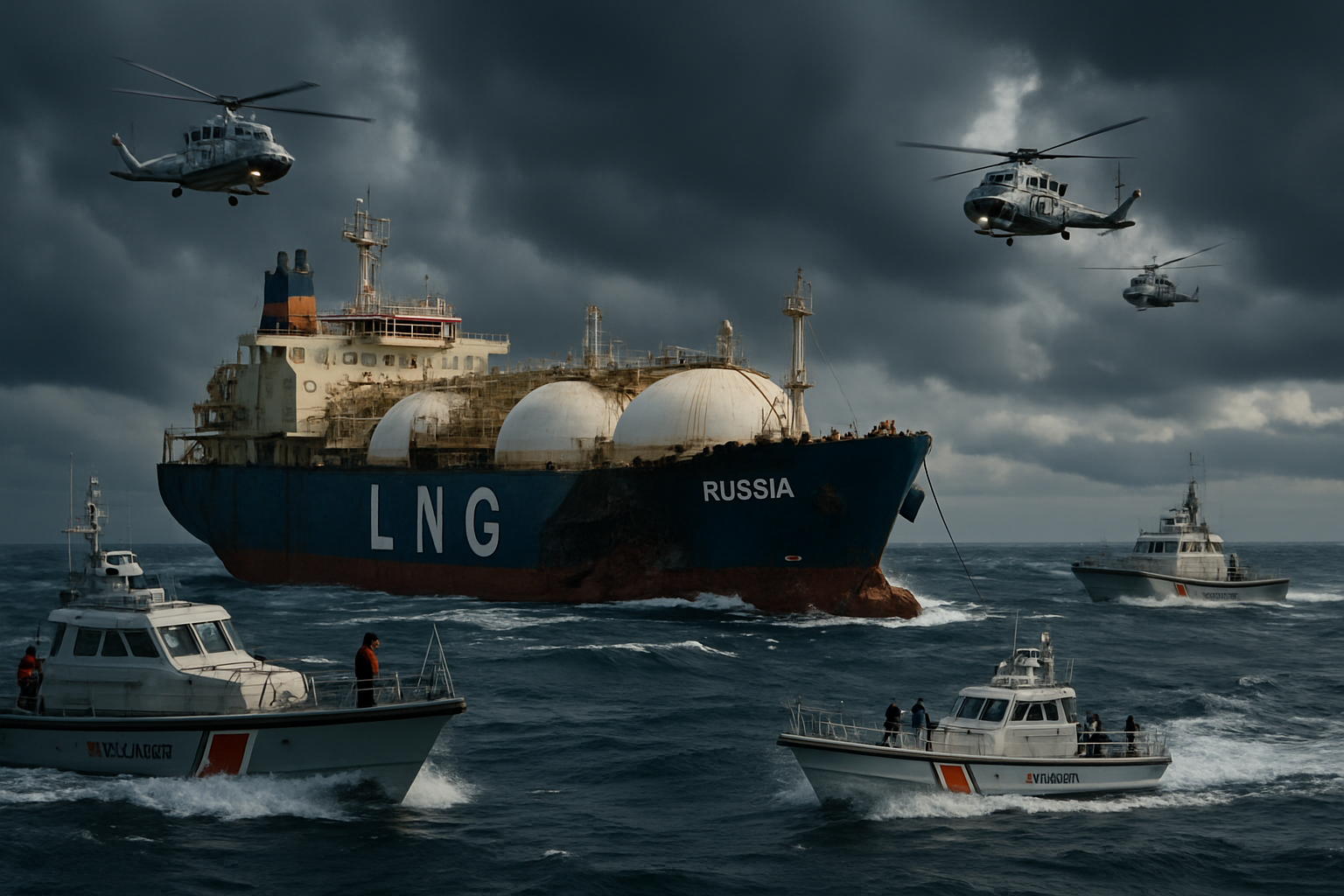
Maritime authorities across Europe face mounting challenges as a drone-damaged Russian LNG tanker drifts closer to Malta while coordinated strikes by sea pilots and maritime traffic controllers disrupt major shipping operations in Belgian ports, exposing critical vulnerabilities in international shipping safety infrastructure.
The Arctic Metagaz, a Russian LNG tanker carrying approximately 61,000 tons of liquefied natural gas, remains stranded roughly 38 nautical miles southeast of Malta after sustaining significant hull damage from what sources describe as a maritime drone attack. Maltese authorities have activated contingency planning protocols while monitoring the vessel's drift pattern, though they cannot intervene while it remains in international waters.
Escalating Maritime Security Threats
The incident involving the Arctic Metagaz represents a dramatic escalation in maritime warfare tactics, marking what experts believe could be the first successful drone attack on a Russian LNG tanker. The vessel was initially struck approximately 150 nautical miles southeast of Malta, leaving a substantial breach in its hull that has compromised both navigation and cargo containment systems.
Maritime security analysts note this attack follows a troubling pattern of increasing aggression against energy transport vessels. The targeting of LNG carriers represents a significant strategic escalation, as these vessels carry highly volatile cargo that poses substantial environmental and safety risks if compromised.
"The use of maritime drones against energy infrastructure vessels marks a dangerous new chapter in modern naval conflict. The potential for catastrophic environmental damage is enormous."
— Admiral Sir Philip Jones, Former First Sea Lord
Port Operations Under Siege
Simultaneously, coordinated strike action by sea pilots and maritime traffic controllers has severely disrupted shipping operations across Belgium's major Flemish ports. The Agency for Maritime Services and the Coast (MDK) reports that vessel movements have slowed to critical levels, with only essential safety personnel remaining on duty during the industrial action.
The timing of these strikes compounds the maritime crisis, as alternative routing through Belgian ports becomes increasingly important while the Mediterranean situation remains volatile. The disruption affects not only commercial shipping but also critical supply chains that depend on predictable port operations.
Global Maritime Crisis Context
These incidents unfold against the backdrop of what maritime experts describe as the most severe global shipping crisis in modern history. Recent months have witnessed unprecedented disruptions to international maritime trade, including the effective closure of critical shipping lanes and the deployment of sophisticated "shadow fleet" operations designed to circumvent international sanctions.
The shadow fleet phenomenon has become particularly concerning, with intelligence sources indicating over 600 vessels worldwide operating with false documentation and concealed ownership. European authorities have responded with comprehensive sanctions packages targeting maritime services, but enforcement remains challenging across international waters.

Environmental and Economic Implications
The potential environmental consequences of the Arctic Metagaz situation cannot be overstated. With 61,000 tons of LNG aboard, any structural failure could result in catastrophic environmental damage to the Mediterranean ecosystem. The vessel's proximity to Malta's territorial waters heightens concerns about potential impact on one of Europe's most densely populated maritime regions.
Economic implications extend far beyond immediate shipping delays. The compound effect of damaged vessels, port strikes, and ongoing maritime security threats has created what economists describe as a "perfect storm" for international trade disruption. Insurance premiums for maritime cargo have surged, while alternative routing adds significant costs to global supply chains.
Technological Response and Future Preparedness
Maritime authorities are increasingly turning to advanced surveillance technologies to address evolving threats. Enhanced satellite tracking systems, AI-powered monitoring networks, and real-time analytics platforms represent the cutting edge of maritime domain awareness. However, coordination across international jurisdictions remains a significant challenge.
The integration of automated systems with human oversight has proven essential in modern maritime operations. Predictive maintenance algorithms help identify potential vessel failures before they become critical, while digital monitoring systems provide unprecedented visibility into global shipping patterns.
International Cooperation Imperative
The current crisis underscores the absolute necessity for enhanced international maritime cooperation. Recent successful enforcement actions, including Belgium's seizure of shadow fleet vessels in coordination with G7 and Nordic partners, demonstrate the potential for effective multilateral responses to maritime threats.
"The complexity of modern maritime challenges requires unprecedented levels of international coordination. No single nation can address these threats in isolation."
— Deputy PM Maxime Prévot, Belgium
European maritime officials emphasize that future security depends on creating robust frameworks for information sharing, coordinated enforcement actions, and standardized response protocols. The development of these systems requires significant investment in both technology and diplomatic cooperation.
Industry Transformation and Adaptation
The maritime industry faces fundamental transformation pressures beyond immediate security concerns. Environmental regulations drive demand for cleaner vessel technologies, while geopolitical tensions reshape traditional shipping routes and business models. The Pure Car Truck Carrier (PCTC) market exemplifies these challenges, with recent years witnessing massive ordering surges followed by subdued demand as automotive production regionalizes.
Greek maritime companies have demonstrated remarkable adaptability during current crises, with firms like Atlas Maritime successfully pivoting from automotive carriers to crude oil transportation. This strategic flexibility represents a model for industry resilience amid volatile market conditions.
Looking Forward: Building Maritime Resilience
As the Arctic Metagaz situation continues to develop and Belgian port strikes persist, the maritime industry confronts a fundamental reckoning with safety and security vulnerabilities. The convergence of these challenges requires comprehensive responses addressing both immediate threats and long-term systemic weaknesses.
Future maritime security will likely depend on integrated approaches combining advanced technology, enhanced international cooperation, and robust contingency planning. The current crisis may ultimately serve as a catalyst for the comprehensive maritime safety reforms that experts have long advocated.
The resolution of these immediate challenges will test the international community's capacity for coordinated crisis management while establishing precedents for addressing future maritime security threats. Success will require sustained commitment to operational excellence, strategic cooperation, and technological innovation across all aspects of global shipping operations.