The global maritime and shipping industry faces a pivotal transformation period in April 2026, as environmental technologies advance rapidly while companies grapple with unprecedented operational challenges ranging from geopolitical tensions in critical waterways to evolving regulatory frameworks.
Three major developments this week illustrate the complex dynamics reshaping international shipping: Iran's seizure of commercial vessels in the Strait of Hormuz, revolutionary environmental initiatives at European ports, and innovative partnerships aimed at reducing the industry's carbon footprint.
Security Crisis Escalates in Critical Shipping Lanes
The maritime security situation deteriorated significantly on April 24 when Iranian forces captured two commercial vessels belonging to Swiss shipping giant MSC. The MSC Francesca and Epaminondas were seized in the Strait of Hormuz, a waterway handling approximately 40% of global seaborne oil transit, according to the UK Maritime Trade Operations center.
This latest incident underscores the vulnerability of global supply chains to geopolitical tensions. With over 150 oil and LNG tankers already stranded in Persian Gulf waters representing billions in cargo value, shipping companies face unprecedented operational challenges that extend far beyond immediate financial losses.
"We do not have tolls. All of us are trade-dependent economies. All of us know it is in our interest to keep it open."
— Vivian Balakrishnan, Singapore Foreign Minister, on Strait of Malacca cooperation
The crisis has prompted enhanced cooperation among maritime nations. Singapore, Malaysia, and Indonesia recently reaffirmed their commitment to maintaining free passage through the Strait of Malacca, which handles approximately 25% of global traded goods, demonstrating how regional partnerships become critical during periods of international maritime instability.
Environmental Technology Revolution Transforms Port Operations
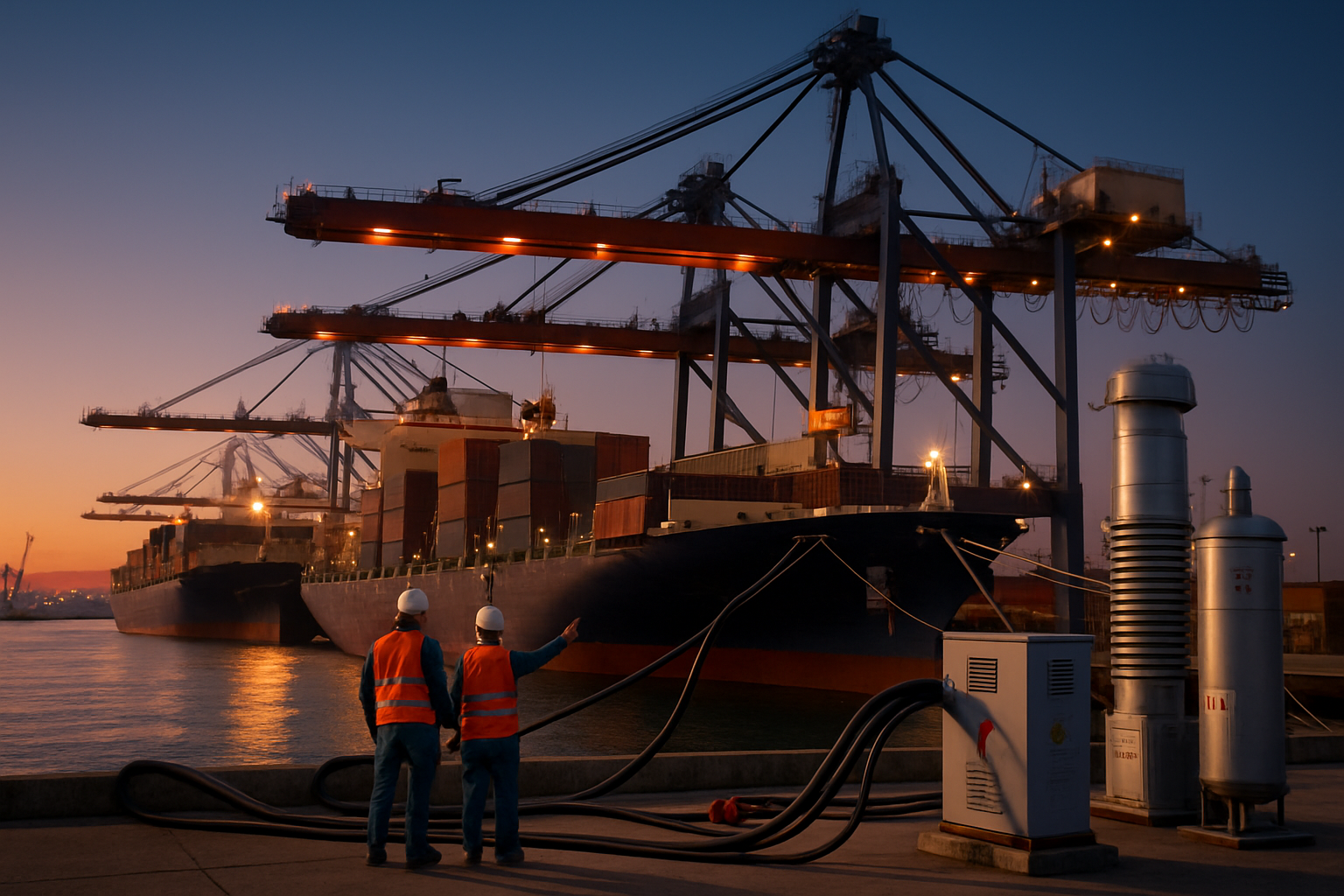
While security concerns dominate headlines, a quieter revolution in environmental technology is transforming port operations across Europe. The Port of Klaipėda in Lithuania completed installation of shore power supply equipment, enabling ships to connect to the electrical grid while docked rather than running polluting auxiliary engines.
This shore power initiative represents a broader trend toward sustainable maritime operations. The technology reduces both air pollution and noise in port areas, addressing longstanding environmental concerns while improving conditions for port workers and nearby communities.
Simultaneously, the Superyacht Eco Association's SEA Index formalized a partnership with the Port de Marseille Fos, bringing France's leading Mediterranean port into a network of 23 environmentally committed ports. This collaboration introduces new air quality certification covering nitrogen oxides and particulate matter emissions from luxury vessels.
Industry Adaptation Strategies Emerge
The convergence of environmental pressures and security challenges is forcing shipping companies to develop sophisticated adaptation strategies. Greek maritime firms, historically dominant in international shipping, continue demonstrating operational excellence despite volatile conditions, with companies like Safety Management Overseas achieving zero detention records over 36 months.
Technology integration has accelerated dramatically, with satellite tracking, AI-powered monitoring, and real-time analytics becoming standard features rather than optional enhancements. These systems enable better coordination with naval forces and provide enhanced visibility into vessel locations and cargo status.

Supply Chain Resilience Through Geographic Diversification
The ongoing disruptions have accelerated discussions about supply chain diversification that industry experts say were already years overdue. The 21-mile Strait of Hormuz's effective closure exposes dangerous over-dependence on single geographical chokepoints that characterizes much of modern global logistics.
Alternative routing through the Arabian Peninsula, while more expensive and time-consuming, is being actively developed by major shipping lines. Malaysia's Kuching Port Authority announced a major expansion project including a 220-meter wharf extension designed to accommodate larger vessels as part of Southeast Asian maritime hub strategy.
Port automation and predictive maintenance investments, originally planned for gradual implementation over several years, are now being fast-tracked as essential infrastructure for maintaining operational continuity during crisis periods.
Environmental Regulations Drive Industry Innovation
Environmental regulations are simultaneously creating challenges and opportunities for the maritime sector. The EU's 20th sanctions package introduced comprehensive maritime services bans affecting vessel insurance, maintenance, and port access, while environmental standards drive demand for cleaner vessel technologies.
The Pure Car Truck Carrier (PCTC) market exemplifies this transformation. After experiencing over 280 vessel orders between 2021-2024, the sector now faces subdued demand due to automotive industry regionalization and the shift toward electric vehicles, which require different transportation strategies.
"The maritime industry carries 90% of international trade and requires constant adaptation to political and economic realities."
— Maritime Industry Analysis Report
International Cooperation Models Emerge
Successful navigation of current challenges increasingly depends on international cooperation frameworks. The collaboration between Singapore, Malaysia, and Indonesia in maintaining secure passage through the Strait of Malacca provides a template for other regions facing maritime security challenges.
Naval cooperation has evolved beyond traditional models, with multiple nations coordinating merchant vessel protection in contested environments. This represents a significant development in 21st-century maritime security doctrine, where civilian shipping protection requires unprecedented international coordination.
Economic Implications and Market Adaptation
The economic implications extend far beyond the shipping industry itself. Insurance premiums have surged globally as underwriters grapple with new forms of maritime warfare and environmental liability. Companies with strategic flexibility and operational excellence are demonstrating remarkable resilience during these challenging conditions.
Asian infrastructure investments are creating alternative shipping routes that reduce dependence on traditional chokepoints. This geographic diversification represents a fundamental shift in global trade patterns that will likely influence international commerce for decades.
Future Outlook: Balancing Security and Sustainability
The maritime industry's current transformation represents more than temporary crisis management. Companies are implementing permanent changes to business models, incorporating enhanced risk assessment methodologies, route diversification strategies, and environmental compliance systems.
Success in this evolving landscape requires balancing immediate security concerns with long-term sustainability goals. The industry must maintain operational flexibility while investing in cleaner technologies and building resilient supply chain networks.
The developments of April 2026 may prove to be a watershed moment for global maritime commerce, establishing new standards for how the industry manages the intersection of geopolitical risk, environmental responsibility, and operational efficiency in an increasingly complex international environment.