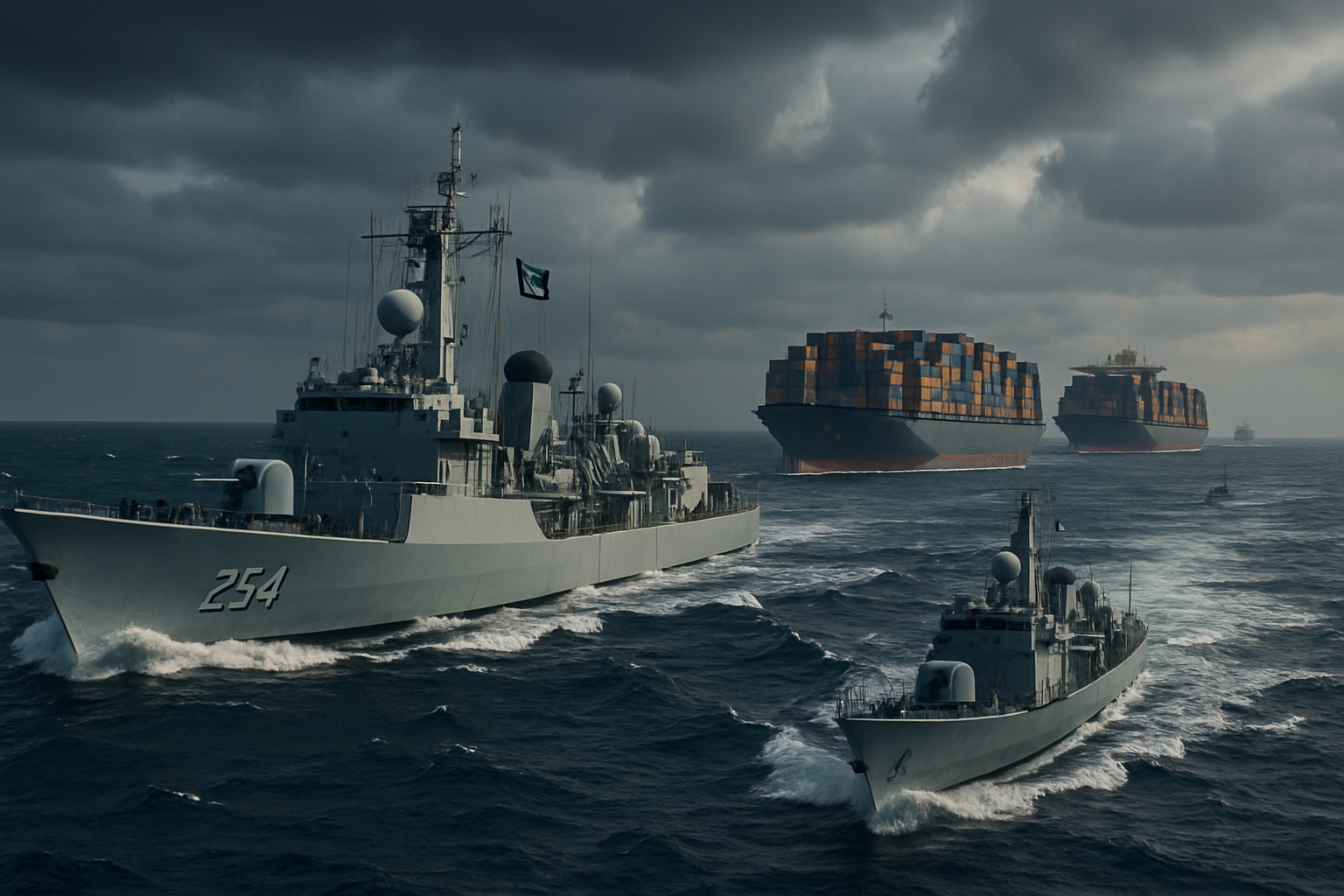
The global shipping industry is undergoing its most significant transformation since World War II as escalating regional conflicts force maritime companies to implement unprecedented security measures, dramatically alter shipping routes, and coordinate closely with military forces to maintain the flow of international trade.
Pakistan Navy's launch of Operation Muhafiz-ul-Bahr represents a watershed moment in maritime security cooperation, as naval forces worldwide work to protect the 90% of global trade that moves by sea. The operation, initiated to safeguard Pakistan's Sea Lines of Communication (SLOCs) and ensure uninterrupted energy supplies, comes amid the most dangerous international crisis since the Cold War.
Ships Adopt Desperate Deception Tactics
In a stunning revelation of the industry's vulnerability, ships transiting the strategically vital Strait of Hormuz have begun falsifying their tracking data to claim Chinese crew members or Chinese destinations in desperate attempts to avoid Iranian attacks. According to data from shipping tracker Marine Traffic analyzed by Agence France-Presse, vessels are changing their Automatic Identification System (AIS) information to display "all-Chinese crew" or Chinese ports as destinations.
Iran's effective closure of the Strait of Hormuz since February 28 has created a crisis affecting 40% of global seaborne oil transit. At least 10 vessels have been attacked, forcing the industry to adopt survival tactics that would have been unimaginable just months ago.
"We are witnessing the most severe maritime disruption in our company's 127-year history,"
— Senior Executive, Major Shipping Line
Naval Protection Operations Expand Globally
Pakistan Navy's Operation Muhafiz-ul-Bahr exemplifies the new reality of maritime security cooperation. The Inter-Services Public Relations (ISPR) confirmed that escort operations are being conducted in close coordination with Pakistan National Shipping Corporation, with the navy "actively monitoring and controlling the movement of merchant vessels to ensure their safe and secure transit."
This development reflects a broader pattern of naval forces worldwide adapting to protect commercial shipping. With approximately 90% of Pakistan's trade moving through maritime routes, the operation represents a critical component of national economic security.
Breakthrough Navigation Despite Crisis
Despite the chaos, some vessels continue attempting to navigate dangerous waters. The Greek-operated oil tanker Shenlong Suezmax, with a capacity of 1 million barrels, successfully sailed through the Strait of Hormuz carrying Saudi Arabian crude loaded at Ras Tanura port. The vessel, listing Mumbai as its destination, demonstrated that commercial navigation remains possible under extreme security measures.
According to maritime data platforms Kpler, Lloyd's List Intelligence, and MarineTraffic, the tanker last recorded its position inside the strait on March 8 before safely updating its location as heading for India. The successful transit offers hope that carefully planned operations can continue even in hostile environments.
Industry-Wide Operational Adaptations
Major shipping companies have implemented comprehensive security protocols unprecedented in peacetime operations. Hundreds of ships remain anchored on both sides of critical waterways as companies assess safety conditions and coordinate with military forces. The maritime industry is watching for any signs that sailings might resume through narrow corridors that handle massive shares of global energy trade.
Oil and shipping markets are particularly focused on developments in the Persian Gulf, where energy exports critical to global supply chains face severe disruption. The industry has been forced to develop new risk assessment frameworks and operational procedures to navigate an increasingly complex security environment.
Economic and Strategic Implications
The current crisis has exposed the vulnerability of modern global commerce to single-point failures in critical maritime chokepoints. The 21-mile-wide Strait of Hormuz, through which approximately 40% of seaborne oil passes daily, demonstrates how geographic constraints can threaten international economic stability.
Energy analysts warn that prolonged disruptions could force fundamental restructuring of global supply chains, with companies seeking alternative routes that may be longer and more expensive but less vulnerable to geopolitical disruption.
Coordination with National Security Agencies
The Pakistani military's coordination with the Pakistan National Shipping Corporation represents a new model of public-private cooperation in maritime security. This approach recognizes that commercial shipping protection requires seamless integration between military capabilities and civilian maritime expertise.
The operation acknowledges that "with approximately 90% of national trade transiting through maritime routes," Pakistan's economic security is inseparable from maritime security. This perspective is being adopted by nations worldwide as governments recognize the strategic importance of protecting commercial shipping lanes.
Long-Term Industry Transformation
Maritime industry experts believe the current crisis will accelerate technological innovation and operational changes that have been under consideration for years. Enhanced satellite tracking, improved communication systems, and closer coordination with naval forces are becoming standard operational requirements rather than optional security measures.
The industry is also investing in route diversification strategies, exploring alternative pathways that reduce dependence on single chokepoints. While such alternatives often involve longer distances and higher costs, they provide crucial redundancy in an increasingly uncertain security environment.
Regional Cooperation Models
Pakistan Navy's proactive approach to maritime protection reflects broader regional cooperation trends as nations recognize that shipping security requires collective action. The operation demonstrates how military forces can adapt to provide civilian protection while maintaining operational effectiveness.
As the crisis continues, maritime security experts anticipate that similar operations will become standard practice, with naval forces worldwide developing new doctrines for protecting commercial shipping in contested environments.
The shipping industry's adaptation to current security challenges represents one of the most significant operational transformations in maritime history, with implications that will reshape global trade patterns for decades to come. As conflicts continue to affect critical shipping lanes, the industry's ability to maintain essential trade flows while protecting crews and cargo will determine the resilience of international commerce in an increasingly uncertain world.