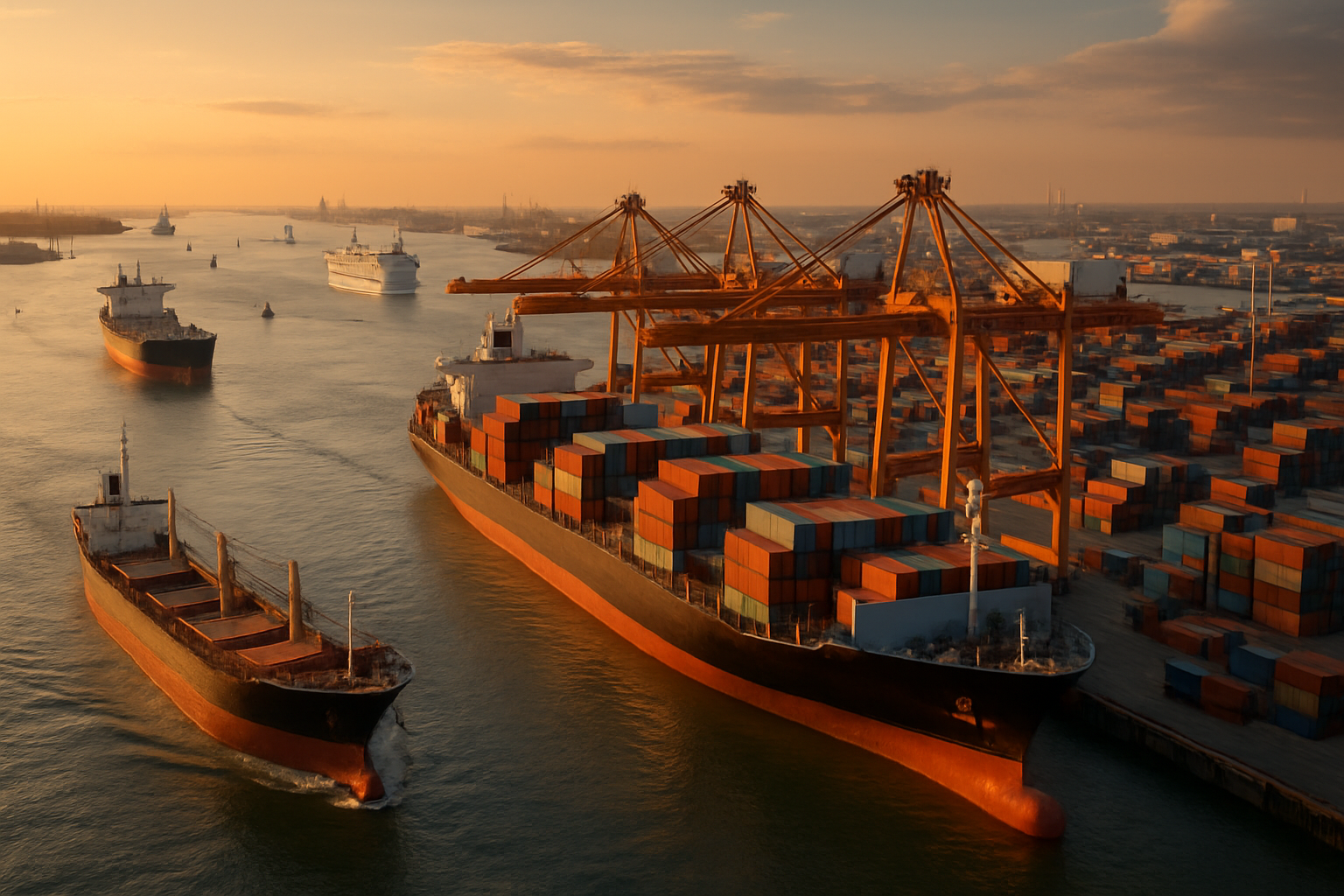
The global maritime and shipping industry is experiencing a period of significant transformation as February 2026 unfolds, with developments ranging from exceptional safety achievements to international legal challenges and record-breaking transit operations across the world's waterways.
Cyprus-Based Safe Bulkers Sets New Global Safety Standards
Safe Bulkers companies have achieved a remarkable milestone in maritime safety, earning top rankings among the world's leading port state control (PSC) performers in the latest assessment by RISK4SEA. The achievement reinforces the Cypriot-linked group's exceptional safety record in international shipping operations.
The sixth edition of "Top PSC Performers (January 2026)," published alongside the "PSC Resilient 50" initiative, lists the 50 ship managers worldwide with excellent inspection performance and zero detentions. Within this framework, Safety Management Overseas S.A. and Safe Bulkers Management Ltd., part of the group led by Poly V. Hadjiioannou, achieved the highest overall scores in their respective ship categories.
"This distinction confirms zero ship detentions and consistent superiority in PSC performance based on 36 months of verifiable inspection data."
— Safe Bulkers Group Statement
The evaluation's credibility is enhanced by its comprehensive methodology, covering a complex global inspection environment over three full years of operations. This achievement comes at a crucial time when maritime safety standards are under increased scrutiny due to international sanctions enforcement and heightened regulatory oversight.
Baltic Sea Cable Damage Case Enters Legal Phase
In a significant development for maritime security and infrastructure protection, the Chinese captain of a Hong Kong-registered cargo ship pleaded not guilty on Wednesday to charges of criminal damage in connection with alleged damage to undersea cables in the Baltic Sea in October 2023.
The case represents a critical test of international maritime law enforcement, particularly regarding the protection of critical underwater infrastructure. The Balticconnector incident has drawn attention to the vulnerability of subsea cables that carry internet traffic, telecommunications, and energy connections between countries.
Legal experts are closely watching this case as it could set important precedents for prosecuting maritime incidents involving critical infrastructure damage, especially in an era of increased geopolitical tensions and concerns about hybrid warfare tactics.
Historic Disney Adventure Sets Panama Canal Record
Disney Cruise Line's ultra-large cruise ship Disney Adventure achieved a historic milestone on February 2, setting a record as the largest cruise ship to transit the Panama Canal during her repositioning cruise to Asia. At 208,100 gross tons, the vessel became the first 200,000-plus gross ton cruise ship to successfully navigate the canal.
The achievement represents a 24 percent increase in size over the previous record holder, the Norwegian Bliss (168,000 gross tons). At 342 meters (1,122 feet) in length and 46.4 meters (152 feet) in beam, the Disney Adventure's transit required extensive multidisciplinary coordination from canal authorities.
The Neopanamax Locks, which have a maximum capability of handling vessels up to 370 meters (1,215 feet) in length and a beam of 51.25 meters (168 feet), provided sufficient clearance for the massive vessel, though coordination efforts were intensive due to the ship's unprecedented scale.
Venezuelan Oil Trade Resumption Creates Compliance Challenges
The resumption of Venezuela's oil trade under US management has created new challenges for maritime operators, with several aging tankers facing detention in Caribbean jurisdictions as they transition to ports with more stringent port state control inspection regimes.
The Caribbean MOU on Port State Control (CMOU) reports that small tankers Morning Sun and Regina have been detained in Dutch-affiliated jurisdictions - the former in St Eustatius and the latter in Curaçao. Both vessels were previously involved in delivering Venezuelan oil using the same shadow fleet tankers that had carried Venezuelan cargoes for years under sanctions.
According to industry sources, Regina had carried at least one oil cargo associated with the joint Trafigura-US marketing arrangement. The detention represents a potential setback for Curaçao, which aspires to become a regional oil trading hub. The development highlights the complex transition from sanctions-era operations to legitimate trade frameworks.
Maritime Security Enhancement in Pacific Region
Fiji has significantly strengthened its maritime security capabilities with 65 officers from multiple agencies successfully completing specialized training in Boat Masters Licence (BML) and Restricted Master Engineer Licence Class 6 (RMEL6) certifications in Suva.
The comprehensive training program, involving officers from the Republic of Fiji Navy, Fiji Revenue and Customs Service (FRCS), and Fiji Police Force's Water Police Division, was funded by the United Nations Development Programme with support from the UK Government. The Maritime Safety Authority of Fiji conducted the training to enhance inter-agency coordination and make joint operations more efficient and professional.
"With the increase in drug movements out at sea, licensed officers should be better equipped to monitor suspicious vessels within Fiji's maritime domain."
— Defence Minister Pio Tikoduadua
The certification of operators strengthens border protection and maritime surveillance capabilities, addressing growing concerns about transnational criminal activities in Pacific waters.
Pacific Cruise Industry Shows Strong Recovery
The Pacific cruise industry continues its robust recovery, with Fiji welcoming more than 1,000 tourists in early February following visits by cruise ships Seabourn Quest and Crystal Serenity. According to ship agent Transam, Seabourn Quest carried 442 passengers and 504 crew members during its visit to Dravuni island, while Crystal Serenity arrived with 578 passengers and 346 crew members across multiple port calls.
Crystal Serenity, measuring 250 meters in length with a gross tonnage of 68,870, made strategic stops at Savusavu on February 1, Lautoka on February 8, and Suva on February 9. The carefully planned itinerary demonstrates the cruise industry's sophisticated approach to maximizing economic impact across multiple destinations.
Several additional cruise ships are scheduled to visit Fiji throughout February, including Coral Princess, Amera, MSC Magnifica, Le Soleal, and Carnival Luminosa. This sustained activity indicates strong consumer confidence in Pacific cruise destinations and the region's successful adaptation to post-pandemic travel patterns.
Industry-Wide Implications and Future Outlook
These diverse developments reflect the maritime industry's complex operating environment in 2026, characterized by heightened safety standards, evolving regulatory frameworks, and adapting to changing geopolitical realities. The industry continues to balance traditional operational excellence with new challenges including sanctions enforcement, infrastructure security, and enhanced maritime domain awareness.
The success of companies like Safe Bulkers in achieving top PSC performance ratings demonstrates that operational excellence remains achievable despite challenging conditions. Meanwhile, legal cases involving infrastructure damage and compliance issues with Venezuelan oil shipments highlight the need for robust legal frameworks and enforcement mechanisms.
The cruise industry's continued growth, exemplified by record-breaking Panama Canal transits and strong Pacific recovery, indicates resilient consumer demand for maritime tourism. However, operators must navigate increasingly complex regulatory environments while maintaining safety standards and security protocols.
Strategic Maritime Developments Continue
Looking ahead, the maritime industry faces continued evolution as international sanctions regimes adapt, infrastructure protection becomes more critical, and operational standards continue to rise. The combination of technological advancement, regulatory innovation, and international cooperation will likely determine which companies and regions successfully navigate these complex waters.
The developments in February 2026 demonstrate that while challenges persist, the maritime industry continues to adapt and thrive through professional excellence, international cooperation, and strategic planning. As global trade patterns evolve and security concerns intensify, maritime operators who prioritize safety, compliance, and operational innovation are positioned to succeed in this dynamic environment.