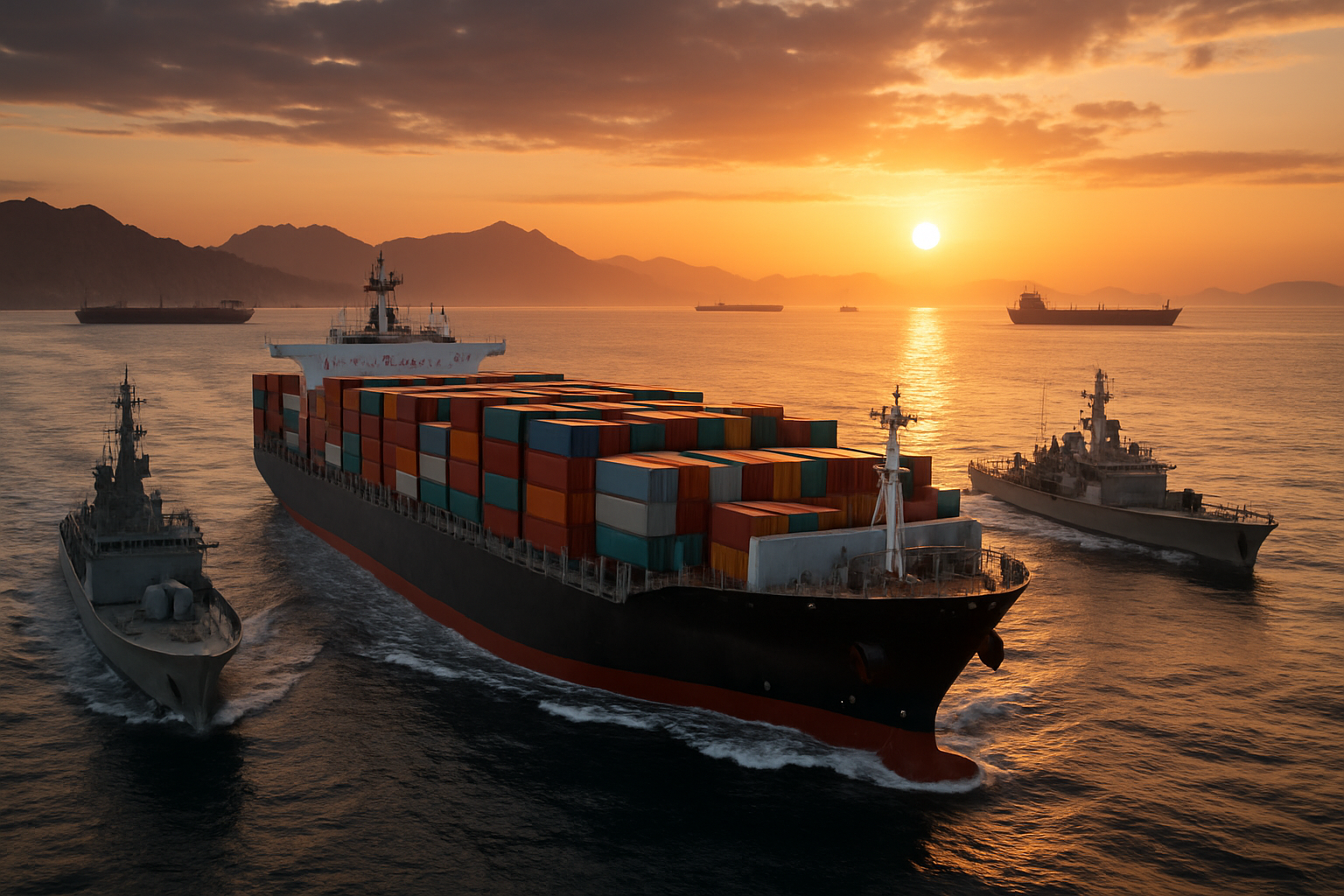
The global maritime shipping industry is undergoing its most significant transformation since World War II, as the ongoing energy crisis in the Persian Gulf forces companies to implement revolutionary security measures and operational protocols while nations launch coordinated naval protection programs.
Pakistan Launches Historic Naval Protection Operation
Pakistan Navy has launched "Operation Muhafiz-ul-Bahr" to protect maritime trade routes, marking an unprecedented coordination between military and civilian shipping authorities. The operation, working in conjunction with Pakistan National Shipping Corporation, provides naval escort services for merchant vessels navigating through increasingly dangerous waters.
This military-civilian partnership represents a new template for maritime security in the 21st century, protecting approximately 90% of Pakistan's trade that transits through these critical shipping lanes. The operation demonstrates how nations are adapting to protect their economic lifelines in an increasingly volatile global environment.
Global Shipping Routes Face Unprecedented Security Challenges
The closure of the Strait of Hormuz has created the most severe maritime disruption since World War II. Iran's Revolutionary Guard declared the 21-mile waterway "unsafe for shipping," effectively blocking 40% of global seaborne oil transit and forcing unprecedented industry adaptations.
Ships operating in the Persian Gulf region have resorted to desperate measures to avoid Iranian attacks, including falsifying AIS tracking data to claim Chinese crew and destinations. Despite these dangerous conditions, some vessels like the Greek-operated Shenlong Suezmax have successfully transited the strait with Saudi crude, demonstrating the industry's resilience under extreme pressure.
Port Developments Show Remarkable Growth Despite Crisis
Even amid global shipping disruptions, some ports are achieving extraordinary growth. The Port of Kribi in Cameroon reported a remarkable 308.9% increase in container traffic, rising from 135,820 TEU in 2018 to 555,398 TEU in 2025 – representing a 22.3% annual growth rate that positions it as a major Central African logistics hub.
Meanwhile, ports in stable regions continue operations despite regional tensions. The Port of Limassol in Cyprus maintains normal activities, with DP World CEO Simon Pitout confirming all operations proceed without disruption, according to EOA President Yiannis Tsouloftas.
Industry Implements Revolutionary Security Protocols
The current crisis has accelerated the implementation of security measures that would typically take years to develop. Major shipping companies are anchoring vessels while conducting comprehensive safety assessments, developing new risk frameworks specifically designed for hostile maritime environments.
Enhanced coordination with naval forces is becoming standard practice across the industry. Technology investments in advanced tracking systems, satellite navigation, and improved communication capabilities are being fast-tracked due to security requirements rather than routine upgrades.
"The maritime industry is witnessing its most significant operational changes since World War II, with companies forced to balance commercial viability against unprecedented security risks."
— Maritime Industry Analyst
Alternative Routes and Strategic Adaptations
With the Strait of Hormuz effectively closed, shipping companies are exploring alternative Arabian Peninsula routes, despite their inadequate capacity and significantly higher time and cost penalties. This shift is forcing a fundamental recalculation of global trade patterns and logistics strategies.
Route diversification strategies are under urgent development, even though they involve longer distances and higher operational costs. The industry is investing heavily in technology solutions to optimize these alternative pathways while maintaining economic viability.
Naval Cooperation Becomes New Standard
The Pakistani naval operation represents a broader trend of military-civilian cooperation in maritime protection. Similar coordinated responses are expected globally as nations recognize that protecting commercial shipping requires collective action between military and civilian authorities.
International naval cooperation is expanding rapidly, with multiple nations ensuring safe passage through critical shipping lanes. Cyprus's strategic position in the Eastern Mediterranean allows it to maintain operational continuity through enhanced security measures and international cooperation frameworks.
Long-Term Industry Transformation
Current adaptations are reshaping the maritime industry in ways that will likely persist long after the immediate crisis ends. New doctrines for naval protection of commercial shipping in contested environments are being established, creating templates for civilian protection in an increasingly interconnected but volatile world.
The crisis is accelerating changes that the maritime industry had planned to implement over years or decades. Enhanced satellite tracking, improved communication systems, and comprehensive security protocols are becoming standard requirements rather than optional upgrades.
Economic Impact and Supply Chain Resilience
The shipping crisis is exposing critical vulnerabilities in global supply chains, particularly the over-dependence on single geographical chokepoints. The 21-mile Strait of Hormuz serves as a stark reminder of how strategic waterways can become single points of failure in modern logistics networks.
Manufacturing sectors dependent on Gulf networks – including automotive, electronics, and textiles – are experiencing severe disruptions. Companies are being forced to develop more resilient supply chains with greater geographical diversification and reduced dependency on volatile regions.
Technological Innovation Under Pressure
The crisis is driving rapid technological advancement in the maritime sector. Port automation, predictive maintenance, and digital monitoring systems are being implemented at unprecedented speed to optimize throughput while reducing security risks.
Investment in infrastructure and technology is yielding substantial returns even under challenging conditions, as demonstrated by success stories like the Port of Kribi's exceptional growth model.
Regional Cooperation Frameworks Evolve
Naval forces from multiple nations are working together to ensure safe passage through critical shipping lanes. This cooperation is establishing new frameworks for international maritime security that may define industry operations for decades to come.
Industry organizations are coordinating security protocols and best practices globally, creating standardized approaches to maritime protection that transcend national boundaries.
Future Implications for Global Trade
The current crisis represents more than a temporary disruption – it's fundamentally reshaping how the maritime industry thinks about risk, security, and operational planning. Traditional trade patterns are being forced to adapt, potentially creating new permanent routes and partnerships.
The success of coordinated naval protection operations like Pakistan's "Operation Muhafiz-ul-Bahr" provides a model for how nations can protect their maritime economic interests while contributing to broader international security efforts.
As the industry continues to adapt to these unprecedented challenges, the innovations and cooperative frameworks being developed today will likely define maritime commerce for the coming decades, creating a more resilient and secure global shipping network.