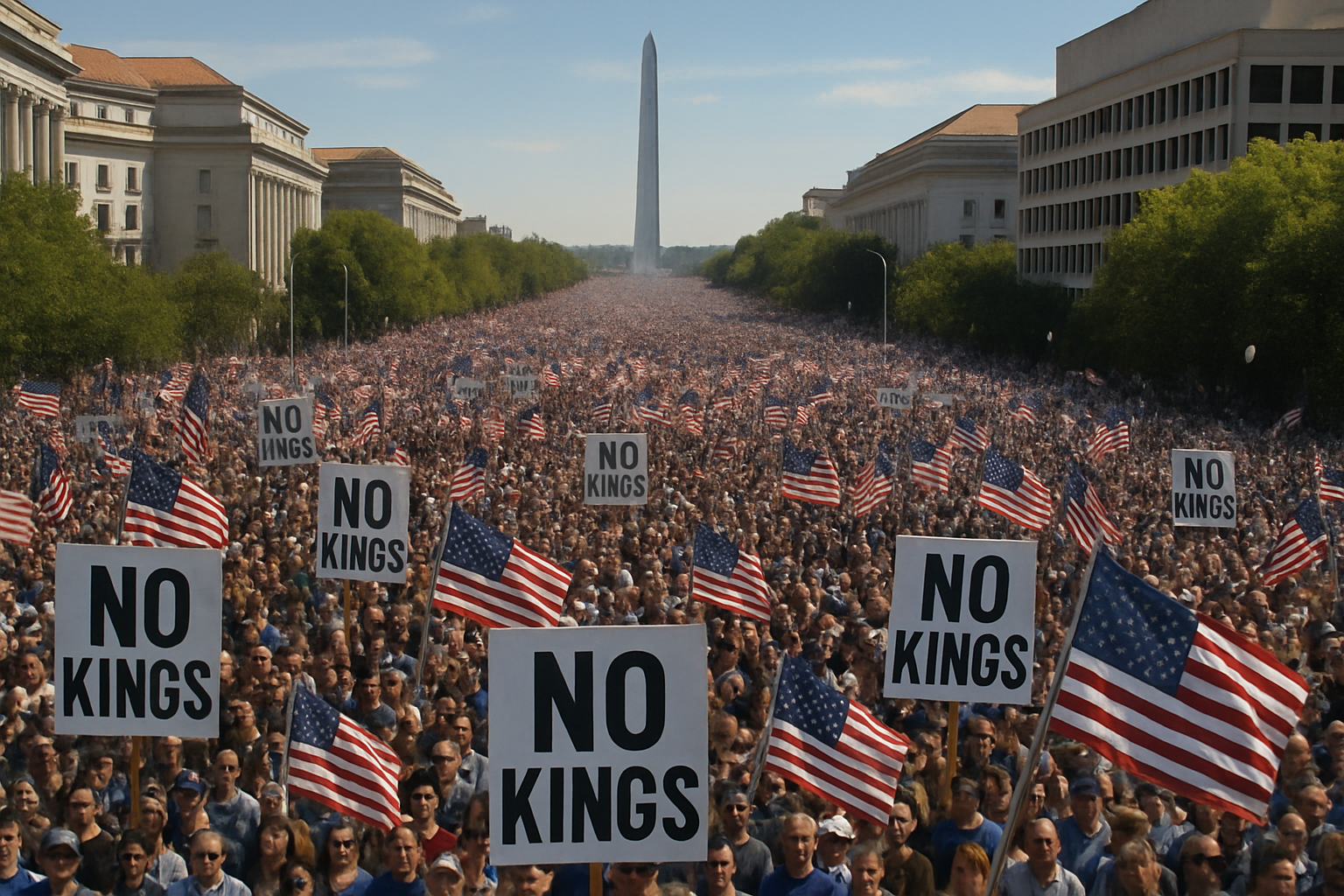
Hundreds of thousands of Americans took to the streets on Saturday, March 28, 2026, in what organizers are calling the largest single-day protest in US history, as the "No Kings" movement mounted its most significant challenge yet to President Donald Trump's second-term agenda.
The demonstrations, occurring in over 3,200 cities across all 50 states, represent the third major wave of "No Kings" protests since Trump returned to office in January 2025. The movement, which takes its name from America's founding rejection of monarchy, has mobilized millions against what protesters call Trump's "authoritarian bent" and his controversial military engagement in Iran.
Scale and Scope of Demonstrations
According to international sources tracking the protests, the March 28 demonstrations exceeded previous "No Kings" events in both size and geographic reach. The first protest in June 2025 drew several million participants, while October's second wave attracted an estimated seven million people according to organizers. Saturday's events expanded beyond traditional urban centers to include rural communities and small towns previously uninvolved in the resistance movement.
From St. Paul, Minnesota, where protesters carried signs reading "No king. No war. No ice," to major metropolitan areas like New York, Los Angeles, and Washington D.C., the demonstrations maintained coordinated messaging while reflecting local concerns. The protests notably extended beyond US borders, with solidarity events reported in Vienna, Madrid, and Amsterdam.
"America is better than this,"
— Common protest slogan heard across multiple cities
Iran War Fuels Opposition
The timing of the protests coincides with growing public opposition to Trump's military engagement in Iran, which began alongside Israeli forces with constantly shifting objectives and timelines. The conflict has become a primary driver of the latest protest wave, adding foreign policy grievances to domestic concerns about democratic institutions.
Sources indicate that only 25% of Americans support the Iran strikes, with 56% believing Trump is too willing to use military force. This opposition includes roughly a quarter of the Republican base, demonstrating unusual bipartisan resistance to the administration's foreign policy.
The military operation, dubbed "Operation Epic Fury," has already cost $11.3 billion in its first week, with Pentagon operations expected to continue through September, far beyond the initially projected 4-6 week timeline. The conflict has resulted in three confirmed US deaths and over 150 wounded troops.
Celebrity and Political Support
The protests drew significant celebrity participation, with rock legend Bruce Springsteen scheduled to perform "Streets of Minneapolis" at the main St. Paul rally. Actor Robert De Niro made appearances at multiple events, continuing his vocal opposition to the Trump administration.
Several political figures joined the demonstrations despite security concerns. The protests represent the most visible and sustained opposition to Trump since his return to office, providing a platform for Democratic leaders and progressive activists to voice coordinated resistance.
Economic and Social Impact
The demonstrations caused significant disruptions across major metropolitan areas, with transportation systems strained and some businesses closing early. However, the protests remained largely peaceful, marking a tactical evolution from some earlier confrontations that had included incidents of violence.
The movement has increasingly adopted a "without mobilization" strategy in some regions, focusing on economic pressure through strikes and work stoppages rather than traditional street demonstrations. This approach reflects lessons learned from previous protests and aims to minimize negative publicity while maximizing political impact.
Government Response
The Trump administration has dismissed the protests as driven by "radical leftist" groups and emphasized the president's legal authority as commander-in-chief. The White House pointed to economic indicators and argued that the demonstrations represent a vocal minority rather than mainstream American opinion.
However, the scale and geographic distribution of the protests, extending well into traditionally conservative areas, suggests broader discontent with administration policies. The movement's success in organizing coordinated national action demonstrates significant organizational capacity and sustained political engagement.
International Dimension
The protests coincided with growing international isolation over the Iran conflict. European allies have delivered a comprehensive rejection of Trump's requests for naval coalition support in the Strait of Hormuz, with German Defense Minister Boris Pistorius questioning what "a handful of European frigates" could accomplish that the powerful US Navy cannot.
This allied resistance has prompted Trump to declare that the United States no longer needs or wants NATO assistance, representing a significant shift toward unilateral action. The protests provided visual evidence of domestic opposition to complement international diplomatic resistance.
Historical Context and Future Implications
The "No Kings" movement draws its name and symbolism from America's founding rejection of monarchical rule, positioning current protests within a broader historical narrative of democratic resistance. Protesters frequently invoke constitutional principles and institutional norms they claim are under threat.
The movement's evolution from reactive demonstrations to proactive political organizing suggests a maturing opposition capable of sustained engagement. The success of Saturday's protests in mobilizing participants across diverse geographic and demographic communities indicates the potential for continued political pressure on the administration.
As the November 2026 midterm elections approach, these demonstrations serve as both a show of force and an organizing tool for opposition parties seeking to capitalize on anti-Trump sentiment. The protests' emphasis on constitutional governance and democratic accountability provides messaging that extends beyond traditional partisan divisions.
Looking Ahead
Organizers have indicated that additional "No Kings" events are planned throughout 2026, with the movement positioning itself as a sustained check on presidential power rather than a sporadic protest phenomenon. The success of Saturday's coordinated action across thousands of communities suggests the infrastructure exists for continued large-scale organizing.
The protests occur at a critical juncture in American politics, with ongoing conflicts abroad, economic pressures at home, and fundamental questions about democratic institutions and presidential authority. The "No Kings" movement's ability to sustain momentum and translate protest energy into political change will likely define much of the remaining Trump presidency.
As America grapples with these challenges, the March 28 demonstrations mark a significant moment in the ongoing struggle between executive power and popular resistance, with implications extending far beyond any single administration or political moment.