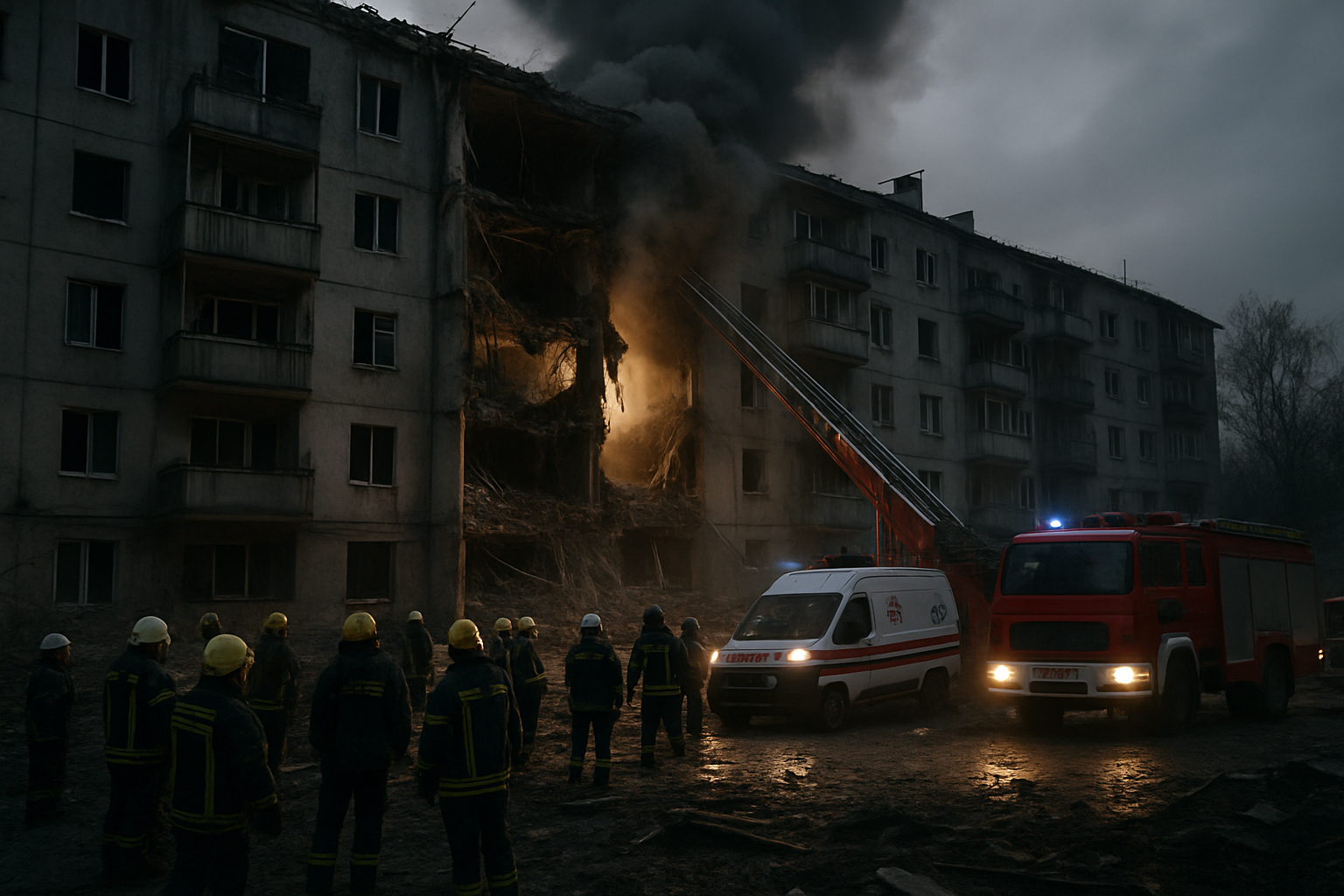
Russia launched one of its most devastating coordinated drone assaults of 2026 overnight on March 28, deploying over 270 combat drones against Ukrainian cities including Odesa and Kryvyi Rih, killing at least three civilians and wounding dozens more in attacks that struck residential areas and critical infrastructure, including a maternity hospital.
Ukrainian air defense forces successfully intercepted 252 of the 273 drones launched by Russian forces since the evening of March 27, according to Ukrainian military sources. However, the sheer scale of the assault overwhelmed defensive systems in several regions, allowing multiple strikes to reach their intended targets across southern and central Ukraine.
Odesa Under Siege
The historic port city of Odesa bore the brunt of the Russian offensive, with more than 60 combat drones targeting the city overnight according to President Volodymyr Zelensky. The attacks caused widespread damage across the Primorsky, Khadjibey, and Kiev districts of the city.
In a particularly alarming escalation, one drone struck the roof of a maternity hospital in the Primorsky district, though no casualties were reported from that specific strike. The symbolic targeting of medical facilities represents a clear violation of international humanitarian law and the Geneva Conventions, which provide special protection to hospitals and medical personnel.
"Russian forces in the night of March 28 delivered a massive strike with drones on Odesa,"
— Sergey Lysak, Head of Odesa City Administration
Residential buildings in multiple districts sustained significant damage, with reports of fires breaking out across the city. By the latest count, two people were confirmed killed in Odesa, with 11 others wounded, including civilians who were injured when debris from intercepted drones fell in residential areas.
Kryvyi Rih Targeted Repeatedly
The industrial city of Kryvyi Rih faced its second major attack of the morning, with Russian forces striking an industrial facility and killing two civilians while injuring others. The repeated targeting of the same city within hours demonstrates the systematic nature of Russian assault tactics.
Local authorities reported that explosions were heard throughout the city as waves of drones approached from different directions, forcing residents to seek shelter in basements and metro stations. The industrial nature of many targets suggests Russia continues its strategy of degrading Ukraine's economic capacity alongside its military objectives.
Unprecedented Scale of Attack
Military analysts described the 273-drone assault as representing one of the largest single coordinated drone operations Russian forces have conducted since the beginning of 2026. The scale demonstrates Russia's continued capacity to produce and deploy large numbers of unmanned aerial vehicles despite international sanctions on technology components.
The drones used in the attacks were primarily Shahed-type kamikaze drones, many of which are manufactured in collaboration with Iran. These weapons have become a signature element of Russia's "terror bombing" campaign against Ukrainian civilian infrastructure, designed to maximize psychological impact on the population.
Pattern of Systematic Civilian Targeting
The March 28 attacks continue a documented pattern of Russian forces systematically targeting civilian infrastructure and residential areas throughout 2026. Previous major assaults have targeted energy facilities, transportation networks, and population centers with the apparent goal of breaking Ukrainian civilian morale.
International human rights organizations have documented hundreds of such attacks as potential war crimes under the Rome Statute, noting the deliberate nature of strikes against protected civilian targets. The targeting of the maternity hospital in Odesa adds to a growing list of medical facilities struck by Russian forces.
Since March 25, 2026, Russian forces have conducted what Ukrainian officials term "energy terrorism" - systematic attacks on power generation and distribution facilities during harsh winter conditions. Over 1,170 buildings in Kyiv alone have been left without adequate heating due to infrastructure damage from previous attacks.
Diplomatic Stalemate Continues
The massive drone assault comes as diplomatic efforts to resolve the conflict remain suspended indefinitely. Trilateral peace negotiations between Ukraine, Russia, and the United States, which had shown promising progress in February with a historic 314-prisoner exchange and restoration of US-Russia military communications, have been postponed due to the ongoing Iran crisis.
President Zelensky confirmed in March that there are "no necessary signals for trilateral meeting" until the security situation regarding Iran allows for resumed diplomatic engagement. The postponement represents a significant setback to what had been the most promising peace initiative since Russia's February 2022 invasion.
"Due to situation around Iran, there are still no necessary signals for trilateral meeting, but will resume as soon as security situation allows"
— President Volodymyr Zelensky
International Response and Support
The European Union continues to provide unprecedented support to Ukraine, with a historic €90 billion loan package approved - the largest single-nation assistance program in EU history. However, divisions within the bloc persist, with Slovakia, Czech Republic, and Hungary refusing to participate in the aid package.
Sweden and Denmark have jointly committed €246 million for advanced air defense systems, while Germany has delivered 35 Patriot missiles to help protect Ukrainian cities. Despite this support, the scale of Russian drone attacks often overwhelms available defensive systems.
Over 17.8 million Ukrainians are currently accessing winter support programs due to infrastructure damage from systematic Russian attacks on energy facilities. The humanitarian crisis has deepened as repair efforts are complicated by continued targeting of maintenance crews and equipment.
Strategic Context and Military Developments
The drone attacks occur against a backdrop of accelerating Russian territorial gains. Moscow's forces captured 481 square kilometers of Ukrainian territory in January 2026 alone, compared to 260 square kilometers in December 2025 - an 85% increase that represents the fastest territorial acquisition in months.
Ukrainian military officials have disclosed that 55,000 soldiers have been officially confirmed killed since the February 2022 invasion, though this figure represents only documented battlefield deaths. Intelligence estimates suggest actual military casualties could be 2-3 times higher when including missing personnel and undocumented losses.
Nuclear Governance Crisis
The attacks take place within the context of an unprecedented nuclear governance crisis. The New START treaty between the United States and Russia expired on February 5, 2026, marking the first time in over 50 years that the two nuclear superpowers operate without bilateral constraints on their arsenals.
UN Secretary-General António Guterres has described the current situation as a "grave turning point" with nuclear risks at their "highest levels in decades." The restored military communications between Washington and Moscow, achieved during the February diplomatic breakthrough, now represents the only remaining formal channel between the superpowers.
Ukraine's Strategic Transformation
Despite the ongoing attacks, Ukraine has begun a strategic transformation from aid recipient to security provider on the international stage. Ukrainian military experts are now deployed to the UAE, Qatar, Jordan, Bahrain, and Kuwait to help combat Iranian Shahed drones - the same weapons systems being used against Ukrainian cities.
This evolution demonstrates Ukraine's growing expertise in counter-drone warfare and its ability to leverage battlefield experience into strategic partnerships with Middle Eastern allies. The UK has also revealed four operational maintenance, repair, and overhaul (MRO) facilities in Ukraine servicing Western-supplied equipment, with a fifth facility planned.
Looking Forward
As Ukrainian emergency services continue rescue operations and damage assessments from the March 28 attacks, the broader trajectory of the conflict remains uncertain. The indefinite suspension of peace talks due to the Iran crisis has removed the most promising diplomatic track for resolving territorial disputes.
The framework for resumed negotiations remains intact - prisoner exchange mechanisms, structured negotiation formats, and Pentagon-Moscow deconfliction protocols can be reactivated when conditions permit. However, fundamental disagreements over eastern Ukrainian territories under Russian control remain unchanged.
Russia demands recognition of its territorial gains and insists on Moscow as the venue for any Putin-Zelensky summit, while Ukraine maintains its position on territorial integrity and seeks long-term security guarantees. The June 2026 deadline previously established by the Trump administration for Washington venue talks now appears uncertain due to Middle East priorities.
"Ukraine will never give up its territories. The Ukrainian people would reject any referendum on handing over territories as a failure story"
— President Volodymyr Zelensky
Stakes for European Security
The outcome of the conflict carries implications far beyond Ukraine's borders. Success in achieving a negotiated settlement could provide a template for 21st-century conflict resolution and reinforce international law enforcement mechanisms. Failure could lead to continued military escalation with global implications for territorial sovereignty principles.
European security architecture faces its most significant test since World War II, with the stakes including the credibility of international humanitarian law, the effectiveness of collective defense mechanisms, and the precedent for responding to territorial aggression in the modern era.
As rescue operations continue in Odesa, Kryvyi Rih, and other affected cities, the human cost of this strategic competition remains starkly visible in the destroyed homes, damaged hospitals, and civilian casualties that mark each escalation of this devastating conflict.