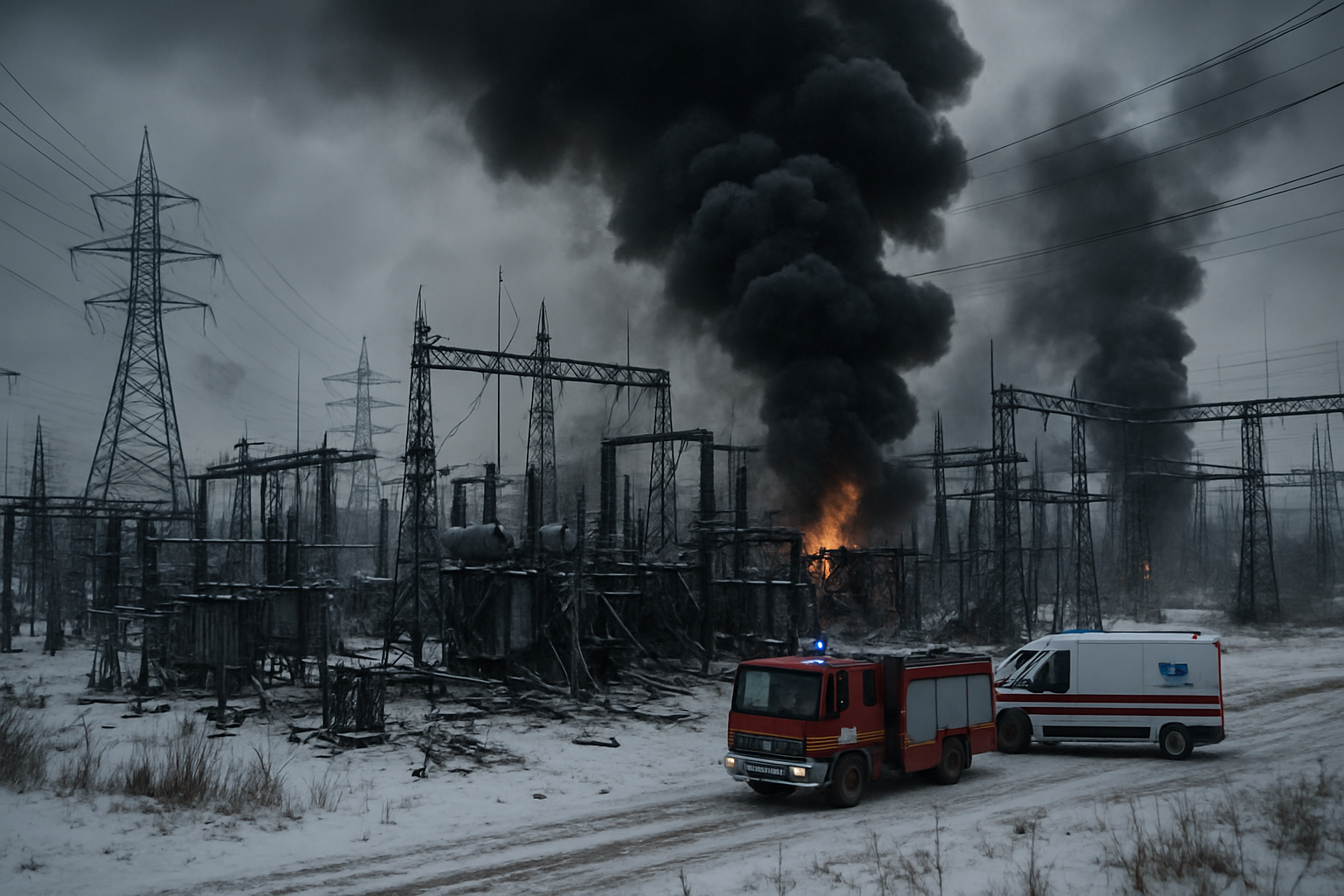
Russia launched one of its most devastating coordinated attacks on Ukrainian energy infrastructure since the full-scale invasion began, deploying more than 440 drones and around 40 missiles of various types in a massive overnight assault that forced nuclear power plants to reduce their generation capacity and left millions of Ukrainians without power during life-threatening winter conditions.
Ukrainian President Volodymyr Zelensky confirmed that the attack, which began in the early hours of February 7, 2026, involved "more than 400 drones and around 40 missiles of various types," marking what energy company DTEK described as another major blow to Ukraine's power grid during one of Europe's harshest winters in recent memory.
Nuclear Plants Forced to Reduce Output
The scale and precision of the Russian assault overwhelmed Ukraine's distribution system, creating cascading effects that forced all nuclear power plants across the country to reduce their electricity generation. According to Ukraine's Ministry of Energy, the reduction in nuclear output became necessary as "Russian missiles and drones slammed Ukrainian energy facilities," creating an overtaxed distribution network that could not handle full nuclear generation capacity.
This represents a significant escalation in Russia's systematic targeting of energy infrastructure, as nuclear facilities provide the backbone of Ukraine's electricity supply. The forced reduction in nuclear generation capacity demonstrates the sophistication of Russia's attack strategy, targeting not just individual facilities but the entire interconnected energy grid.
Widespread Infrastructure Damage
Ukrainian air defense forces successfully intercepted 24 Russian missiles and destroyed 382 drones during the overnight assault, according to official reports from the Ukrainian Armed Forces. However, the sheer volume of incoming projectiles overwhelmed defensive systems, allowing significant damage to energy facilities across eight regions.
National grid operator Ukrenergo reported that energy facilities in eight oblasts suffered damage, forcing the implementation of emergency power outages across most regions of Ukraine. The company stated that these emergency cuts would remain in place "until the power system stabilizes," indicating the severity of damage to critical infrastructure.
"Most regions of Ukraine are currently experiencing emergency power outages, which will be cancelled once the power system stabilizes."
— Ukrenergo, Ukrainian Grid Operator
Humanitarian Crisis Amid Extreme Cold
The timing of the attack proved particularly devastating, occurring during temperatures well below zero across much of Ukraine. The combination of widespread power outages and sub-zero temperatures created a humanitarian emergency, forcing authorities to activate emergency warming centers across affected regions.
The attack resulted in at least one confirmed civilian death, as a man in the Rivne region perished due to the missile and drone strikes. The assault represents the continuation of Russia's "winter weapon" strategy, deliberately targeting civilian infrastructure during extreme weather conditions to maximize suffering among the civilian population.
France24's reporting from the scene described scenes of Ukrainians seeking shelter in metro stations and other underground facilities, highlighting the human cost of the infrastructure warfare. The attacks come as millions of Ukrainians are already struggling with heating and electricity shortages after previous Russian strikes on the energy system.
International Response and Defensive Measures
The scale of the Russian attack prompted immediate responses from neighboring NATO countries. Poland scrambled fighter jets and temporarily suspended flights at airports in Lublin and Rzeszow in eastern Poland as a precautionary measure, demonstrating how the conflict's effects extend beyond Ukraine's borders.
Recent international support has included a €246 million air defense package from Sweden and Denmark, featuring advanced Tridon Mk2 systems designed to strengthen Ukraine's ability to defend against such massive aerial assaults. The World Bank has also allocated $40 million specifically for energy system restoration efforts.
Pattern of Systematic Targeting
This latest assault continues Russia's systematic campaign against Ukrainian energy infrastructure that has intensified throughout 2026. According to Ukrainian officials, over 10,000 Russian drones and bombs were launched in January 2026 alone, with energy workers becoming specific targets of attacks.
The strategy represents what Ukrainian officials call "energy terrorism," designed to break civilian morale and create unsustainable humanitarian conditions. Previous attacks have specifically targeted energy workers attempting to repair damaged facilities, including a February 1 drone strike that killed 15 DTEK energy workers returning from their shift.
Strategic Impact on Peace Negotiations
The timing of the attack carries particular significance as it occurs during ongoing diplomatic efforts to resolve the conflict. Recent trilateral peace talks between Ukraine, Russia, and the United States in Abu Dhabi had achieved some progress, including a prisoner exchange involving 314 individuals and the restoration of military communications between Washington and Moscow.
However, this massive energy infrastructure attack demonstrates Russia's continued willingness to escalate military pressure even while engaging in diplomatic processes. NATO Secretary-General Mark Rutte recently condemned similar attacks as sending a "bad signal" before negotiations, highlighting the tension between military operations and peace efforts.
Long-term Implications for Ukrainian Energy Security
The systematic nature of attacks on Ukraine's energy infrastructure creates long-term challenges that extend far beyond immediate humanitarian concerns. Each major assault requires months of reconstruction work, specialized equipment, and significant international financial support to restore full capacity.
The targeting of energy facilities also affects Ukraine's ability to maintain essential services including hospitals, schools, and industrial facilities crucial for the war effort. The forced reduction in nuclear power generation represents a new escalation that threatens Ukraine's energy independence and long-term economic stability.
As recovery efforts begin following this latest assault, Ukrainian authorities face the dual challenge of immediate humanitarian response and long-term infrastructure rebuilding. The international community continues to provide support through financial assistance, technical expertise, and defensive systems, but the scale of damage demonstrates the ongoing vulnerability of civilian infrastructure to systematic military targeting.
The attack serves as a stark reminder of how modern warfare increasingly targets civilian infrastructure as a tool of military strategy, creating humanitarian crises that extend far beyond traditional battlefield engagement and affecting millions of non-combatants in their daily struggle for basic necessities like heat and electricity during harsh winter conditions.