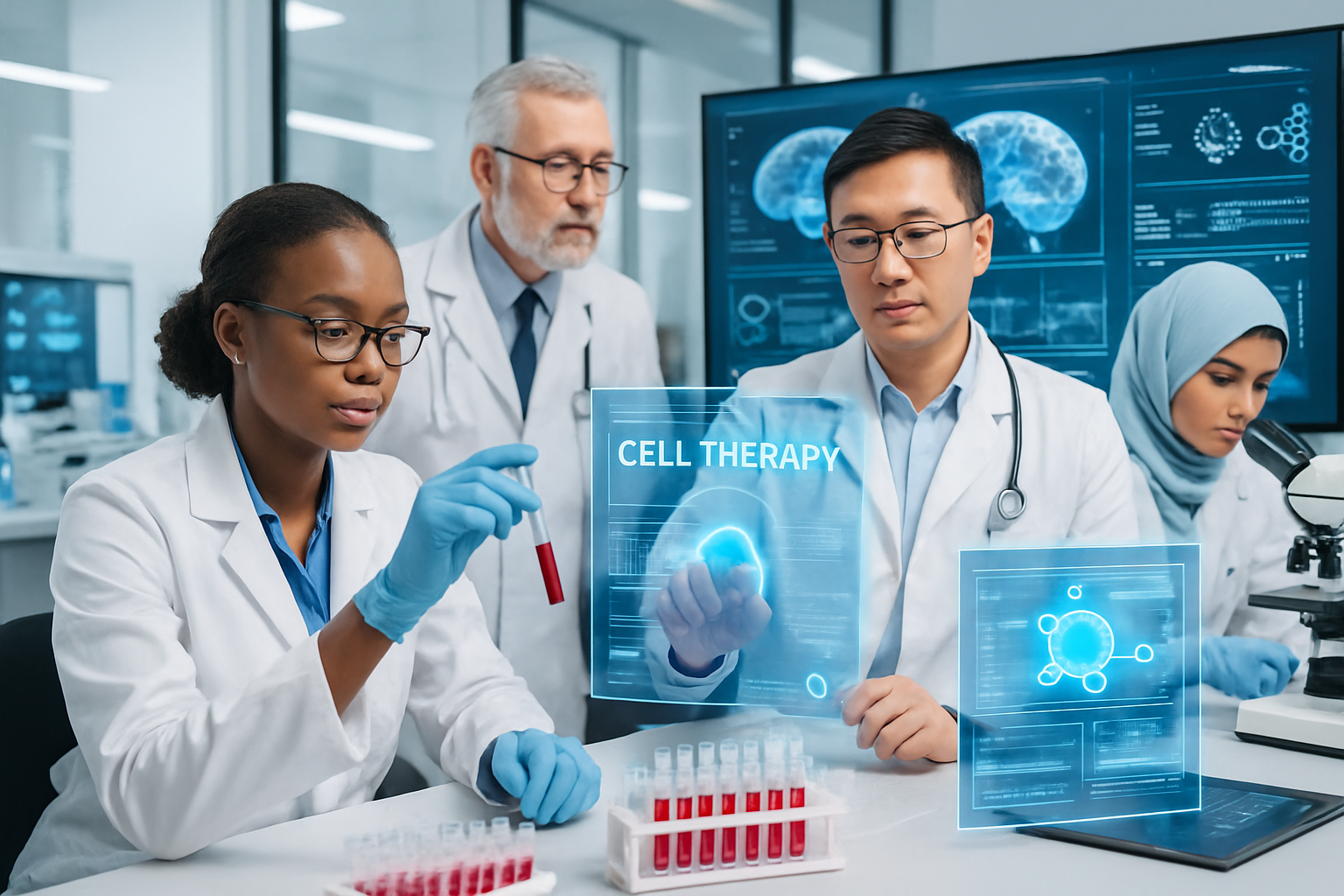
February 2026 has witnessed a remarkable convergence of medical breakthroughs spanning three continents, marking a pivotal moment in global healthcare advancement. From pioneering organ transplants in West Africa to revolutionary cancer treatment timing discoveries in Asia, these developments represent a new era of international medical collaboration and innovation.
Burkina Faso Achieves Historic Second Kidney Transplant Success
The Centre Hospitalier Universitaire (CHU) de Tengandogo in Ouagadougou has successfully completed Burkina Faso's second session of kidney transplantations on February 3-4, 2026. This landmark achievement saw two patients suffering from chronic kidney failure receive life-saving transplants, confirming the country's significant progress in specialized medical care and opening new hope for numerous patients across West Africa.
The successful completion of this second transplant session represents a monumental step forward for Burkina Faso's healthcare system, positioning the nation as an emerging leader in advanced medical procedures within the Sahel region. The CHU de Tengandogo's achievement demonstrates how developing nations can establish world-class medical capabilities through focused investment and international collaboration.
"This represents a historic moment for our healthcare system and confirms that Burkina Faso can provide the most advanced medical treatments to our citizens."
— CHU de Tengandogo Medical Team
The success comes during a period of significant transformation for Burkina Faso under Captain Ibrahim Traoré's leadership, which has prioritized healthcare infrastructure development alongside the country's record-breaking 94-ton gold production in 2025, generating over $6 billion in revenue to fund social programs including healthcare expansion.
China Discovers Optimal Timing for Lung Cancer Treatment
Researchers from Hunan Cancer Hospital in mainland China, supported by the Chinese University of Hong Kong's Faculty of Medicine, have made a groundbreaking discovery that could revolutionize lung cancer treatment protocols worldwide. Their study reveals that patients with advanced lung cancer who receive immunochemotherapy before 3 PM nearly double their survival rates compared to those treated later in the day.
This research represents a paradigm shift in understanding how circadian rhythms affect cancer treatment efficacy. The study's findings suggest that the body's natural biological clock plays a crucial role in determining how effectively cancer treatments work, opening entirely new avenues for optimizing therapeutic protocols.
Dr. Hong Kong medical experts involved in the study emphasize that while more research is needed to fully understand the mechanisms behind this phenomenon, the discovery immediately offers new possibilities for improving patient outcomes through strategic treatment scheduling. The implications extend far beyond lung cancer, potentially influencing how oncologists approach treatment timing for various cancer types.
The timing discovery aligns with broader 2026 medical trends toward personalized medicine and precision treatment approaches. As healthcare systems worldwide grapple with rising cancer rates, this cost-effective intervention could significantly improve survival outcomes without requiring new drugs or expensive equipment.
South Africa Launches Historic HIV Vaccine Trial
In a historic milestone for African-led medical research, South Africa has initiated the BRILLIANT 011 clinical trial at the Desmond Tutu Health Foundation (DTHF) site at Groote Schuur Hospital in Cape Town. This groundbreaking study represents the continent's first major step toward an effective HIV vaccine, with the first participant already enrolled in this landmark research program.
The BRILLIANT 011 trial marks a significant evolution in HIV prevention research, shifting from international-led studies to African-driven initiatives that better understand the unique challenges and population characteristics of the continent most affected by HIV/AIDS. South Africa's leadership in this area reflects its advanced research infrastructure and commitment to addressing one of the continent's most pressing health challenges.
This development occurs alongside Malaysia's strengthened HIV/AIDS support through government-provided medications, as announced by Deputy Health Minister Dato Hanifah Hajar Taib, demonstrating global coordination in addressing HIV prevention and treatment across different regions and approaches.
Global Context: A New Era of Medical Innovation
These three breakthroughs occur within a broader context of unprecedented global medical innovation throughout 2026. Recent advances include Australia's world-first mRNA brain cancer vaccine trial for children, Spain's pioneering face transplant using an euthanasia donor, Finland's same-day laser brain tumor treatment, and Sweden's AI-enhanced breast cancer detection systems.
The convergence of these developments reflects several key trends reshaping global healthcare:
- South-South Cooperation: African and Asian nations are increasingly leading their own medical research rather than relying solely on Western institutions
- Precision Medicine: Treatment timing and personalization are becoming as important as the treatments themselves
- Technology Integration: AI and advanced diagnostics are enhancing traditional medical approaches
- Regional Expertise: Countries are developing specialized capabilities that serve broader regional populations
Challenges and Opportunities Ahead
Despite these remarkable achievements, global healthcare faces significant challenges in 2026. The World Health Organization confronts severe funding pressures following withdrawals by the United States and Argentina, forcing job cuts during critical pandemic preparedness negotiations. This funding crisis occurs precisely when international coordination is most needed to support breakthrough research and ensure equitable access to new treatments.
However, the success stories from Burkina Faso, China, and South Africa demonstrate that medical innovation can flourish even amid global institutional challenges. These countries have shown that focused investment, international collaboration, and commitment to excellence can produce world-class results regardless of broader systemic constraints.
The economic implications of these breakthroughs extend far beyond immediate healthcare benefits. Burkina Faso's transplant program could position the country as a regional medical hub, China's timing research could be implemented globally at minimal cost, and South Africa's HIV vaccine work could yield treatments benefiting millions worldwide.
Looking Forward: Sustainable Medical Advancement
The February 2026 medical breakthroughs represent more than isolated achievements—they signal a fundamental shift toward distributed, collaborative global health innovation. Rather than concentrating advanced medical research in traditional centers, these developments show how countries worldwide can contribute unique expertise and capabilities to address humanity's shared health challenges.
For healthcare systems globally, these advances offer both inspiration and practical guidance. The Burkina Faso model demonstrates how focused investment in specialized capabilities can yield outsized regional impact. China's research shows how fundamental questions about treatment optimization can produce immediately applicable results. South Africa's HIV vaccine trial illustrates how countries can take leadership in addressing their most pressing health challenges.
As 2026 continues, the integration of these diverse medical advances—from organ transplantation to cancer treatment timing to vaccine development—promises to accelerate progress across the entire spectrum of healthcare challenges. The success of these internationally distributed research efforts suggests that the future of medical innovation lies not in centralized excellence, but in coordinated global collaboration that leverages each region's unique strengths and perspectives.
These groundbreaking developments in February 2026 mark just the beginning of what promises to be a transformative year for global healthcare, with implications that will benefit patients worldwide for decades to come.