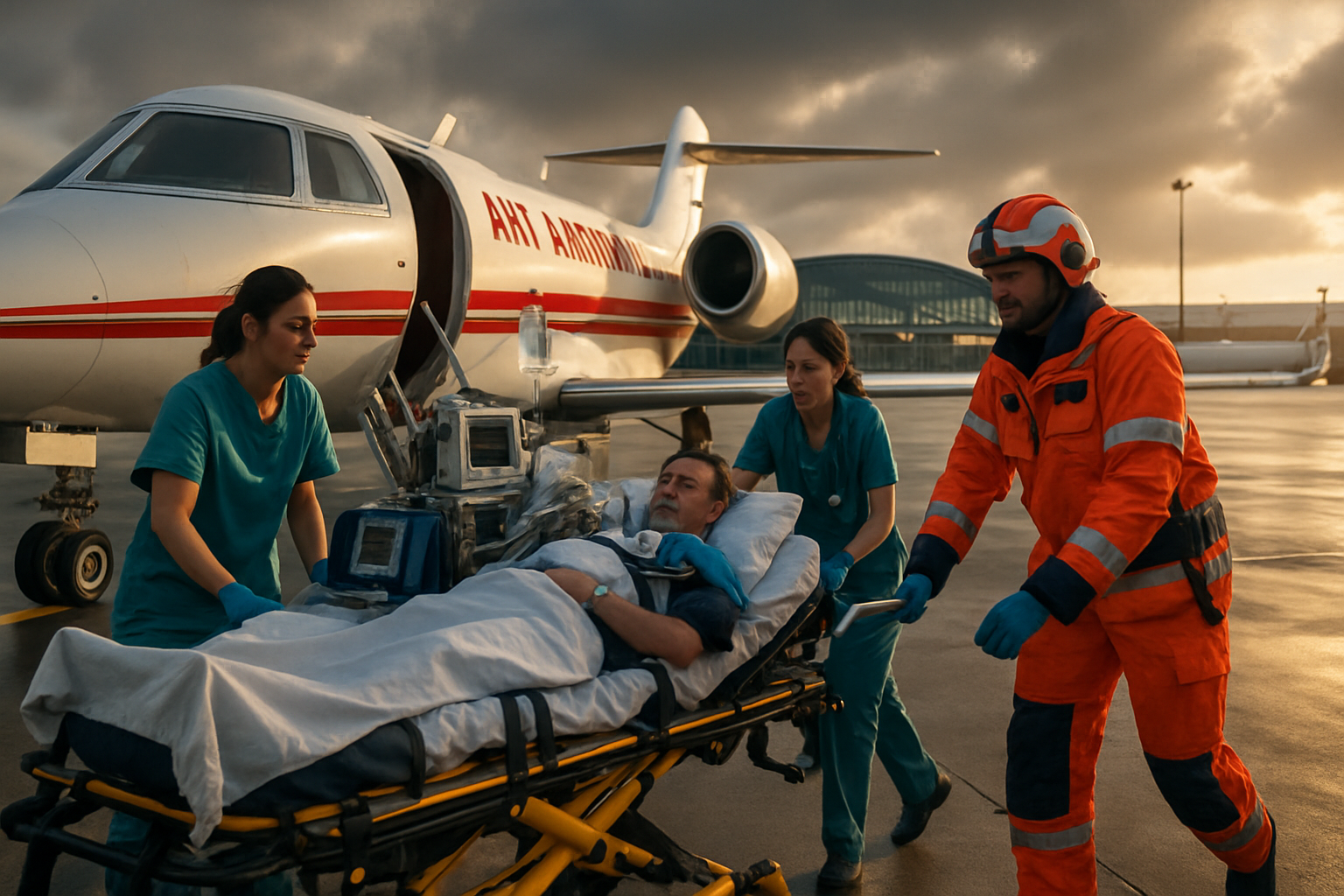
A devastating case in Cyprus has emerged as a stark reminder of the fragile nature of international healthcare systems, as a 38-year-old man lost his chance at a life-saving lung transplant due to critical failures in emergency medical transfer infrastructure.
According to his family's public complaint on the Alpha Enimerosi television programme, the patient was informed on February 2 that a compatible lung had been found in Athens and that he would be transferred immediately to the Onassis Hospital. However, the Health Insurance Organisation's inability to secure an air ambulance within the required timeframe led to the transplant being given to another patient, leaving the Cyprus man with lungs that are 75 percent destroyed due to pulmonary emphysema.
Emergency Transfer System Breakdown
"My son is confined to the house — he cannot go out because he is not allowed to fall ill," his mother said in an emotional television interview. The case has prompted Health Minister investigations and raised serious questions about the reliability of emergency medical transfer systems that countless patients across Europe depend on for life-saving treatments.
The failure occurred despite the Health Insurance Organisation's apparent preparation for the transfer. No air ambulance was available, and commercial flight options proved impossible within the critical timeframe required for organ transplants. This represents a catastrophic breakdown in the medical tourism infrastructure that has become essential for smaller nations providing specialized care to their citizens.
Global Healthcare Workforce Expansion Amid Access Challenges
Paradoxically, while individual patients face life-threatening access barriers, South Korea announced plans to dramatically expand medical education capacity. The Ministry of Health unveiled a comprehensive plan to gradually increase medical school quotas by 668 students annually through 2031, representing the most significant expansion of medical education in the country's history.
This expansion reflects a broader recognition of healthcare workforce shortages that have reached crisis levels globally. The South Korean initiative aims to address both domestic healthcare needs and the country's growing role as a regional medical tourism destination, particularly for complex procedures that require highly trained specialists.
"The shortage of medical professionals has reached a point where it threatens the fundamental accessibility of healthcare services across multiple countries."
— Healthcare Policy Expert
Medical Tourism's Hidden Infrastructure Gaps
The Cyprus case illuminates critical vulnerabilities in the medical tourism ecosystem that have developed over decades. As healthcare systems increasingly rely on cross-border medical arrangements, the infrastructure supporting these life-saving transfers has not kept pace with demand. Air ambulance services, while technically advanced, remain limited in availability and subject to operational constraints that can prove fatal in time-sensitive cases.
Recent memory analysis reveals that medical tourism has undergone significant transformation throughout 2026. China has emerged as a major destination through visa policy relaxation and affordable treatment options, with social media-driven testimonials creating new patterns in patient flows traditionally dominated by Thailand, India, and Mexico. However, the underlying infrastructure challenges remain largely unaddressed.
Regional Disparities in Emergency Care
The contrast between countries investing in medical education expansion and those struggling with basic emergency transfer capabilities highlights growing disparities in healthcare infrastructure development. While South Korea positions itself for increased medical tourism revenue through workforce expansion, smaller nations like Cyprus face critical gaps in the support systems necessary for patient safety.
Healthcare experts note that emergency medical transfer systems require sustained international cooperation and standardized protocols that transcend national boundaries. The current fragmented approach leaves patients vulnerable to precisely the type of system failure experienced in Cyprus.
Economic and Human Cost of System Failures
The economic implications of failed medical transfers extend beyond individual tragedy. Each failed emergency transfer represents lost confidence in cross-border healthcare systems that generate billions in revenue annually. For smaller economies heavily dependent on medical tourism relationships with larger healthcare centers, these failures can undermine years of relationship building and systemic investment.
From a human perspective, the Cyprus case represents thousands of similar situations worldwide where patients requiring specialized care depend on complex logistical arrangements that can fail at critical moments. Healthcare systems have increasingly specialized, creating dependencies on emergency transfer capabilities that often operate without adequate redundancy or backup protocols.
International Coordination Challenges
The case also highlights the need for improved international coordination in emergency medical situations. While the European Union has made significant progress in healthcare cooperation, individual cases like this demonstrate that operational coordination often breaks down when rapid response is required.
Emergency medical transfer protocols require real-time communication between multiple healthcare systems, insurance organizations, transportation providers, and regulatory authorities across national boundaries. The Cyprus case suggests that these complex coordination requirements may exceed current operational capabilities during peak demand periods.
Technology Solutions and Future Prevention
Healthcare technology experts suggest that artificial intelligence and predictive analytics could help prevent similar failures by optimizing emergency transfer resources and providing early warning systems for potential bottlenecks. However, implementing such systems requires international cooperation that has proven challenging to coordinate.
The expansion of medical education programs like South Korea's initiative may help reduce dependency on medical tourism for routine procedures, but complex cases requiring specialized expertise will continue to necessitate cross-border transfers. This reality demands urgent attention to infrastructure resilience and backup protocols.
Call for Systematic Reform
Healthcare advocates argue that the Cyprus case should serve as a catalyst for comprehensive reform of international emergency medical transfer systems. Proposed improvements include mandatory backup protocols for air ambulance services, international emergency transfer insurance, and standardized cross-border medical emergency procedures.
As medical tourism continues to grow globally, with countries like South Korea investing heavily in healthcare workforce expansion, the supporting infrastructure must evolve to match the complexity and urgency of patient needs. The alternative—cases like the Cyprus lung transplant failure—represents an unacceptable human cost for systems that should prioritize patient safety above all other considerations.
The investigation ordered by Cyprus's Health Minister may provide insights into preventing future failures, but broader international cooperation will be essential to address the systemic vulnerabilities that created this tragic situation. For the thousands of patients who depend on cross-border medical arrangements, such reforms cannot come soon enough.