A convergence of groundbreaking medical treatments across Canada, Colombia, and Peru is reshaping patient care through innovative surgical techniques, advanced transplant programs, and cutting-edge reconstructive procedures that promise dramatically improved outcomes for thousands of patients.
The latest developments demonstrate how the global "Therapeutic Revolution of 2026" continues to accelerate, with healthcare systems embracing prevention-first approaches while implementing revolutionary surgical innovations that address complex medical conditions previously considered challenging or impossible to treat effectively.
3D Printing Revolutionizes Complex Jaw Surgery
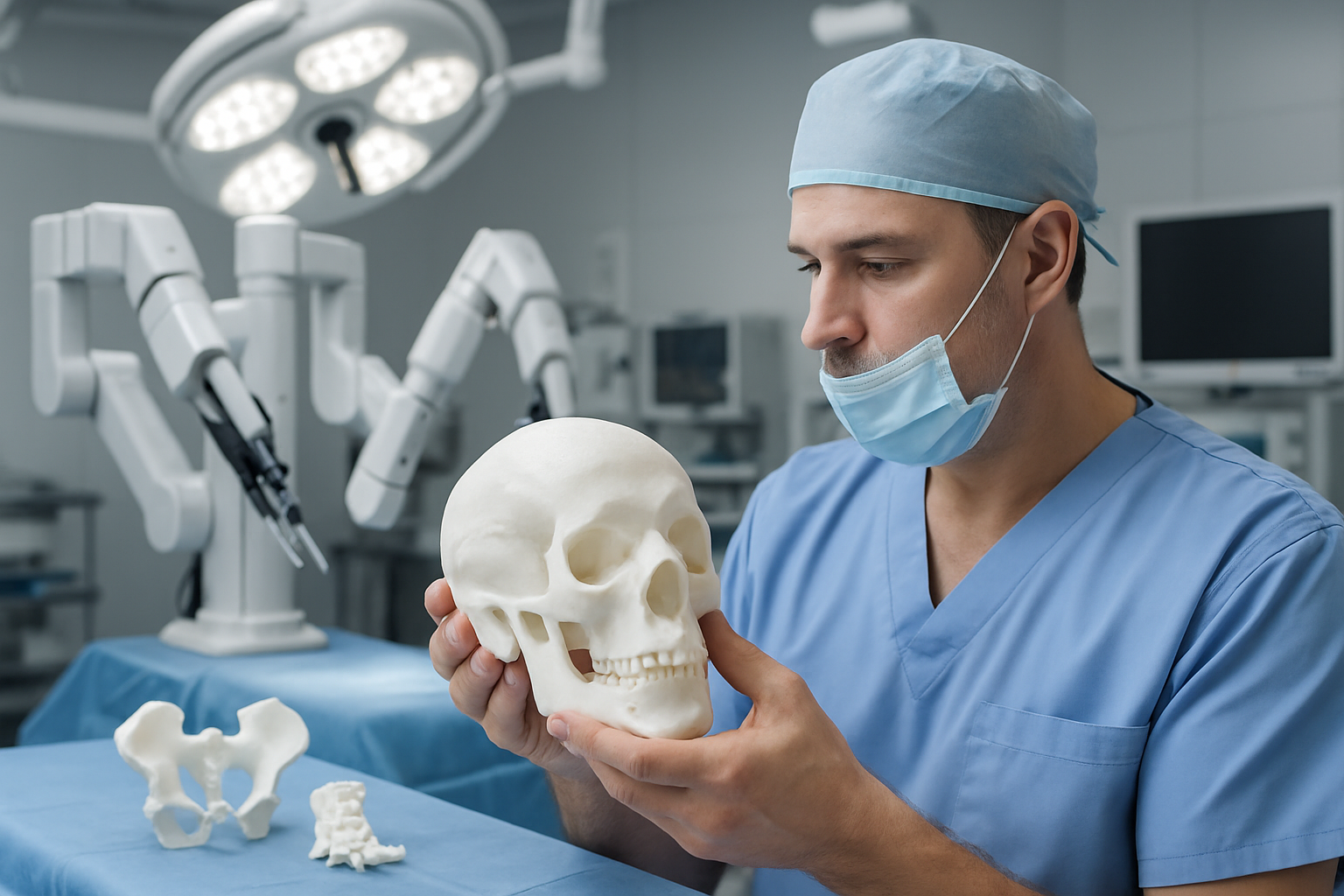
Daniel McClelland, a Winnipeg resident, represents a milestone in precision surgical medicine after successfully undergoing specialized jaw surgery in Saskatchewan following years on Manitoba's waitlist. The procedure utilized advanced 3D printing technology for surgical planning, enabling surgeons to create precise anatomical models of McClelland's skull structure before performing the complex operation.
McClelland, who spent years in constant pain and unable to eat solid foods, now reports being "mostly back to normal" after the groundbreaking procedure. The case demonstrates how 3D printing technology is revolutionizing surgical planning and execution, allowing for unprecedented precision in complex reconstructive procedures.
"This technology provides high precision and enhanced technical capabilities, improving clinical outcomes while minimizing surgical errors and strengthening patient safety."
— Medical Technology Expert
The success highlights the importance of interprovincial healthcare cooperation in Canada, where specialized procedures not available in one province can be accessed through coordinated medical networks. This model is being studied by healthcare systems worldwide as a framework for optimizing scarce specialized medical resources.
Colombia Achieves Record Transplant Success
Colombia's Caribbean region has emerged as a transplantation powerhouse, with Atlántico coordinating a comprehensive network integrating five departments that achieved remarkable results in 2025. The program successfully completed 61 kidney transplants, 246 cornea transplants, and one heart transplant, representing one of the most successful regional organ transplant programs in Latin America.
Despite these achievements, the program faces significant challenges with 430 people currently remaining on waiting lists for kidney transplants across the region. This underscores both the program's success in developing transplant capabilities and the ongoing need for expanded donor programs and public awareness campaigns.
The Colombian model demonstrates how regional cooperation can maximize transplant success rates by coordinating resources across multiple healthcare jurisdictions. The integration of five departments under Atlántico's coordination allows for optimal organ allocation and surgical expertise sharing, resulting in improved patient outcomes and reduced waiting times.
Peru Pioneers Reconstructive Ear Surgery
Hospital Guillermo Almenara in Peru achieved a remarkable surgical milestone by successfully reconstructing an ear for a young university student using his own cartilage. The complex procedure addressed microtia, a congenital condition affecting approximately 1 in 10,000-20,000 births, where the external ear is underdeveloped or absent.
The surgical team utilized the patient's own costal cartilage to create a natural and symmetrical ear structure, representing a sophisticated approach to reconstructive surgery that avoids the complications associated with synthetic implants or donor materials. This autologous approach reduces rejection risks while achieving superior aesthetic and functional outcomes.
The procedure exemplifies Peru's growing reputation for complex reconstructive surgery within South America's expanding healthcare infrastructure. EsSalud's investment in specialized surgical capabilities positions the institution as a regional leader in treating congenital conditions that significantly impact patients' quality of life and social integration.
Global Context: The Therapeutic Revolution of 2026
These medical advances occur within the broader context of the "Therapeutic Revolution of 2026," characterized by unprecedented international cooperation in medical innovation despite traditional multilateral funding challenges. Countries are adopting bilateral partnerships and regional cooperation models that drive medical innovation through peer-to-peer knowledge sharing and coordinated resource allocation.
The convergence of technological innovation with human-centered care represents a fundamental shift from reactive treatment models toward proactive intervention strategies. This approach emphasizes enhancing rather than replacing clinical judgment, ensuring that advanced technologies serve to improve rather than compromise the personal relationships essential to effective medical care.
Economic and Social Implications
The economic implications of these medical advances extend far beyond immediate treatment costs. Prevention-focused strategies demonstrate superior cost-effectiveness compared to reactive treatment models, with initial investments in advanced surgical capabilities justified through long-term savings and improved population health outcomes.
Healthcare systems implementing comprehensive prevention and advanced treatment programs report enhanced community resilience, reduced emergency intervention demands, and improved quality of life metrics. The medical tourism potential of these capabilities creates additional economic multiplier effects while reducing dependence on international medical referrals.
- Reduced long-term healthcare costs through improved surgical outcomes
- Enhanced regional medical reputation attracting international patients
- Improved workforce productivity through better population health
- Strengthened healthcare sovereignty reducing international referral dependency
Implementation Challenges and Success Factors
The successful implementation of these advanced medical treatments requires sustained political commitment, adequate resource allocation, and comprehensive professional training programs. Healthcare systems must balance technological innovation with established safety protocols while ensuring equitable access to advanced treatments regardless of geographic or economic constraints.
Success factors identified across these programs include international cooperation for knowledge sharing, community engagement building trust and cultural appropriateness, and technology integration that enhances rather than replaces human-centered care approaches. The diversity of approaches provides complementary models that strengthen the global healthcare ecosystem through shared learning and adaptation.
Future Trajectory and Global Impact
These developments represent a critical juncture in healthcare evolution, demonstrating how coordinated action can achieve transformative improvements under resource constraints. The integration of precision medicine advances, innovative surgical techniques, and international cooperation provides a foundation for resilient healthcare systems capable of addressing 21st-century health challenges.
The convergence of 3D printing technology, advanced transplant protocols, and reconstructive surgical innovations offers hope for more effective, accessible, and sustainable medical care delivery. As these techniques become more widely adopted and refined, they promise to transform treatment options for millions of patients worldwide facing complex medical conditions.
"The success demonstrates that medical advances can benefit communities regardless of geographic or economic constraints through patient-centered outcomes and international cooperation."
— Global Healthcare Analysis Report
March 2026 represents a transformative period where evidence-based medical innovations are successfully translating into accessible, effective treatments that benefit diverse populations while establishing new standards for international healthcare cooperation and technological integration in medical practice.