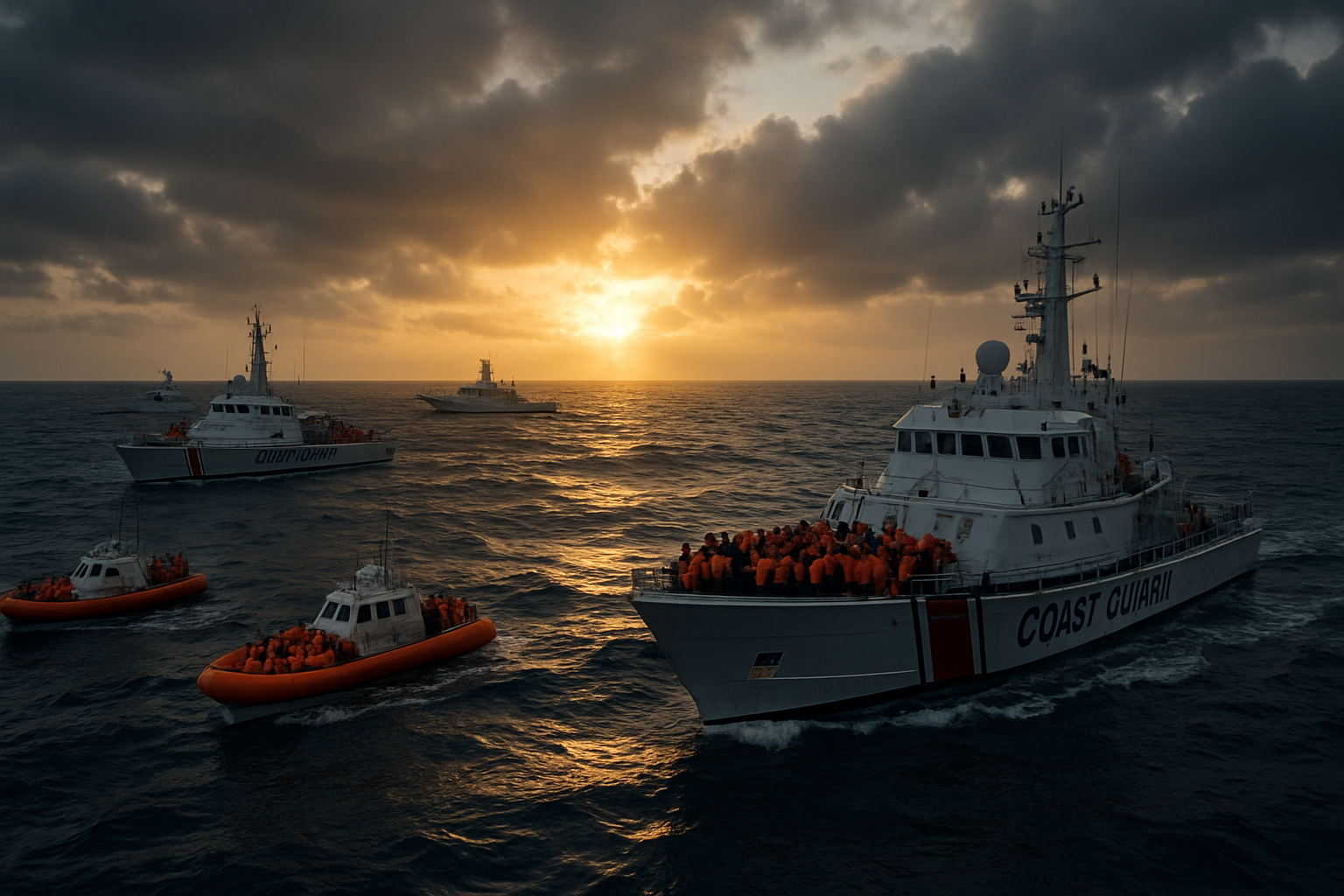
At least 38 migrants have died in a series of boat disasters across Mediterranean and Aegean migration routes within 24 hours, marking one of the deadliest periods for irregular crossings this year and underscoring the persistent humanitarian crisis facing European borders.
The deadliest incident occurred off the coast of Bodrum, Turkey, where 19 Afghan nationals, including a baby, perished when their speedboat capsized in rough Aegean Sea conditions. Turkish Coast Guard Command reported that the vessel, carrying dozens of migrants, ignored repeated orders to stop and attempted to flee at high speed before taking on water and overturning.
Simultaneously, Italian authorities confirmed 19 migrant deaths off Lampedusa island, with the Italian Coast Guard discovering the bodies aboard a vessel in Libyan search and rescue waters south of the Italian territory. An additional 58 survivors were rescued from the same incident, according to reports from multiple European news agencies.
Aegean Sea Tragedy
The Bodrum incident represents the latest deadly crossing in the eastern Aegean, a route that has witnessed increasing fatalities despite European efforts to stem irregular migration. Turkish authorities launched immediate rescue operations supported by helicopters from Izmir, successfully pulling 20 migrants from the water while recovering 18 bodies at the scene. One additional person died later in hospital, bringing the confirmed death toll to 19.
Muğla province governor Idris Akbiyik confirmed that all those aboard were Afghan nationals, highlighting the continued displacement pressures facing Afghanistan under Taliban rule, where 88% of female-headed households cannot meet minimum living requirements according to humanitarian assessments.
Search efforts continue for at least one person still reported missing from the Aegean incident, with Turkish rescue teams maintaining operations despite challenging weather conditions that contributed to the vessel's difficulties.
Lampedusa Deaths
The Lampedusa tragedy occurred in Libyan search and rescue waters, complicating rescue coordination between Italian authorities and Libyan coast guard forces. The incident highlights the complex jurisdictional challenges facing Mediterranean rescue operations, where vessels often traverse multiple maritime zones during crossing attempts.
Italian news agency ANSA reported that the death toll from the Lampedusa area reached 19, with seven individuals in critical condition among the survivors. The victims included two children, according to Repubblica reports, adding to the growing number of minors who have perished attempting Mediterranean crossings this year.
Croatian River Rescue
In a separate incident demonstrating the expansion of irregular migration routes beyond traditional Mediterranean pathways, Croatian emergency services conducted a major overnight rescue operation on the Sava River in eastern Croatia. Approximately 30 migrants were saved after their boats capsized, though specific casualty figures from this incident remain unclear.
The Croatian operation highlights how migration pressures are affecting new geographic areas as traditional routes face increased enforcement, forcing migrants to attempt increasingly dangerous alternatives including river crossings and overland routes through the Balkans.
Historical Context of Mediterranean Crisis
These latest tragedies occur against the backdrop of significant policy shifts across Europe regarding migration and asylum procedures. The European Parliament approved historic asylum changes in February 2026, allowing deportation to "safe" third countries through a center-right and far-right alliance, representing a fundamental shift from protection-based to deterrence-focused principles.
Greece is currently leading a coalition with Germany, Netherlands, Austria, and Denmark to establish migrant return centers in Africa for rejected asylum seekers whose home countries refuse readmission. This enhanced cooperation mechanism enables smaller member state groups to advance policies without requiring unanimous EU consent, bypassing traditional humanitarian safeguards.
The policy transformation comes as EU asylum applications declined 19% in 2025, with Germany experiencing a 31% reduction. However, the EU Asylum Agency has warned of potential "refugee flows without precedent" if regional conflicts, particularly involving Iran's 84+ million population, escalate further.
Dangerous Route Persistence
Despite increasing enforcement measures and policy restrictions, dangerous Mediterranean crossings continue at deadly rates. Recent memory includes the February 2026 Aegean Sea collision near Chios island that killed 15 migrants, and a March incident where Greek coast guard rescued 26 migrants after six days adrift, during which 22 others died according to survivor accounts.
"The death toll on Mediterranean routes has more than doubled in the first two months of 2026 compared to the previous year."
— Portuguese Maritime Reports
International observers note that restrictive policies may be redirecting rather than reducing dangerous journeys, as migrants seek alternative routes when legal pathways are restricted. The Belgian coast has recently seen increased activity from migrants attempting to reach the UK, while new routes through Algeria and Turkey have emerged as Spain reports a surge in what authorities call the "Turkish route."
Technological and Enforcement Responses
European authorities have implemented increasingly sophisticated border control measures, including the EU Entry/Exit System (EES) that has detected over 4,000 overstayers in its first four months of operation. However, these technological successes have created processing delays, with airlines warning of four-hour queues during summer 2026 that may require partial system suspensions.
The enforcement evolution includes enhanced cooperation between European nations, with unprecedented naval coordination demonstrated during recent Mediterranean crises. Countries have deployed advanced missile defense systems and coordinated rescue operations, particularly around Cyprus following regional security concerns.
Humanitarian and Legal Challenges
Human rights organizations are preparing legal challenges against external processing arrangements, citing violations of non-refoulement principles and international humanitarian law. The systematic detention of hundreds of Afghan migrants by Pakistani police amid military confrontations adds another layer of complexity to displacement pressures affecting Afghan populations.
Climate displacement continues to mount pressure on existing asylum categories, with January 2026 marking the 19th consecutive month that global temperatures exceeded 1.5°C above pre-industrial levels. Environmental migration experts warn that current asylum frameworks are inadequate for handling climate-induced displacement.
Economic Contradictions
The restrictive immigration policies create tensions with severe labor shortages in healthcare, agriculture, and construction sectors across Europe. Countries like Albania have successfully integrated 27,000 foreign nationals to address workforce gaps, contrasting sharply with the restrictive approaches adopted elsewhere that ignore economic realities.
The Bertelsmann Foundation found that Germany requires 288,000 foreign workers annually to prevent a 10% workforce contraction by 2040, highlighting the contradiction between demographic needs and current policy directions.
Regional and Global Implications
The Mediterranean migration crisis extends beyond European borders, with implications for international cooperation frameworks and crisis management approaches. Recent developments include Guinea launching investigations into German expulsions of its citizens, and Mexico protesting the deaths of 13 nationals in ICE custody, demonstrating how migration policies create broader diplomatic tensions.
Enhanced cooperation mechanisms pioneered in European migration policy could influence similar coalitions worldwide, establishing precedents for how democratic nations balance humanitarian commitments with security objectives. The success or failure of current approaches will likely influence international migration management strategies for decades ahead.
"The European response demonstrates the necessity and capability for independent action when continental security is threatened."
— European Strategic Autonomy Assessment
As investigations continue into the specific circumstances of these latest tragedies, the incidents underscore the urgent need for comprehensive approaches that address root causes of displacement while maintaining safe and legal pathways for those fleeing persecution and conflict. The current policy trajectory represents a critical test of whether 21st-century democratic institutions can maintain humanitarian principles while adapting to complex migration realities driven by climate change, conflicts, and economic disparities.
The coming months will likely prove decisive in determining whether European cooperation can provide frameworks for effective crisis management or whether the current restrictive approach will intensify rather than resolve the underlying humanitarian challenges driving these dangerous crossings.