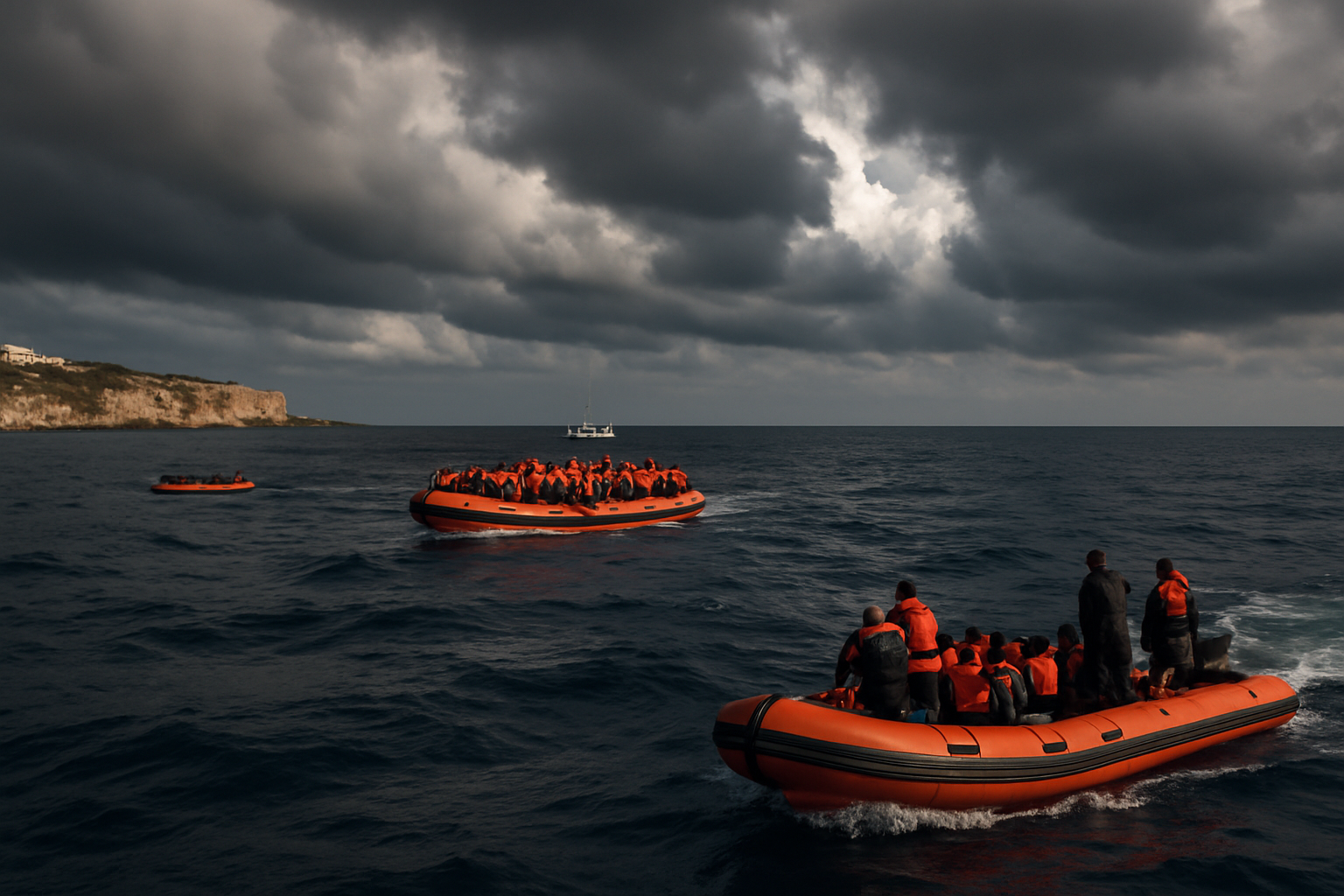
At least 22 migrants perished after spending six harrowing days adrift in the Mediterranean Sea off the Greek coast, survivors told authorities following their rescue by Greek coast guard forces on Friday. The tragedy underscores the escalating humanitarian crisis on Mediterranean migration routes, where the death toll has more than doubled during the first two months of 2026.
Greek coast guard vessels rescued 26 survivors, including one woman and one minor, from a rubber boat that had been drifting helplessly in dangerous waters for nearly a week. The survivors, who were attempting to reach Europe from North Africa, provided harrowing accounts of the ordeal that claimed nearly half their companions' lives.
According to multiple international sources, the rescued migrants told authorities that 22 people died during the treacherous crossing. In a particularly disturbing detail reported by Portuguese media, survivors revealed that the bodies of those who perished were thrown overboard on orders from traffickers accompanying the vessel.
Dramatic Increase in Mediterranean Deaths
This latest tragedy comes amid a significant surge in migrant deaths on Mediterranean routes. French media reports indicate that the number of migrants who died attempting to reach European Union territory more than doubled during the first two months of 2026, highlighting the increasing desperation driving people to undertake these perilous journeys.
The incident adds to a growing list of documented tragedies in the region. Just weeks earlier, in February 2026, another devastating collision near Chios island resulted in 15 migrant deaths when a speedboat carrying migrants collided with a Greek coast guard patrol vessel in the eastern Aegean Sea. These incidents reflect the dangerous nature of the Eastern Mediterranean migration route between Turkey and the Greek islands.
The Human Cost of Policy Changes
The tragedy occurs against the backdrop of significant shifts in European migration policy. Recent developments include the European Parliament's historic February 2026 asylum procedure changes, which allow deportation to "safe" third countries through a center-right and far-right alliance, representing a fundamental shift from protection-based to deterrence-focused principles.
"The number of migrants who died trying to reach EU soil more than doubled during the first two months of 2026."
— France 24 International News Report
Greece is currently leading a coalition with Germany, Netherlands, Austria, and Denmark to establish migrant return centers in Africa for rejected asylum seekers whose home countries refuse readmission. This initiative utilizes enhanced cooperation mechanisms that enable smaller EU member states to advance policies without unanimous consent from all 27 member nations.
Broader European Context
The incident highlights the complex challenges facing European migration policy. While overall EU asylum applications declined 19% in 2025 according to the European Union Agency for Asylum (EUAA), with Germany experiencing an even steeper 31% reduction, maritime routes remain deadly as people continue to seek alternative pathways to safety and opportunity.
Public opinion polling shows 89% of Europeans demand greater EU unity on migration issues, while 72% express border security concerns, according to recent Eurobarometer surveys. This creates political pressure for more restrictive approaches, even as humanitarian organizations warn of the human costs of deterrence-focused policies.
Climate and Political Pressures
The continuing stream of migrants attempting dangerous sea crossings occurs during a period of unprecedented global challenges. March 2026 marks the 19th consecutive month that global temperatures have exceeded 1.5°C above pre-industrial levels, the longest sustained warming streak in recorded history. This climate crisis is creating new displacement pressures that traditional asylum categories struggle to address.
Additionally, ongoing conflicts and political instability in regions including Afghanistan, Syria, and parts of Africa continue to drive people from their homes. The complexity of these overlapping crises – environmental, political, and economic – creates a challenging landscape for both migrants seeking safety and European policymakers attempting to manage migration flows.
Rescue Operations and Response
The Greek coast guard's successful rescue of 26 survivors demonstrates the ongoing commitment of Mediterranean rescue operations, despite policy debates about deterrence versus humanitarian assistance. Coast guard officials worked to provide immediate medical attention and safe harbor for the survivors.
Italian media confirmed that among those saved were vulnerable individuals including women and children, emphasizing the human dimension of these tragedies beyond immigration statistics. The rescue operation required coordination between multiple Greek vessels and represented the kind of life-saving work that continues daily across Mediterranean waters.
Looking Forward
This latest tragedy serves as a stark reminder of the human costs involved in current migration dynamics. As European nations continue to debate and implement new policies aimed at managing migration flows, the deadly reality of Mediterranean crossings persists.
The incident underscores the need for comprehensive approaches that address both the root causes driving migration and the immediate humanitarian imperative to save lives at sea. With global displacement pressures expected to intensify due to climate change and ongoing conflicts, the international community faces mounting pressure to develop sustainable solutions that balance border security concerns with fundamental humanitarian obligations.
As rescue operations continue across the Mediterranean and policy debates evolve in European capitals, the memories of the 22 lives lost during six days at sea serve as a sobering reminder that behind every policy discussion and statistic are real human beings seeking safety, opportunity, and hope for a better future.