At least 990 people have died or gone missing in the Mediterranean Sea since January 2026, according to the International Organization for Migration (IOM), marking one of the deadliest starts to a year since record keeping began and representing more than double the casualties recorded in the same period last year.
The devastating toll comes as European Union asylum policies undergo their most significant transformation since the 2015-16 refugee crisis, with the European Parliament's February 2026 approval of external processing centers through a center-right and far-right alliance fundamentally shifting from protection-based to deterrence-focused principles.
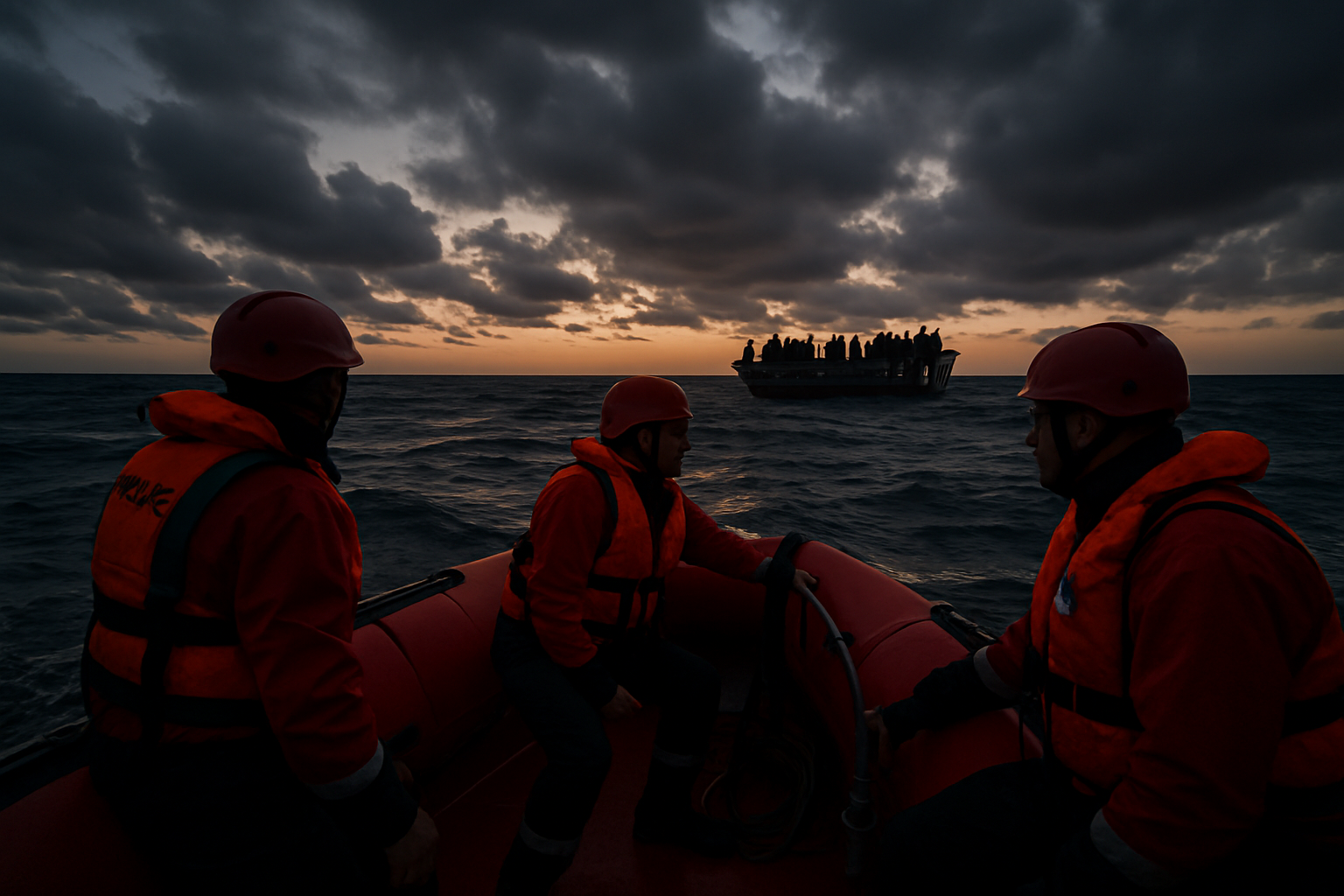
The latest tragedy occurred on April 5, when more than 70 migrants died or went missing after their wooden boat carrying 105 people capsized in the central Mediterranean near Libya. NGOs Mediterranea Saving Humans and Sea-Watch rescued 32 survivors, with video footage from Sea-Watch's surveillance aircraft Sea-Bird 2 showing survivors clinging to the overturned hull.
Pattern of Deadly Crossings
The death toll represents part of a devastating pattern that has emerged in 2026. On April 1, at least 38 migrants died in multiple boat disasters across Mediterranean and Aegean routes within 24 hours, including 19 Afghan nationals who perished when their speedboat capsized in the Aegean Sea near Bodrum, Turkey, and 19 migrants found dead in a vessel in Libyan search and rescue waters south of Lampedusa.
Earlier tragedies include the March 28 incident where 22 migrants died after six days adrift at sea off the Greek coast, with survivors reporting that bodies were thrown overboard by order of traffickers. The February collision near Chios island claimed 15 lives when a migrant boat collided with a Greek coast guard patrol vessel.
"This is one of the deadliest starts to a year since we began keeping records. The human cost of these dangerous crossings continues to mount as people attempt increasingly perilous routes."
— International Organization for Migration Spokesperson
European Policy Transformation
The surge in deaths occurs against the backdrop of Europe's most significant migration policy overhaul in decades. The European Parliament's February 2026 historic asylum changes allow deportation to "safe" third countries through enhanced cooperation mechanisms that enable smaller member state groups to advance policies without unanimous EU consent.
Greece is leading a coalition with Germany, Netherlands, Austria, and Denmark to establish migrant "return centers" in Africa for rejected asylum seekers whose home countries refuse readmission. The initiative builds on Italy's Albanian processing model, which serves as a template for external deportation centers.
Despite the policy shift toward deterrence, EU asylum applications declined by 19% in 2025 to 669,400, yet death tolls on dangerous routes have surged, suggesting that restrictive policies may redirect rather than reduce perilous journeys.
Climate and Demographic Pressures
The crisis unfolds as March 2026 marked the 19th consecutive month of global temperatures exceeding 1.5°C above pre-industrial levels – the longest sustained warming streak in recorded history. Climate displacement experts warn that current asylum categories are inadequate for handling climate-induced displacement, adding complexity to already strained systems.
Paradoxically, European demographic challenges create tension between migration restrictions and economic needs. Germany's Bertelsmann Foundation research shows the country requires 288,000 foreign workers annually to prevent a 10% workforce contraction by 2040, while countries like Albania have successfully integrated 27,000 foreign nationals to address labor shortages.
Technology and Enforcement
The EU's Entry/Exit System (EES) detected more than 4,000 overstayers in its first four months of operation, exceeding expectations but creating processing delays that require partial summer suspensions. The biometric system represents the largest border control technological advancement in decades, yet implementation challenges persist at older airports during high-volume periods.
Enhanced cooperation mechanisms have enabled policy advancement while bypassing traditional humanitarian safeguards, with 89% of Europeans demanding greater EU unity and 72% expressing border security concerns according to Eurobarometer polling.
Humanitarian Response and Challenges
Search and rescue operations continue to strain NGO and coastal resources across the Mediterranean. Recent operations have involved multiple nationalities of vessels and aircraft, with rescue boats often operating in dangerous conditions to reach migrants in distress.
The International Organization for Migration has documented systematic violations of the October 2025 Gaza ceasefire, with over 1,600 violations resulting in 680+ Palestinian deaths during the supposed peace period. Meanwhile, the Rafah crossing remains severely restricted, limiting medical evacuations for more than 20,000 Palestinians awaiting treatment.
Legal and Human Rights Concerns
Human rights organizations are preparing legal challenges over non-refoulement principle violations and international humanitarian law compliance concerns. The systematic erosion of traditional asylum protections through external processing arrangements represents the most significant departure from post-World War II international refugee protection principles.
Constitutional challenges are expected in multiple jurisdictions as the enhanced cooperation mechanisms enable controversial policy advancement without traditional safeguards.
Global Template Implications
International observers are closely monitoring the European external processing experience as a potential template for how developed democracies manage complex migration flows in the 21st century. The success or failure of current approaches will influence international migration management strategies for decades ahead.
The crisis represents a critical test of whether democratic institutions can maintain humanitarian commitments while adapting to contemporary realities of climate change, conflicts, and economic disparities. As the death toll approaches 1,000, the urgency for comprehensive solutions that address both border security and humanitarian protection has never been greater.
"We are witnessing a fundamental transformation in how Europe approaches migration, but the human cost continues to mount. This is a critical test of our values and our ability to protect the most vulnerable while managing legitimate security concerns."
— European Migration Policy Expert
As 2026 progresses, the Mediterranean migration crisis stands as a stark reminder of the ongoing challenges facing international migration management, with nearly 1,000 lives lost representing individual tragedies within a broader policy transformation that will shape European and global approaches to migration for years to come.