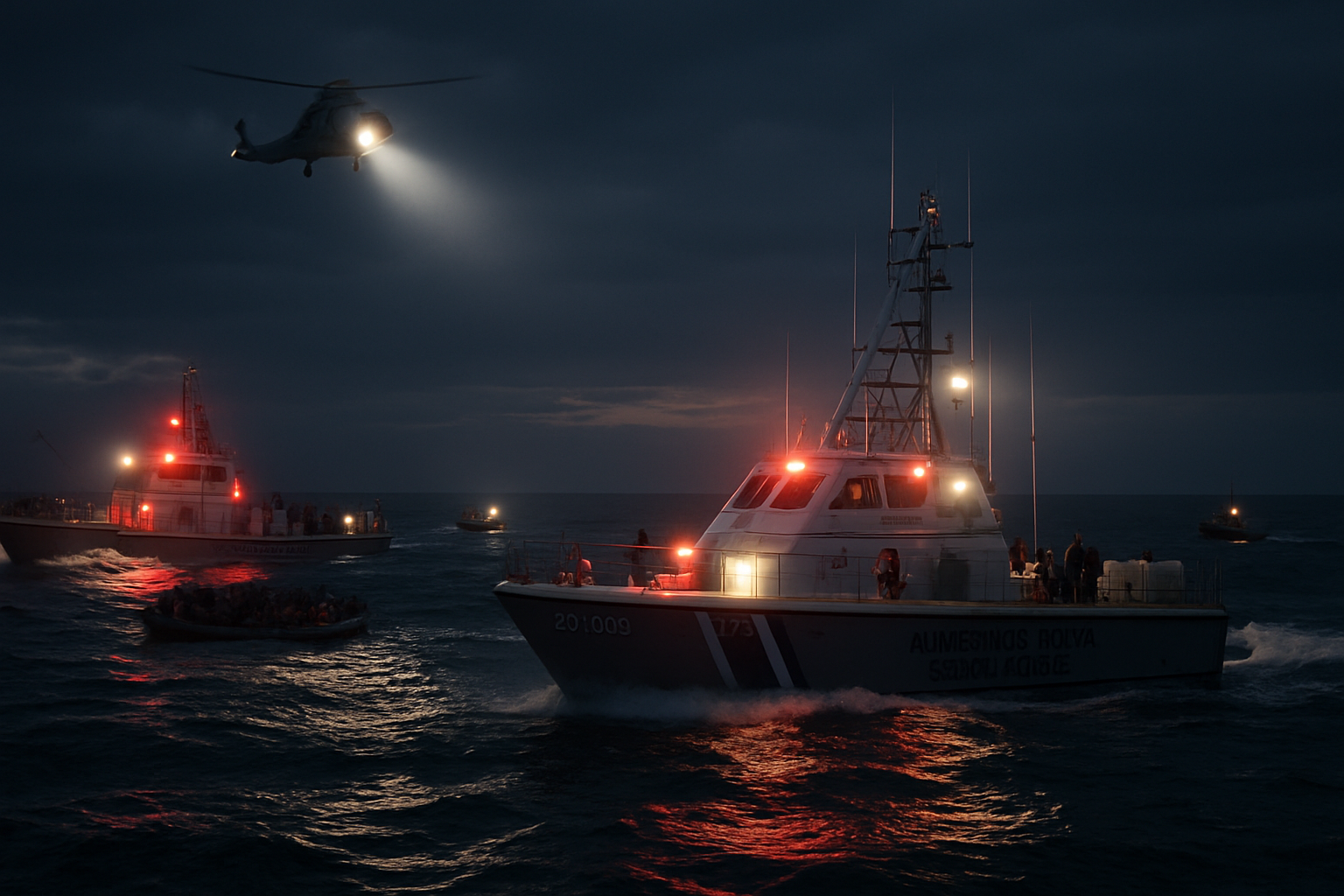
At least 14 migrants died after a collision between a Greek coastguard patrol vessel and a boat carrying migrants in the Aegean Sea near the island of Chios, according to Greek authorities. The tragic incident occurred on Tuesday evening, prompting an extensive search and rescue operation that continues as officials fear more casualties.
The collision took place in waters off the eastern Greek island of Chios, located in the eastern part of the Aegean Sea. Initial reports from multiple international sources indicate the death toll ranges from 14 to 15 people, with some discrepancies in official counts as rescue operations remain active.
Rescue Operations and Casualties
Greek coastguard officials confirmed that 26 people have been successfully rescued from the water following the collision. However, the fate of additional passengers who may have been aboard the migrant vessel remains unclear, with search and rescue teams continuing to scour the area for potential survivors or additional victims.
Two members of the Greek coastguard crew were also injured in the incident and have been transported to local hospitals for medical treatment. The condition of the coastguard personnel has not been disclosed by authorities.
"This is a tragic incident that demonstrates the continued dangers facing migrants attempting to cross the Mediterranean and Aegean seas in search of safety."
— Maritime Safety Expert
The collision occurred during what appears to have been a routine patrol operation by the Greek coastguard, though the exact circumstances leading to the incident remain under investigation.
Investigation Launched
Greek authorities have launched a comprehensive investigation into the circumstances surrounding the deadly collision. The incident adds to growing concerns about maritime safety in the region, where dangerous crossings by migrants seeking to reach European Union territory have become increasingly common.
The Aegean Sea route between Turkey and Greece has long been a primary pathway for migrants and asylum seekers attempting to reach Europe. The waters around Chios, in particular, have witnessed numerous incidents involving migrant boats due to the island's proximity to the Turkish coast.
Broader Migration Context
Tuesday's tragedy underscores the ongoing humanitarian crisis in the Mediterranean and Aegean seas, where thousands of migrants risk their lives annually in overcrowded and often unseaworthy vessels. The European Union's external borders, particularly in Greece and Italy, continue to serve as primary entry points for people fleeing conflict, persecution, and economic hardship in the Middle East, Africa, and Asia.
The incident comes amid heightened tensions over migration policy across Europe, with various member states implementing different approaches to border control and migrant assistance. Greece, as a frontline state, has faced particular challenges in managing the influx of migrants while ensuring both border security and humanitarian obligations.
Recent Migration Trends
The Eastern Mediterranean route, which includes crossings from Turkey to Greek islands like Chios, remains one of the most dangerous migration pathways to Europe. Weather conditions, overcrowded boats, and the challenging maritime environment contribute to the risks faced by those attempting the journey.
International organizations, including the United Nations High Commissioner for Refugees (UNHCR) and the International Organization for Migration (IOM), have repeatedly called for safer, legal pathways for migration to prevent such tragedies.
Emergency Response
The Greek coastguard mobilized significant resources for the search and rescue operation, deploying multiple vessels and coordinating with other maritime authorities in the region. The scope of the operation reflects both the severity of the incident and the commitment to locating any additional survivors or victims.
Emergency medical teams have been dispatched to treat the rescued individuals, many of whom are likely to be suffering from hypothermia and other conditions related to their time in the cold February waters of the Aegean Sea.
International Response
The tragic incident has drawn attention from international media and humanitarian organizations across Europe and beyond. News outlets from Denmark, Germany, Norway, Poland, Qatar, and Venezuela have all reported on the collision, highlighting the global significance of Mediterranean migration issues.
European Union officials are expected to address the incident as part of ongoing discussions about migration policy and border management. The tragedy may also influence debates about the effectiveness of current search and rescue protocols in European waters.
Looking Forward
As investigations continue and rescue operations persist, the incident serves as a stark reminder of the human cost of irregular migration in European waters. The collision near Chios represents another chapter in the ongoing humanitarian challenge facing the European Union as it seeks to balance border security with the protection of vulnerable migrants seeking safety and opportunity.
Authorities are expected to release additional details about the investigation as it progresses, including potential changes to maritime patrol procedures to prevent similar incidents in the future. The focus now remains on completing rescue operations and providing appropriate care for survivors while honoring the memory of those who lost their lives in Tuesday's tragic collision.