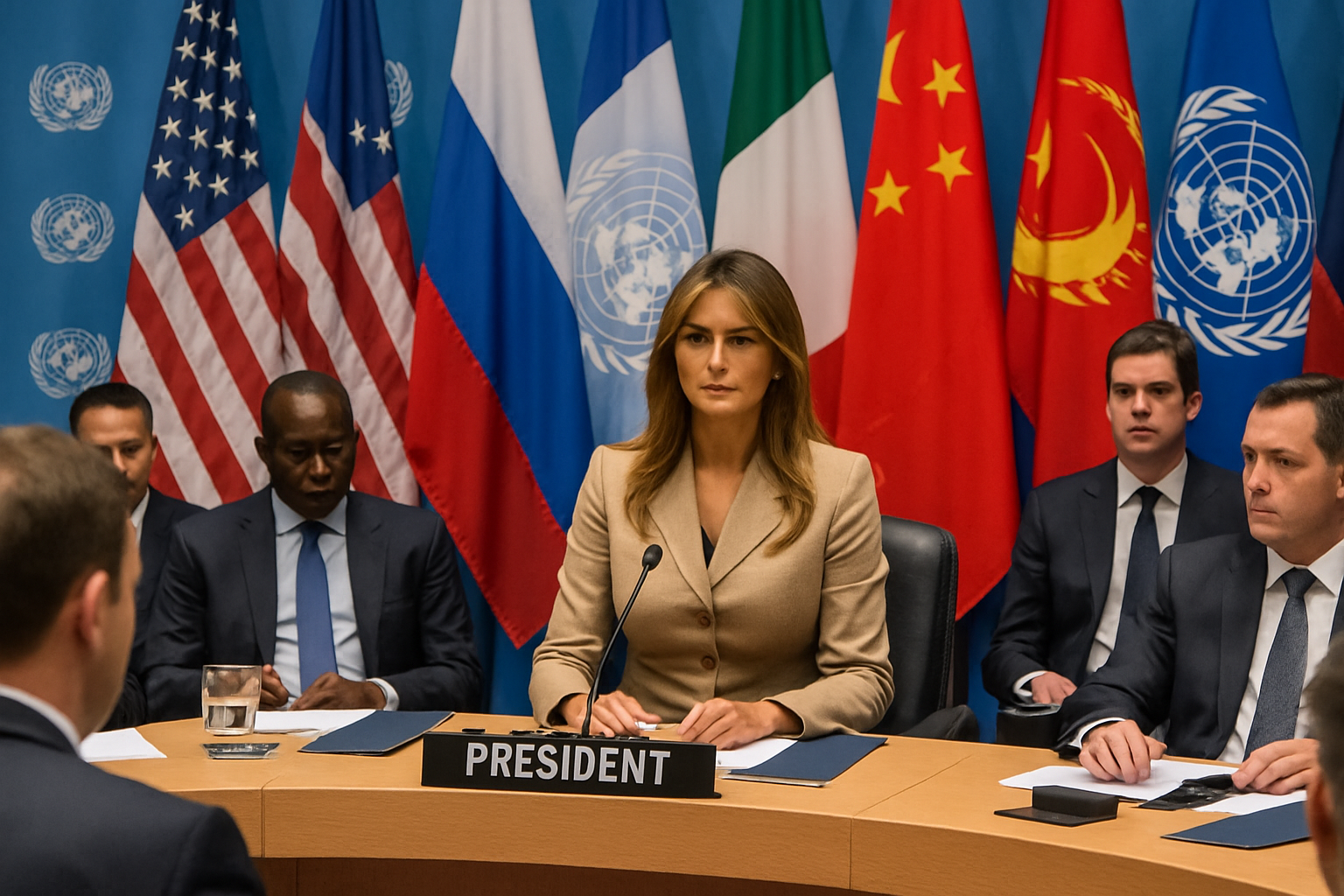
First Lady Melania Trump made history on March 2, 2026, becoming the first spouse of a world leader to preside over a United Nations Security Council meeting, chairing a session focused on protecting children victims of war during America's rotating presidency of the Council.
The unprecedented diplomatic event took place just two days after the beginning of the Israeli-American offensive against Iran, adding significant geopolitical weight to Mrs. Trump's advocacy for the world's most vulnerable children. Her appearance was broadly welcomed, even receiving acknowledgment from Russia, which "saluted" her presence despite ongoing tensions.
Breaking Diplomatic Protocol
Never before in the UN's 81-year history has the spouse of a serving world leader assumed such a prominent role in the Security Council, the organization's most powerful body responsible for maintaining international peace and security. Mrs. Trump's chairmanship represents a significant departure from traditional diplomatic protocols and marks an evolution in how First Ladies engage in international diplomacy beyond ceremonial functions.
According to our memory records, this development had been anticipated since February 26, 2026, when the White House announced Mrs. Trump would chair the meeting during the US monthly rotating presidency to emphasize education's role in advancing tolerance and world peace. The session's theme addressed "Children, technology and education in conflict," focusing on how educational systems can serve as foundations for conflict prevention and resolution.
"The United States stands with all children around the world. I hope that soon, peace will be with you."
— Melania Trump, First Lady of the United States
Unprecedented International Reception
Despite the highly charged international atmosphere following the recent military operations in Iran, Mrs. Trump received what sources described as a "warm reception" from the international community. Most remarkably, even Russia, typically critical of US diplomatic initiatives, acknowledged her presence positively, demonstrating the universal appeal of child protection advocacy.
The First Lady's speech delivered a powerful message about the importance of educational continuity during conflicts while addressing how technology can both maintain learning opportunities and protect children from digital threats. Her remarks came at a critical moment when global conflicts have displaced millions of children from their educational environments.
Global Context and Timing
Mrs. Trump's historic chairmanship occurred against the backdrop of intensifying global conflicts, including the ongoing Ukraine war approaching its fourth anniversary and the recent escalation in the Middle East. The timing underscored the urgent need for international attention to children's rights during wartime, a principle gaining increasing recognition from humanitarian organizations worldwide.
The session took place during a period of heightened international tensions, with ongoing conflicts in Ukraine, the Middle East, and other regions affecting millions of children. According to Ukrainian officials, 684 children have been killed since the beginning of Russia's full-scale invasion, highlighting the devastating impact of modern warfare on civilian populations.
Educational Focus Amid Crisis
The meeting's central theme emphasized education as a fundamental tool for peace-building and conflict prevention. Mrs. Trump addressed how educational systems can maintain continuity even in conflict zones while protecting children from both physical and digital threats. This approach aligns with broader international efforts to ensure children's right to education is maintained even during the most challenging circumstances.
Technology's dual role - as both a solution for maintaining educational access and a potential threat requiring child protection measures - formed a key component of the discussions. The session explored innovative approaches to remote learning while addressing cybersecurity concerns specific to vulnerable child populations.
Diplomatic Innovation and Future Implications
Mrs. Trump's appointment represents what diplomatic observers are calling a "business approach" to international relations, departing from traditional frameworks and potentially reshaping how international organizations engage with global challenges through diverse voices and perspectives.
This development could influence how other nations approach the roles of spouses of world leaders in international diplomacy, setting a new precedent for their involvement in formal diplomatic proceedings. The success of this initiative may impact future non-traditional diplomatic appointments and the evolving role of First Ladies in international affairs.
Historical Significance
March 2, 2026, marks a watershed moment in UN history, demonstrating potential new channels for advocacy on critical global issues through innovative diplomatic approaches. The event represents the first time a spouse of a serving world leader has been granted authority to preside over the Security Council, breaking traditional diplomatic protocols that have governed international relations for decades.
The precedent established by Mrs. Trump's chairmanship could reshape how international institutions engage with global challenges, potentially opening new pathways for advocacy on humanitarian issues. Her focus on children's education and protection during conflicts addresses one of the most pressing humanitarian concerns of our time.
International Response and Support
The broad international support for Mrs. Trump's initiative, including the surprising acknowledgment from Russia, suggests that child protection advocacy transcends typical geopolitical divisions. This universal appeal demonstrates the potential for humanitarian issues to serve as bridges in an increasingly polarized international environment.
The positive reception from the international community, despite ongoing tensions in various global conflicts, underscores the unique position that child welfare advocacy holds in international diplomacy. Mrs. Trump's ability to garner support across traditional diplomatic divides highlights the universal nature of protecting children's rights and education.
Looking Forward
As conflicts continue to rage across multiple regions, affecting millions of children worldwide, Mrs. Trump's historic chairmanship brings renewed international attention to these vulnerable populations. The session's focus on maintaining educational opportunities during conflicts and protecting children from emerging digital threats addresses critical contemporary challenges.
The success of this unprecedented diplomatic engagement may pave the way for similar initiatives, demonstrating how non-traditional diplomatic approaches can effectively address urgent humanitarian concerns. Mrs. Trump's chairmanship of the UN Security Council represents not just a historic first, but potentially a new model for engaging international institutions in addressing global challenges through innovative and inclusive diplomatic practices.