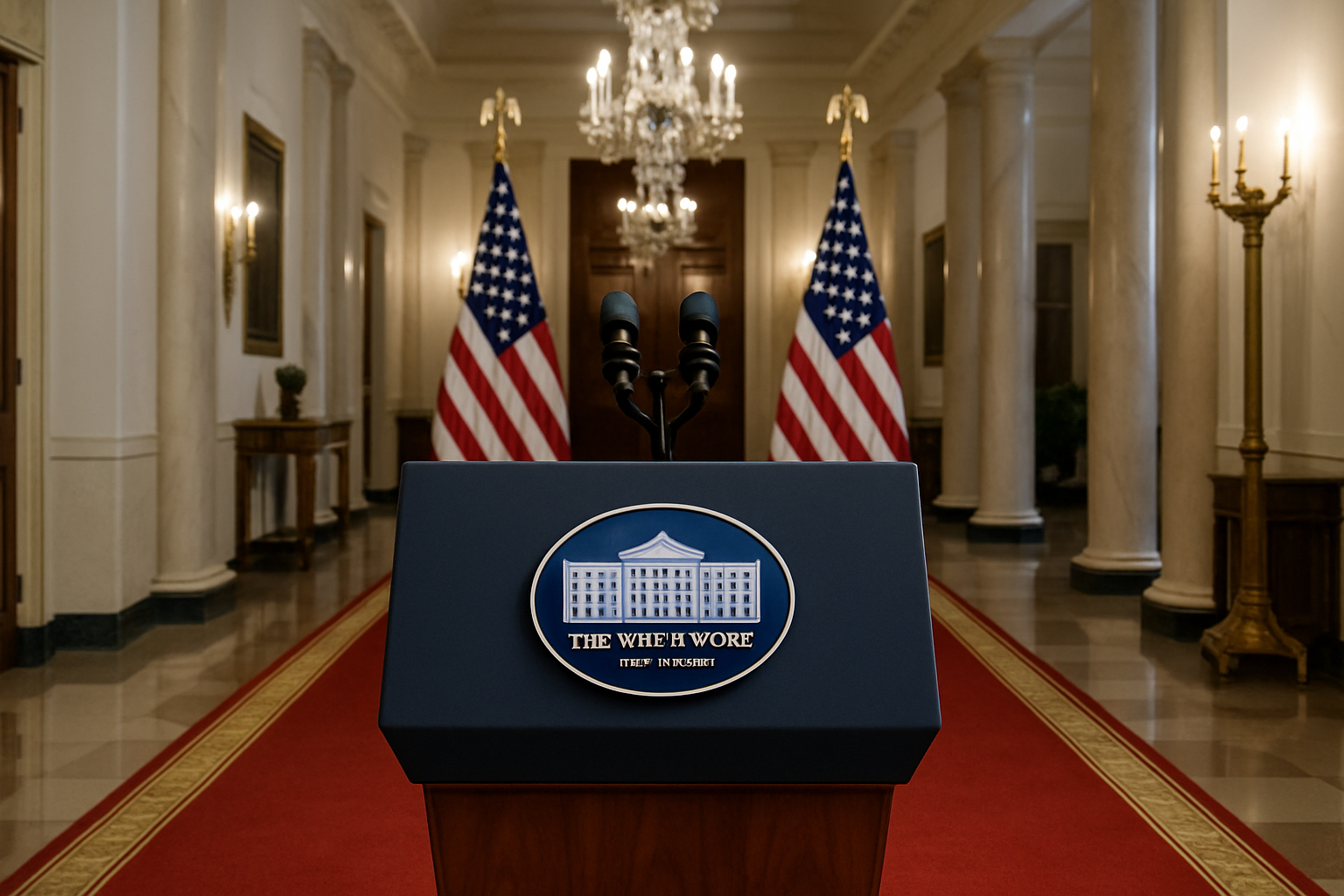
First Lady Melania Trump made an unprecedented public statement from the White House on Thursday, categorically denying any connection to Jeffrey Epstein and calling allegations linking her to the deceased financier "completely baseless lies."
The surprise appearance at the White House Grand Foyer marked a dramatic departure from the First Lady's traditionally reserved approach to public controversies. Speaking directly to cameras, Trump declared that "the lies that associate me with this infamous character that is Jeffrey Epstein must stop today."
President Trump later told reporters he was "completely surprised" by his wife's unsolicited public statement, revealing he had not been informed in advance of the address that was broadcast from the White House.
Breaking Traditional First Lady Protocol
The statement represents a significant break from traditional First Lady protocol, which typically avoids direct engagement with sensitive political matters. Trump's decision to address the Epstein controversy head-on demonstrates the mounting pressure faced by the administration as international investigations continue to unfold.
According to multiple international sources, Trump specifically stated "I was never friends with Jeffrey Epstein" and positioned herself as an advocate for survivors, calling for Congress to hold public hearings centered on victims of Epstein's crimes.
"These women deserve to be heard, and their stories must be told."
— Melania Trump, First Lady
The First Lady also claimed that statements about her are "financially and politically motivated," suggesting the allegations are part of broader political attacks against the Trump administration.
Global Context of Ongoing Investigations
Melania Trump's statement comes amid what European law enforcement has described as the "largest international elite criminal network exposure in recent memory," with active investigations spanning six countries.
The international scope includes ongoing proceedings against Norwegian Crown Princess Mette-Marit, who faces potential criminal charges after being mentioned over 1,000 times in Department of Justice documents. In the UK, the government continues to grapple with fallout from the Peter Mandelson ambassador appointment scandal, while Baltic states coordinate investigations into modeling agency trafficking networks.
Recent months have seen a wave of high-profile resignations, including Goldman Sachs' top lawyer Kathy Ruemmler and DP World CEO Sultan Ahmed bin Sulayem, both connected to the expanding Epstein document revelations.
Trump Administration Under Scrutiny
The administration has faced mounting pressure following revelations in the DOJ's Epstein file releases. An NPR investigation revealed that the Department of Justice allegedly withheld 53 pages of Trump-related materials, including interviews with a victim alleging sexual assault by both Trump and Epstein when she was a minor.
Commerce Secretary Howard Lutnick previously admitted to visiting Epstein's private island in 2012, describing it as a "family vacation," while facing calls for resignation from both parties. FBI documents also revealed that Trump told a Palm Beach police chief in the mid-2000s that "everyone knew" about Epstein's misconduct.
The Department of Justice, under former Attorney General Pam Bondi before her dismissal earlier this month, has been criticized for its handling of the Epstein files, with Congress issuing subpoenas over alleged document withholding and cover-up operations.
Congressional Response and Political Implications
House Democrats have characterized the Trump administration's handling of the Epstein matter as potentially the "largest government cover-up in modern history," with Representative Robert Garcia leading calls for transparency and accountability.
The political ramifications extend beyond the immediate controversy, as the administration grapples with multiple foreign policy challenges, including tensions with Iran and strained relationships with European allies who have collectively rejected Trump's military coalition demands.
Meanwhile, historic Congressional testimony from Bill and Hillary Clinton earlier this year established precedents for holding former presidents accountable in criminal investigations, with Bill Clinton becoming the first former president compelled to testify in the Epstein probe.
Victim Protection Concerns
The Justice Department has faced severe criticism for catastrophic failures in protecting victim identities, accidentally exposing approximately 100 survivor identities, including 31 minors, through redaction errors. Federal judges are currently hearing emergency petitions over these confidentiality breaches, which threaten future victim cooperation with law enforcement.
Despite the massive scope of evidence—over 3 million pages of documents—Deputy Attorney General Todd Blanche has confirmed that no new federal prosecutions are planned, citing "technical and human errors" in the investigation's handling.
International Cooperation and Accountability
The Epstein investigations have led to unprecedented international cooperation, with enhanced coordination between law enforcement agencies across multiple continents. This cooperation has resulted in significant institutional changes, including Norway's Sex og Samfunn organization terminating its partnerships with Crown Princess Mette-Marit—the first such royal institutional rejection in modern Norwegian history.
Cultural institutions worldwide are conducting comprehensive reviews of their relationships with individuals named in the documents, while governments implement new vetting procedures for senior appointments.
Looking Forward
Melania Trump's rare public intervention represents a calculated risk to control the narrative around the Epstein controversy as it continues to affect political figures and institutions globally. Her call for Congressional hearings focused on survivors positions the administration as supportive of victims while firmly rejecting any suggestion of personal involvement.
The statement's timing, occurring without prior coordination with the President, suggests the mounting pressure has reached a point where traditional White House messaging strategies are insufficient to address the ongoing crisis.
As international investigations continue and additional document releases are expected, the ultimate test remains whether these unprecedented exposures will lead to meaningful accountability or continue the pattern of elite impunity that has historically characterized such high-profile cases.
The resolution of these investigations will establish crucial precedents for 21st-century international justice cooperation and determine the effectiveness of democratic institutions in addressing sophisticated transnational criminal networks that transcend borders and traditional jurisdictional boundaries.