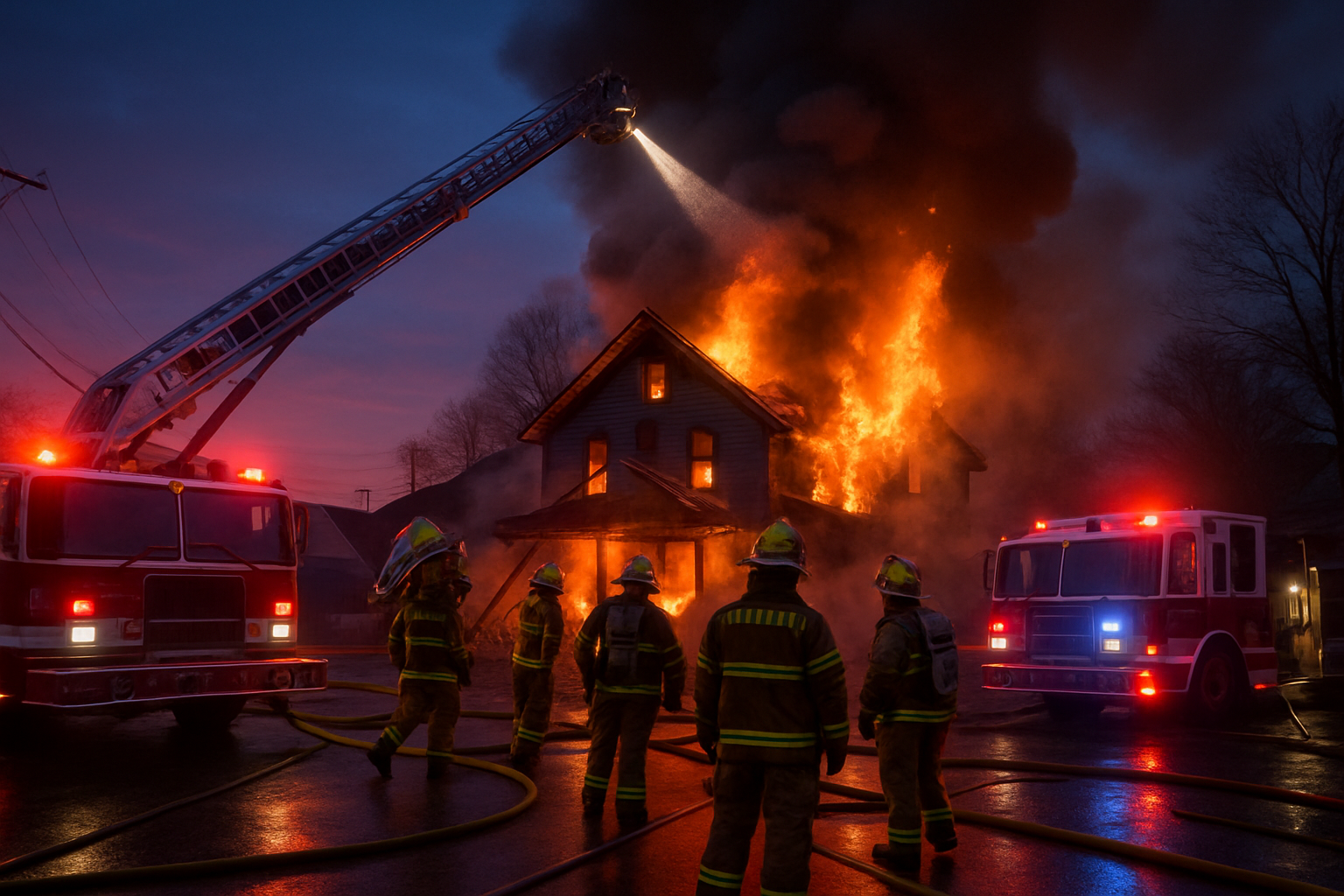
A woman remains in critical condition after firefighters rescued her unconscious from a burning home in Melbourne's north, while teenagers smashed a window to flee the same blaze in what emergency services describe as a harrowing residential fire emergency.
The incident unfolded Thursday morning at a Roxburgh Park residence, where fire crews made a dramatic rescue as flames engulfed the property. The woman, found unconscious inside the burning structure, was immediately transported to hospital and is fighting for her life, according to emergency services reports.
In parallel scenes of desperation, teenagers inside the home took matters into their own hands, breaking a window to escape the rapidly spreading fire. The quick-thinking youths managed to flee to safety before emergency responders could reach them through conventional means.
Emergency Response Under Strain
The Roxburgh Park fire represents yet another challenge for Australian emergency services already managing an unprecedented convergence of fire incidents across the continent. Fire crews responded with full emergency protocols, deploying specialized rescue equipment and medical teams to the scene.
Emergency medical teams worked frantically to stabilize the unconscious woman before transport, with paramedics describing her condition as life-threatening upon arrival at hospital. The successful evacuation of all occupants prevented what could have been a far more tragic outcome.
The teenagers who escaped through the broken window were assessed at the scene but did not require immediate hospitalization, though they are receiving ongoing support for trauma counseling following the ordeal.
Pattern of Australian Fire Emergencies
This latest incident occurs within a broader context of escalating fire emergencies across Australia throughout 2026. Emergency services have documented a significant increase in residential fires, bushfire risks, and compound disaster scenarios that challenge traditional response capabilities.
According to historical context from emergency management archives, Australia has experienced multiple severe fire seasons in recent years, with emergency services noting a shift from sequential to concurrent disasters. The Australian Fire Emergency Services Authority (AFAC) has identified "compound disasters" where multiple emergency types occur simultaneously, fundamentally challenging resource allocation and traditional mutual aid mechanisms.
Fire safety experts emphasize that aging electrical infrastructure, densely packed housing developments, and extreme weather conditions contribute to increased fire risks in urban areas. The Roxburgh Park incident highlights vulnerabilities in residential fire safety systems and the critical importance of rapid emergency response capabilities.
Climate Context and Infrastructure Vulnerabilities
The fire emergency occurs during what meteorologists describe as ongoing climate volatility, with Australia experiencing extreme weather patterns that create both flooding and fire risks simultaneously. This "climate volatility paradox" has been documented throughout 2026, where regions face unprecedented combinations of environmental hazards.
Infrastructure systems designed for historical climate patterns are increasingly operating beyond their intended parameters. Emergency services report that traditional frameworks designed for sequential disasters are proving inadequate when multiple emergency types occur concurrently across vast geographical areas.
The pattern extends beyond individual incidents to represent a fundamental transformation in emergency management approaches. Recovery timelines have shifted from weeks to months or years, requiring what experts term "building back better" climate-resilient infrastructure as an essential survival strategy rather than an optional enhancement.
Community Response and Support Networks
Community networks have played an increasingly vital role in emergency response coordination. Local social media groups and neighborhood watch organizations provide real-time emergency communications when traditional systems become overwhelmed by multiple simultaneous incidents.
Mental health services report increased demand for trauma support following repeated extreme weather events and emergency situations. Families face the psychological toll of potentially losing generational homes and businesses, creating a need for sustained community support systems beyond immediate emergency response.
The successful rescue operation at Roxburgh Park demonstrates the effectiveness of coordinated emergency response when resources are available, but highlights the strain on systems managing multiple concurrent emergencies across metropolitan areas.
Emergency Services Evolution
Fire departments and emergency medical services are adapting their protocols to address compound emergency scenarios. This includes enhanced coordination between fire, medical, and police services, as well as improved community preparedness programs designed to help residents respond effectively in crisis situations.
The window-breaking escape by the teenagers in the Roxburgh Park fire illustrates both the desperation of fire emergency situations and the importance of community education about alternative escape routes when primary exits become compromised.
Technology integration continues to enhance emergency response capabilities, with advanced communications systems, GPS tracking, and real-time coordination platforms improving response times and resource allocation. However, the human element remains crucial, as demonstrated by the firefighters' successful rescue of the unconscious woman.
Looking Forward: Adaptation and Resilience
The March 2026 Roxburgh Park fire emergency serves as both a sobering reminder of fire safety vulnerabilities and a testament to the dedication of emergency services personnel. As Australia continues to face compound extreme events, the focus shifts toward proactive preparation and community resilience building.
Fire safety education programs emphasize the importance of functional smoke alarms, escape route planning, and neighborhood coordination during emergencies. The quick thinking demonstrated by the teenagers who escaped through the window showcases how emergency preparedness training can save lives when conventional evacuation routes become compromised.
Emergency management experts stress that current conditions may represent a preview of routine challenges in coming years without significant adaptation investment. The choice between reactive crisis management and transformative infrastructure adaptation becomes increasingly critical as emergency services face unprecedented demands on their capabilities.
The woman's fight for life in hospital serves as a stark reminder of the human cost of fire emergencies, while the successful rescue operation demonstrates the life-saving impact of well-trained emergency responders working with adequate resources and community support systems.