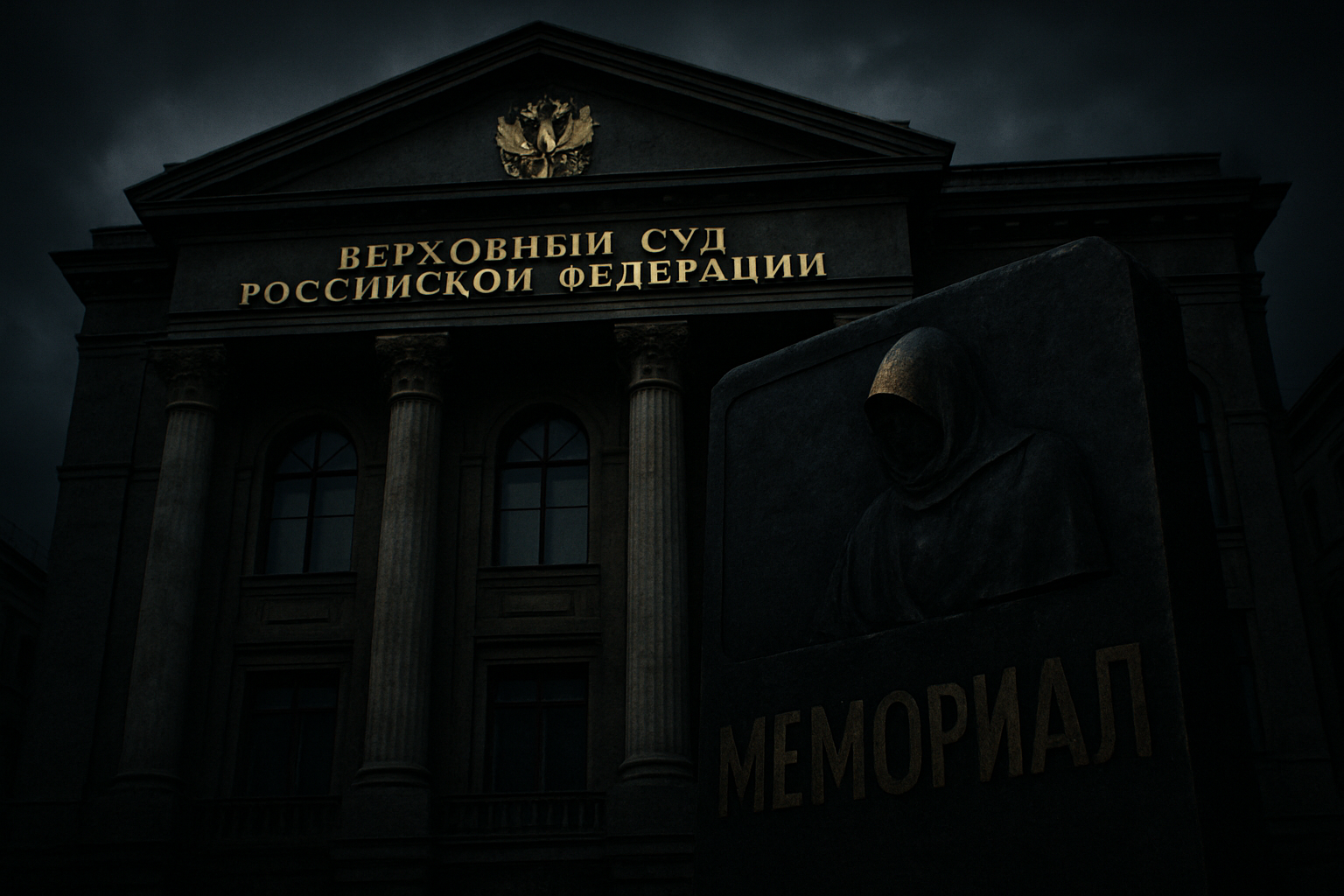
Russia's Supreme Court has declared Memorial, the country's most prominent human rights organization and 2022 Nobel Peace Prize laureate, an extremist group and banned all its activities within the Russian Federation, marking a devastating blow to civil liberties and historical memory preservation in the country.
The closed-door court session on Wednesday resulted in the official designation of Memorial as an "extremist organization" following a lawsuit filed by the Justice Ministry. The ruling effectively criminalizes any association with the organization, subjecting supporters to potential prosecution and imprisonment under Russia's sweeping anti-extremism laws.
Legacy of Memorial: Documenting Dark History
Founded in the late 1980s during the final years of the Soviet Union, Memorial emerged as a beacon for historical truth and human rights advocacy. The organization dedicated itself to documenting Stalin-era repressions, maintaining archives of Soviet political prisoners, and providing crucial support to contemporary political detainees and their families.
Over more than three decades, Memorial compiled extensive databases of victims of political persecution, operated museums dedicated to the memory of Stalin's victims, and provided legal assistance to those facing politically motivated prosecutions. The organization's work proved instrumental in preserving the historical record of Soviet-era atrocities that authorities have increasingly sought to minimize or reinterpret.
"Memorial spent decades documenting Stalin's crimes, uncovering mass graves, identifying burial sites in the Karelia region during the Great Terror," noted a European Court of Human Rights ruling from March 2026 addressing similar persecution of historians in Russia. "His forensic historical research provided concrete evidence of Soviet-era atrocities, helping preserve memory of Stalin's victims through systematic documentation."
Nobel Recognition and International Standing
In 2022, Memorial received the Nobel Peace Prize alongside Ukrainian human rights organization Center for Civil Liberties and Belarusian activist Ales Bialiatski, recognizing their "outstanding effort to document war crimes, human rights abuses and the abuse of power." The Nobel Committee specifically praised Memorial's work in establishing "a culture of accountability" in post-Soviet Russia.
The Nobel recognition placed Memorial among the world's most respected human rights organizations, amplifying international attention to Russia's increasingly authoritarian crackdown on civil society. The organization's extensive documentation of historical repression and contemporary human rights violations made it a primary target for authorities seeking to control historical narratives.
Pattern of Civil Society Suppression
Memorial's designation as extremist represents the culmination of years of legal harassment and pressure. The organization had already been labeled a "foreign agent" under Russia's restrictive legislation targeting NGOs, forcing it to include the stigmatizing designation in all publications and public statements.
This latest action fits within Russia's broader assault on independent civil society organizations. The country has systematically dismantled human rights groups, independent media outlets, and opposition movements through a combination of legal restrictions, criminal prosecutions, and forced closures.
"Russian authorities targeting historians represents escalation - authorities controlling contemporary discourse and historical memory," observed international human rights experts. "Many researchers forced exile or ceased work due prosecution fears."
Impact on Historical Memory
The banning of Memorial carries profound implications for historical memory preservation in Russia. The organization's archives, research, and educational programs provided crucial counternarratives to official historical interpretations that have increasingly portrayed the Soviet era in positive terms.
Memorial's work directly challenged the Russian government's rehabilitation of Stalin's legacy and its broader efforts to promote a sanitized version of Soviet history. By documenting the systematic nature of political repressions and maintaining comprehensive victim databases, the organization preserved evidence that contradicted official attempts to minimize historical atrocities.
International observers have noted that targeting organizations like Memorial represents "an assault on academic freedom, historical memory essential to democracy" and "sets template for authoritarian governments worldwide seeking to control historical narratives."
International Response and Enforcement Challenges
The European Court of Human Rights has previously condemned Russia for similar persecution of historians and human rights activists, though Russia has consistently ignored international oversight. The court's rulings provide "moral authority and documentation of systematic violations for future accountability" while highlighting "urgent need international protection for historians/researchers in authoritarian contexts."
International human rights organizations have condemned the Memorial designation as part of Russia's unprecedented civil society suppression campaign. However, enforcement mechanisms remain limited, as Russia has systematically rejected international human rights oversight and withdrawn from key international agreements.
Broader Context of Repression
Memorial's designation occurs within the context of Russia's wider crackdown on dissent, which has intensified dramatically in recent years. Thousands of arrests, systematic dismantling of independent organizations, and criminalization of various forms of peaceful opposition have created what international observers describe as one of Europe's most repressive environments.
The targeting of Memorial particularly strikes at the heart of Russia's relationship with its own history. Unlike other civil society organizations focused on contemporary issues, Memorial's work on historical documentation made it a unique guardian of historical truth that authorities increasingly view as threatening to official narratives of Russian greatness.
Legacy and Future Implications
Despite the Supreme Court ruling, Memorial's international branches continue operating, and its extensive archives and documentation remain accessible outside Russia. The organization's decades of work have created an irreplaceable historical record that transcends the reach of any single government's censorship efforts.
The case represents what international legal experts describe as "individual tragedy and broader assault on academic freedom, historical memory essential to democracy." The precedent set by Memorial's persecution demonstrates how authoritarian governments can weaponize anti-extremism legislation to silence legitimate human rights advocacy and historical research.
For Russia's remaining civil society activists and independent researchers, Memorial's designation sends a chilling message about the risks of preserving historical truth and defending human rights. The ruling effectively criminalizes core activities that form the foundation of any democratic society's commitment to accountability and historical honesty.
The international community now faces the challenge of preserving Memorial's legacy while supporting the continuation of its vital work despite the Russian government's attempts to erase its contributions to human rights and historical preservation. The organization's story serves as both a testament to the power of truth-telling in authoritarian contexts and a warning about the fragility of the institutions that protect democratic values and historical memory.