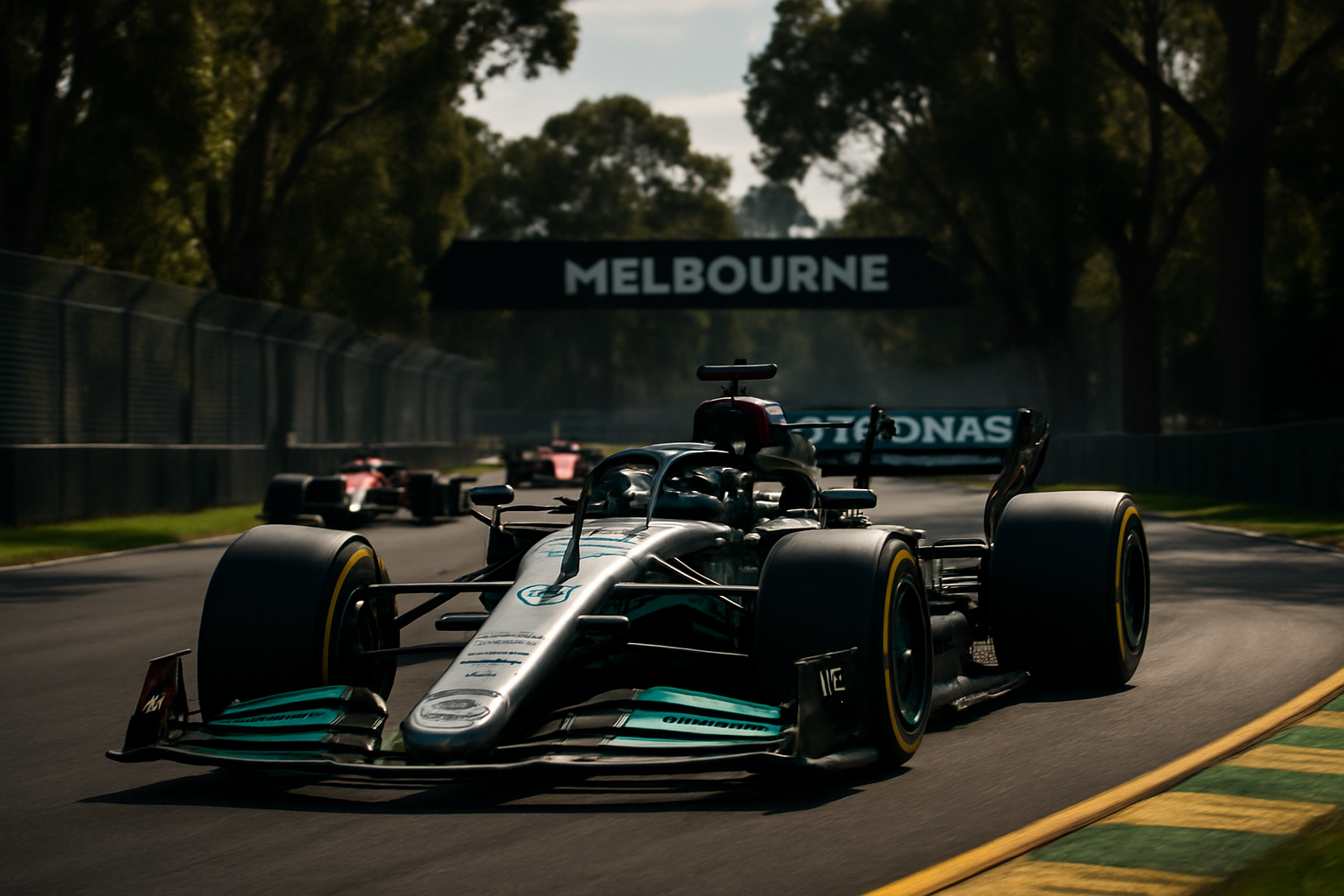
George Russell delivered a commanding performance to top final practice for the Australian Grand Prix, but his achievement was overshadowed by a dramatic crash involving Mercedes teammate Kimi Antonelli that brought out red flags and put Albert Park's medical trauma teams into action.
The Mercedes driver posted the fastest time during Saturday's crucial third practice session at Albert Park Circuit, establishing himself as the man to beat heading into qualifying for Formula 1's 2026 season opener. However, the session was marred by a significant accident involving the young Italian driver that highlighted both the dangers of the sport and the sophisticated medical response systems in place.
Antonelli's High-Speed Impact Raises Safety Concerns
Kimi Antonelli, Mercedes' promising young driver making his debut at the Australian Grand Prix, suffered what multiple sources described as a "big crash" that immediately brought out red flags during the final practice session. The incident required crane recovery and caused significant delays as race officials assessed the severity of the impact.
According to reports from the circuit, the crash was substantial enough to raise immediate concerns about Antonelli's wellbeing, though the driver was reported to be conscious following the incident. The crash has left Mercedes racing against time to repair the extensively damaged car ahead of qualifying, creating additional pressure for the team as they prepare for what promises to be a competitive session.
The incident underscores the ongoing challenges facing Formula 1 as the sport navigates its most revolutionary technical changes in decades. With simultaneous chassis and power unit regulation modifications for the first time in over twenty years, drivers are still adapting to cars that industry insiders describe as "much more sensitive" than their predecessors.
Medical Response Teams on High Alert
The crash highlighted the sophisticated medical infrastructure that operates behind the scenes at every Formula 1 race weekend. Nestled away from public view at Albert Park sits the grand prix medical centre, staffed by trauma specialists from Melbourne's Alfred Hospital who remain on standby for motorsport's most dangerous moments.
These specialized medical teams represent the invisible safety net that allows Formula 1 to operate at the highest levels of motorsport competition. Their presence becomes crucial during incidents like Antonelli's crash, where rapid medical assessment and potential intervention can make the difference between a career-ending injury and a return to racing.
"The medical facilities at Albert Park are among the most advanced in motorsport, designed specifically to handle the unique challenges that can arise from high-speed racing incidents."
— Medical Centre Official, Albert Park Circuit
The availability of these trauma specialists reflects Formula 1's commitment to driver safety, particularly important during a season where new technical regulations have created unpredictable handling characteristics that even experienced drivers are still learning to master.
Russell Emerges as Qualifying Favorite
Despite the dramatic interruption, George Russell's performance during the practice session established him as a serious contender for pole position. The British driver's fastest time demonstrated that Mercedes has made significant strides in adapting to the new technical regulations that have reshaped the competitive landscape for 2026.
Russell's achievement is particularly noteworthy given the challenges Mercedes has faced in recent seasons. The team's strong showing in practice suggests they may have successfully navigated the complex transition to the new technical formula that has proven challenging even for the sport's most established constructors.
The performance comes as Formula 1 experiences what industry experts describe as the most significant regulatory overhaul in the sport's modern era, with teams essentially starting from scratch in both chassis and power unit development. This has created opportunities for traditional hierarchies to be disrupted, potentially allowing teams like Mercedes to regain competitive advantage.
Revolutionary 2026 Season Brings New Challenges
The incidents during practice underscore the broader challenges facing Formula 1 as it embarks on what promises to be its most unpredictable season in history. The simultaneous introduction of new chassis and power unit regulations has created a perfect storm of technical complexity that is testing every team's engineering capabilities.
These changes extend beyond mere performance modifications. The sport has also introduced VAR (Video Assistant Referee) technology for the first time in motorsport history, providing enhanced race officiating capabilities through comprehensive tracking systems. This technological innovation represents another layer of adaptation required from teams, drivers, and officials.
The regulatory changes have forced teams to develop unprecedented contingency plans, including enhanced fuel loading strategies and alternative routing capabilities, as the sport adapts to a changing global landscape affected by ongoing international disruptions.
Global Context Adds Complexity
The Australian Grand Prix is proceeding against the backdrop of significant global challenges that have affected Formula 1's operational planning. International aviation disruptions have forced the sport to develop more sophisticated logistics strategies, while teams have had to navigate complex supply chain issues affecting everything from spare parts to specialized equipment.
Despite these challenges, the Australian Grand Prix represents a crucial milestone for the sport as it demonstrates Formula 1's ability to deliver world-class competition while maintaining the highest safety standards. The combination of Albert Park's improved facilities and the sport's enhanced safety protocols provides a template for how motorsport can continue to evolve while protecting its participants.
Championship Implications Emerge
Russell's strong practice performance and Antonelli's crash have already begun to shape the narrative for what promises to be Formula 1's most competitive season in years. With traditional hierarchies potentially disrupted by the new technical regulations, every session takes on added significance in establishing the competitive order.
The incident also highlights the importance of depth within team operations, as Mercedes must now demonstrate their ability to rapidly repair damaged equipment while maintaining competitive performance. This operational flexibility may prove crucial throughout a season where technical challenges are expected to test every team's resources.
The drama at Albert Park sets the stage for what industry observers expect to be a season-long battle for supremacy, with the outcome potentially reshaping Formula 1's competitive landscape for years to come. As teams continue to unlock the potential of their new technical packages, the lessons learned during this opening weekend may prove decisive in determining championship outcomes.