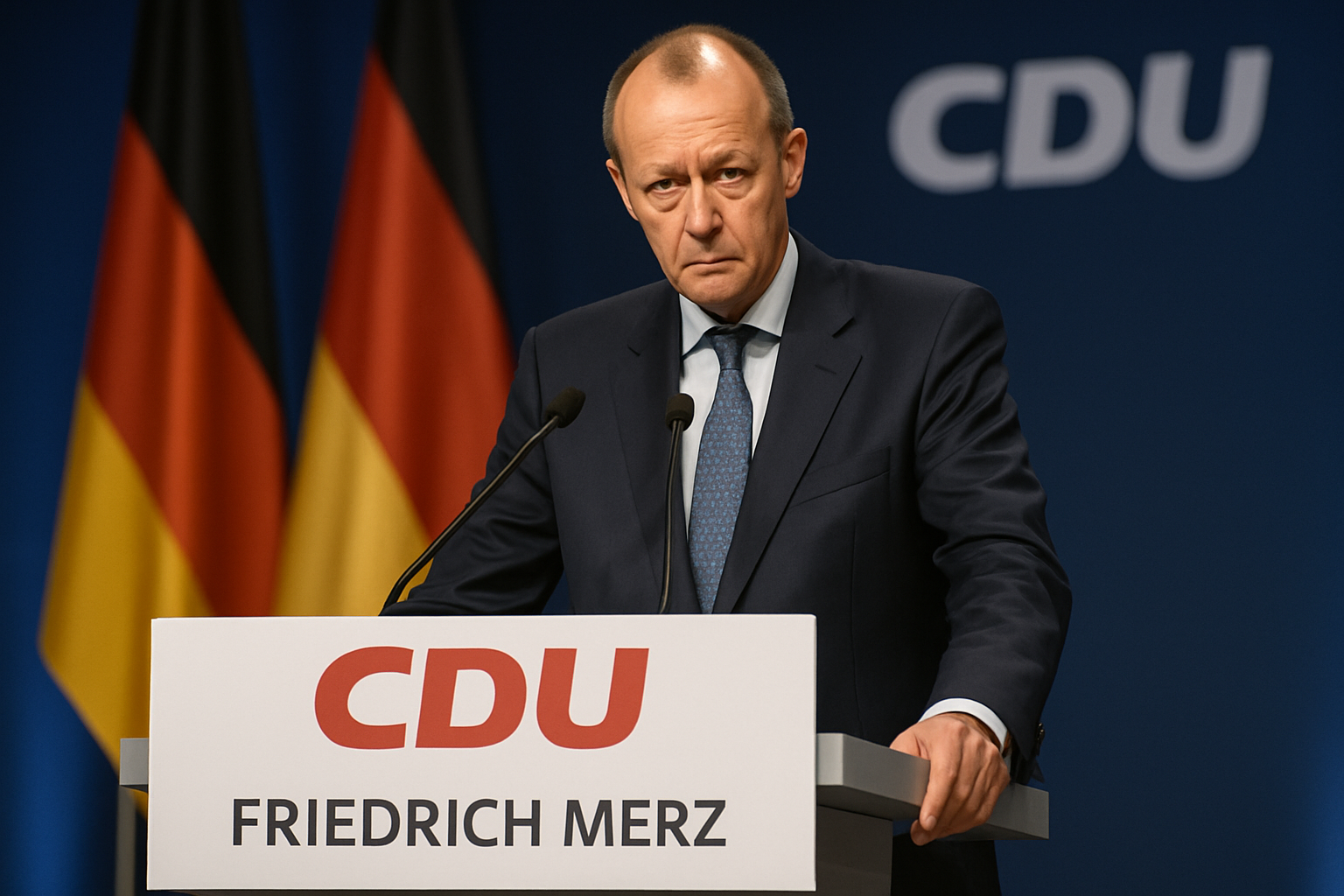
German Chancellor Friedrich Merz confronted mounting political challenges at Friday's Christian Democrat Union (CDU) party congress in Stuttgart, delivering a defiant speech that combined promises of reform with rare public self-criticism, while vowing to prevent the far-right Alternative for Germany (AfD) from "ruining" the country.
A year after his election victory, Merz finds himself politically embattled, trailing significantly in opinion polls ahead of a crucial series of state elections in 2026. The CDU congress in Stuttgart became a critical test of his leadership, with the party faithful demonstrating their continued support through lengthy applause for both the current chancellor and his predecessor, Angela Merkel, who made her first conference appearance since stepping down in 2021.
Confronting the Far-Right Challenge
"We will not allow these people from the so-called Alternative for Germany to ruin our country," Merz declared to party delegates, delivering one of his strongest condemnations of the AfD to date. The statement comes as the far-right party aims to achieve its first state election victory this year, capitalizing on economic uncertainty and immigration concerns to expand its political influence.
Merz's anti-AfD rhetoric reflects the CDU's strategic positioning ahead of critical regional elections. The chancellor's message resonated beyond domestic politics, echoing themes from his recent appearance at the Munich Security Conference where he warned of global democratic challenges and the need for European unity against authoritarian forces.
A Chancellor Under Pressure
The Stuttgart congress took place against a backdrop of significant political difficulties for Merz. Recent polling shows the CDU trailing opposition parties, while critics have pointed to unfulfilled campaign promises and a perceived lack of decisive leadership on key issues. The chancellor's acknowledgment of these criticisms marked an unusual moment of public vulnerability for a German political leader.
"I accept this criticism," Merz admitted during his address, demonstrating what observers described as unprecedented self-reflection. The statement, covered extensively by German media including FAZ and Tagesschau, represented a calculated political gamble aimed at rebuilding trust with voters who have expressed disappointment with his performance to date.
"I accept this criticism. We must do better, and we will do better."
— Friedrich Merz, German Chancellor
Reform Promises and Political Strategy
Beyond his defensive posture, Merz outlined an ambitious reform agenda designed to revitalize both his party and the country. The chancellor promised domestic policy reforms while emphasizing the need for German unity in facing international challenges. His speech combined criticism of internal party divisions with calls for greater cohesion in addressing complex geopolitical realities.
The reform commitments come as Germany grapples with economic pressures, energy security concerns, and its role within the European Union. Merz's promises of "further reforms" were intentionally broad, allowing the party leadership flexibility in developing specific policy proposals while signaling a commitment to change.
Merkel's Strategic Return
Angela Merkel's surprise appearance at the congress provided both symbolic support for Merz and a reminder of the CDU's electoral successes under previous leadership. The former chancellor received what media described as a "storm of applause," demonstrating the party's continued respect for her legacy and the challenge Merz faces in establishing his own political identity.
Merkel's presence served multiple political purposes: reassuring party members about continuity, demonstrating unity between past and present leadership, and providing implicit endorsement for Merz's approach to current challenges. Her first congress appearance since 2021 was carefully calibrated to support the current chancellor while avoiding overshadowing his message.
International Context and European Leadership
Merz's congressional address occurred amid his broader international diplomatic engagement, including his upcoming visit to China and recent participation in the Munich Security Conference. At Munich, he delivered stark warnings about the collapse of the post-war international order and the need for European strategic autonomy, themes that resonated throughout his Stuttgart speech.
The chancellor's international positioning reflects his attempt to establish Germany as a stable democratic leader amid global uncertainty. His criticism of the AfD connects directly to his warnings about authoritarian challenges to democratic institutions, both domestically and internationally.
Electoral Calculations and Future Challenges
The CDU congress comes at a critical juncture for German politics, with state elections scheduled throughout 2026 that will serve as referendums on Merz's leadership. The AfD's growing influence in eastern German states presents particular challenges for the CDU's traditional coalition-building strategies.
Merz's strategy appears focused on consolidating centrist voters while preventing further defection to populist alternatives. His combination of reform promises and anti-extremist rhetoric aims to demonstrate both responsiveness to voter concerns and commitment to democratic values.
Looking Ahead: Tests of Leadership
The Stuttgart congress represents both a challenge survived and a test yet to come for Merz's chancellorship. While party delegates demonstrated their continued support through sustained applause, the true measure of success will be reflected in upcoming election results and polling improvements.
The chancellor's rare admission of mistakes, combined with reform commitments and strong anti-AfD positioning, suggests a political strategy focused on rebuilding credibility while maintaining core party principles. Whether this approach can reverse current polling trends and prevent far-right electoral gains remains the defining question for German politics in 2026.
As Germany faces complex domestic and international challenges, Merz's leadership of the CDU will continue to be tested by his ability to deliver on reform promises while maintaining democratic stability against authoritarian pressures. The Stuttgart congress marked a pivotal moment in this ongoing political drama, with significant implications for both German governance and European democratic resilience.