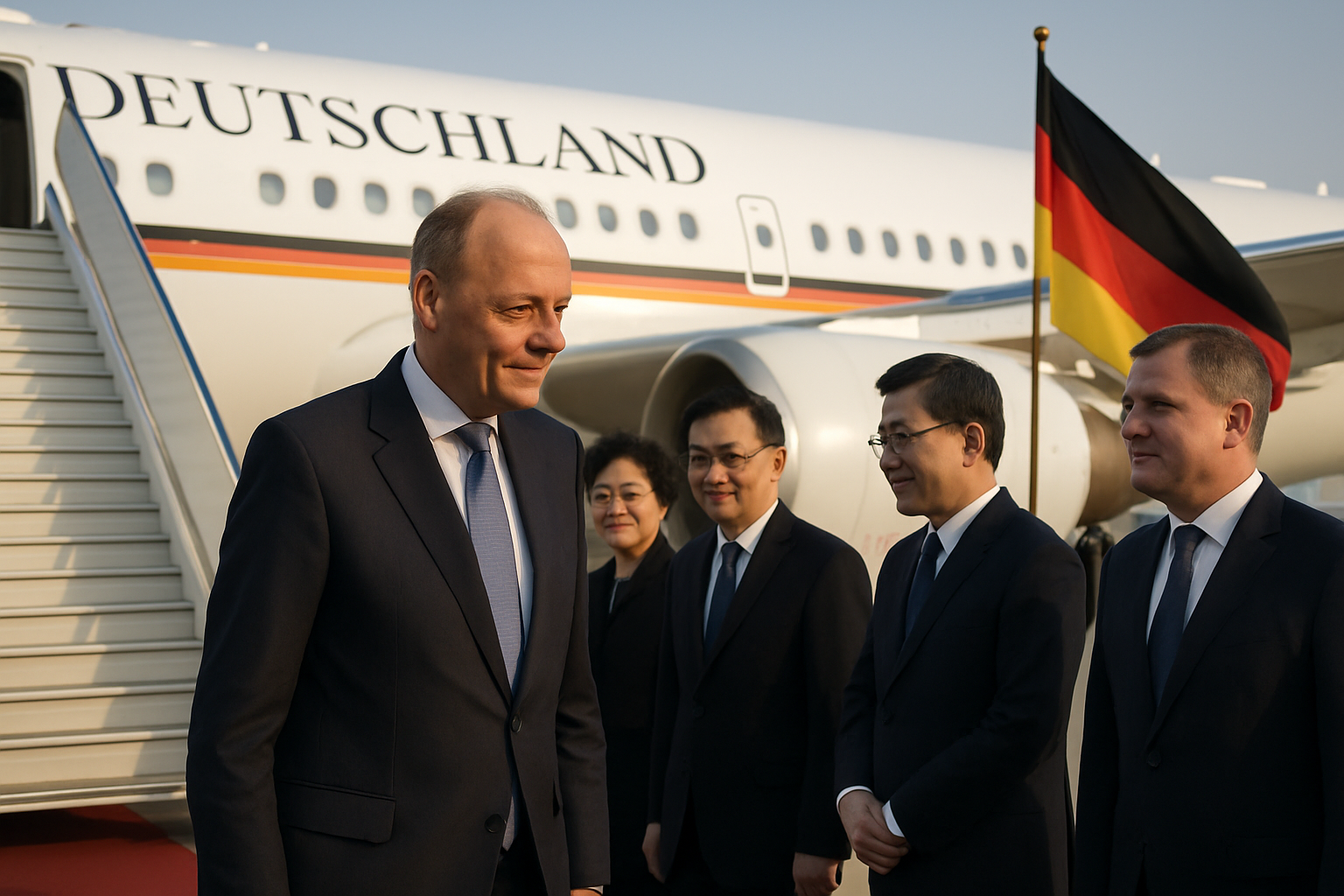
German Chancellor Friedrich Merz touched down in Beijing on Wednesday, February 25, beginning his inaugural visit to Germany's largest trade partner amid mounting economic challenges and growing bilateral tensions between Europe's biggest economy and China.
The two-day official visit marks Merz's first trip to China as Chancellor, coming at a critical juncture as Germany grapples with what sources describe as China's transformation from a "lucrative market to competitive threat" in high-tech manufacturing sectors.
Economic Competition Takes Center Stage
During his meeting with Chinese Premier Li Qiang at the Great Hall of the People, Merz emphasized Germany's commitment to seeking "fair" economic competition with China. The Chancellor was received with full military honors, underscoring the diplomatic significance of the visit despite underlying tensions.
According to multiple diplomatic sources, Merz highlighted the "great potential for growth in both the Chinese and German economies" during his discussions with Chinese leadership. However, the Chancellor also acknowledged the need for realistic expectations, noting that Beijing often operates by "its own rules."
The visit comes as German businesses face unprecedented competition from Chinese firms that now compete directly with established European manufacturers in sophisticated product categories. This shift represents a fundamental change from previous decades when China was primarily viewed as a manufacturing hub for German companies.
Strategic Timing Amid Global Trade Upheaval
Merz's visit occurs against the backdrop of significant global trade disruptions, including recent U.S. Supreme Court rulings limiting presidential tariff authority and ongoing tensions between major trading blocs. The timing appears carefully calculated to position Germany as a stable partner for China amid broader geopolitical uncertainties.
Chinese officials have welcomed recent European approaches, particularly noting the contrast between multilateral European engagement and more confrontational U.S. bilateral strategies. China recently announced zero-tariff access for 53 African countries starting May 1, 2026, demonstrating Beijing's preference for comprehensive trade partnerships.
Technology and Innovation Challenges
The German delegation's visit coincides with China's aggressive expansion in advanced technologies, including humanoid robotics and artificial intelligence. Chinese companies are rapidly scaling production in sectors where German manufacturers have traditionally maintained technological leadership.
German assessments indicate that China has evolved beyond being merely a large consumer market to becoming a direct competitor in high-value manufacturing. This transition presents both opportunities and challenges for German industrial policy and export strategies.
"The relationship has fundamentally changed. We're no longer just selling to China; we're competing with China in global markets."
— German Industrial Source
Bilateral Trade Relationship Under Scrutiny
Despite tensions, China remains Germany's largest trading partner, with bilateral commerce reaching significant volumes annually. The relationship encompasses energy cooperation, automotive manufacturing, industrial machinery, and emerging technology sectors.
However, the visit takes place as both nations reassess their economic interdependence amid changing global supply chain dynamics. German companies are evaluating their exposure to Chinese markets and supply chains, while Chinese firms seek greater access to European technology and consumer markets.
Recent Chinese initiatives, including significant reductions in EU dairy tariffs and selective sector-specific trade agreements, demonstrate Beijing's strategy of maintaining economic relationships while managing political tensions.
Geopolitical Context and Alliance Considerations
Merz's China visit occurs amid broader discussions within European capitals about strategic autonomy and economic security. The trip follows recent Munich Security Conference debates about European independence in both defense and economic policy.
The Chancellor must balance Germany's economic interests with broader European Union concerns about Chinese market practices and technological competition. Brussels has increasingly focused on reducing strategic dependencies while maintaining beneficial trade relationships.
European officials are closely monitoring the outcomes of Merz's discussions, particularly regarding commitments on market access, intellectual property protection, and reciprocal trading arrangements.
Looking Forward: Managing Competition and Cooperation
The visit's success will likely be measured not by dramatic breakthroughs but by the establishment of practical frameworks for managing increasing economic competition between German and Chinese companies.
Both sides acknowledge the need for continued cooperation in addressing global challenges, including climate change, supply chain stability, and economic recovery from recent disruptions. However, the days of purely complementary economic relationships appear to be ending.
As Merz continues his meetings with Chinese leadership, the outcomes will influence not only German-Chinese relations but also broader European approaches to economic engagement with China. The Chancellor's emphasis on "fair" competition suggests a more assertive German stance while maintaining the economic relationship that both countries depend upon.
The visit represents a critical test of whether major economies can maintain beneficial trade relationships while acknowledging and managing direct competitive challenges in the global marketplace.