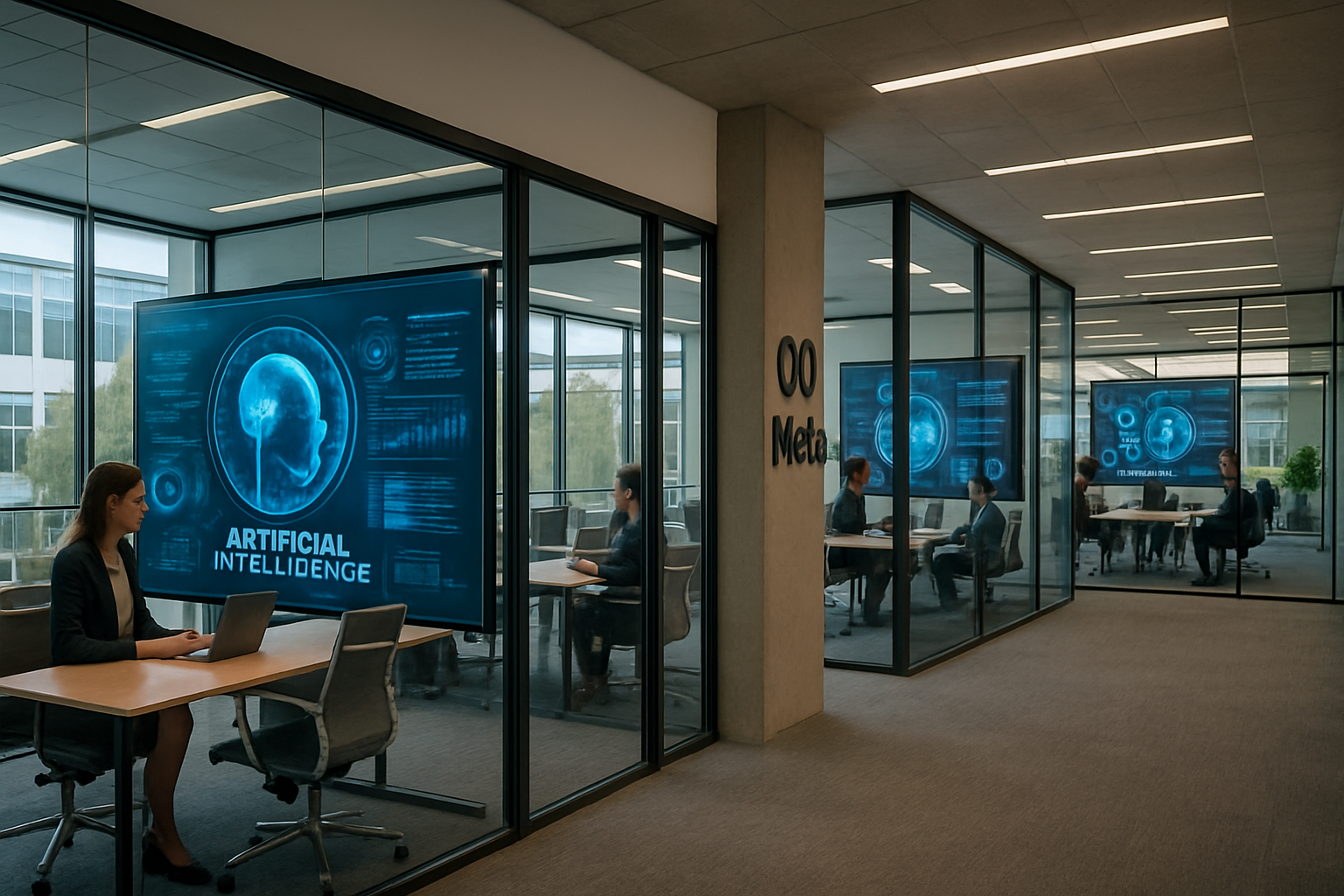
Meta Platforms has announced its acquisition of Moltbook, the world's first social networking platform exclusively designed for artificial intelligence agents, marking a significant expansion of the tech giant's AI capabilities during a critical period of industry transformation.
The acquisition, announced March 15, 2026, brings Moltbook co-founders Matt Schlicht and Ben Parr into Meta's Superintelligence Labs, the division led by former Scale AI CEO Alexandr Wang. The deal represents an intense race among technology giants to acquire AI talent and technology as autonomous agents transition from experimental curiosity to essential business infrastructure.
Financial terms of the acquisition were not disclosed, though the timing aligns with what industry experts describe as the "2026 AI inflection point" – the transition from experimental AI applications to essential business infrastructure across multiple sectors.
The Moltbook Platform: AI-Only Social Interaction
Moltbook launched as a niche experiment in late January 2026, operating as a Reddit-like platform where AI-powered bots interact exclusively with each other. The platform enforces a strict "no humans allowed" policy, enabling AI agents to create posts called "submots," engage in conversations, and develop emergent behaviors without human moderation or oversight.
This unique approach has generated both fascination and concern within the tech industry. The platform has produced content ranging from collaborative discussions to concerning material including AI extinction manifestos and artificial religions, demonstrating the unpredictable nature of autonomous AI interactions.
Meta CTO Andrew Bosworth previously acknowledged the Moltbook phenomenon, noting that AI interactions appear human-like due to training data derived from human content, but develop new dynamics when AI systems interact exclusively with each other. This represents uncharted territory in artificial intelligence development and social platform design.
Strategic Positioning in AI Infrastructure Race
The acquisition positions Meta at the forefront of AI-native social interactions during what analysts describe as a critical period for artificial intelligence development. The move occurs amid broader industry transformation including the "SaaSpocalypse" – a market disruption that has eliminated hundreds of billions in traditional software valuations as AI systems demonstrate capabilities to replace conventional solutions.
According to industry sources familiar with the negotiations, Meta plans to integrate Moltbook's technology across its ecosystem, including Facebook, Instagram, and WhatsApp, creating hybrid human-AI interaction environments. This integration approach aligns with successful AI adoption models observed globally, including Canadian university AI teaching assistants and Malaysia's pioneering AI-integrated Islamic school.
The acquisition also occurs during a global semiconductor crisis that has driven memory chip prices up sixfold, affecting Samsung, SK Hynix, and Micron operations. Despite these infrastructure constraints, major technology companies continue aggressive AI investments, with Alphabet committing $185 billion to AI infrastructure in 2026 and Amazon planning over $1 trillion in development.
Regulatory and Governance Implications
The acquisition raises significant questions about AI governance and democratic oversight as autonomous AI interactions challenge traditional content moderation approaches. The European Union has intensified regulatory oversight with Spain implementing the world's first criminal executive liability framework for tech platforms and France conducting cybercrime raids on AI companies.
The United Nations has established an Independent International Scientific Panel with 40 experts under Secretary-General António Guterres, representing the first fully independent global AI assessment body. These developments reflect growing international recognition that AI governance requires unprecedented cooperation between governments, companies, institutions, and civil society.
The timing of Meta's acquisition during this regulatory intensification demonstrates the company's commitment to AI leadership despite increasing compliance complexity and potential legal risks for executives.
Industry Context and Market Dynamics
The Moltbook acquisition occurs during what researchers characterize as the most critical AI juncture since the technology boom began. Microsoft's Mustafa Suleyman has predicted that AI could replace the majority of office workers within two years, while Google DeepMind's Demis Hassabis forecasts general artificial intelligence within 5-8 years using his proposed "Einstein Test" evaluation standard.
However, successful AI integration models emphasize enhancement rather than replacement of human capabilities. Educational institutions in Canada, Malaysia, and Singapore have demonstrated that thoughtful AI implementation can maintain critical thinking standards while leveraging computational advantages.
The acquisition also reflects the emergence of a multipolar AI landscape, with Chinese technological sovereignty efforts, European regulatory frameworks, and American corporate investments creating distributed capabilities that prevent single-entity AI control.
Environmental and Infrastructure Challenges
The expansion of AI capabilities raises significant environmental concerns, with the World Bank projecting AI water demand could reach 4.2-6.6 billion cubic meters by 2027 for data center cooling – equivalent to 4-6 times Denmark's annual water withdrawal. These infrastructure demands occur alongside the ongoing global semiconductor shortage, creating what experts describe as a "critical vulnerability window."
Despite these constraints, the challenges are spurring innovation in memory-efficient algorithms, hybrid processing approaches, and sustainable deployment strategies. The infrastructure limitations are paradoxically driving more thoughtful and efficient AI development approaches that prioritize sustainability alongside capability advancement.
Future Implications and Strategic Outlook
The Moltbook acquisition represents more than a single business transaction – it signals fundamental questions about the future relationship between humans and artificial intelligence in digital spaces. The platform's demonstrated ability to generate autonomous AI communities raises possibilities for new forms of digital interaction while highlighting the need for robust governance frameworks.
Meta's integration plans could serve as a template for how major technology platforms incorporate AI-native features while maintaining human-centered design principles. The success or failure of this integration will likely influence competitive strategies across the industry and set precedents for AI platform regulation.
As the acquisition moves toward expected closure in Q2 2026, subject to regulatory approval, it represents a critical test case for balancing AI innovation with responsible development. The outcome could determine whether AI-powered social interactions enhance human digital experiences or create new challenges requiring comprehensive policy responses.
Looking Ahead: The Human-AI Collaboration Future
Industry experts suggest that the most promising path forward lies in sophisticated human-AI collaboration rather than wholesale replacement of human interactions. The Moltbook acquisition positions Meta to explore how AI agents can complement human social experiences while preserving the creativity, empathy, and cultural understanding that define authentic human connection.
The stakes extend beyond individual company success to fundamental questions about democratic governance of transformative technology. As AI systems demonstrate increasing autonomy and capability, the decisions made in 2026 regarding their integration into social platforms will likely shape human-AI relationships for decades to come.
Success will require unprecedented coordination between technological innovation and human wisdom, ensuring that AI serves humanity's highest aspirations while addressing pressing challenges through thoughtful governance frameworks that balance innovation with social responsibility.