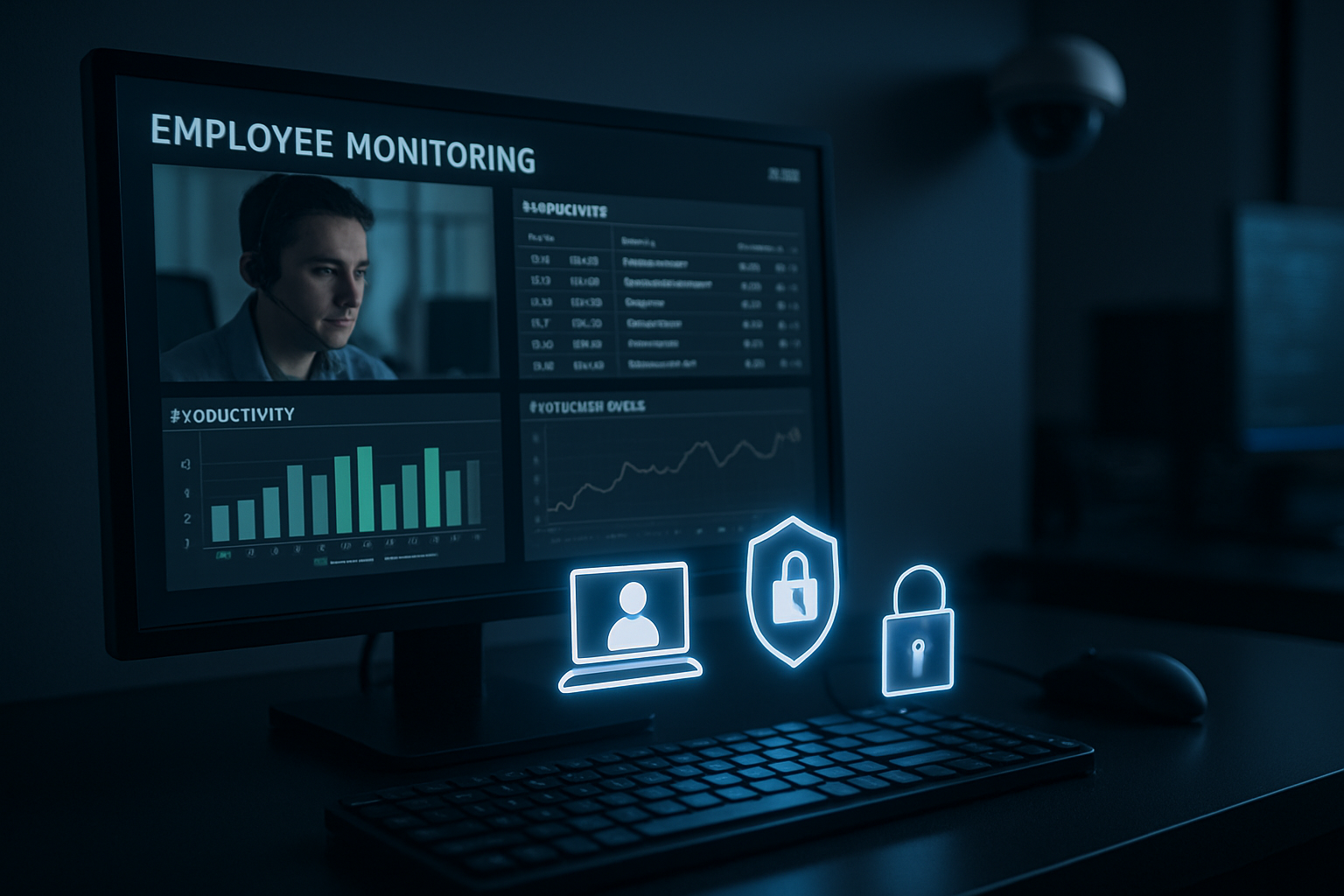
Meta Platforms has implemented a comprehensive employee surveillance program across its United States operations, capturing detailed mouse movements, clicks, and keystrokes on company computers to train artificial intelligence systems, according to investigations by Planet News and international media outlets.
The program, operating under Meta's "Model Capability Initiative" (MCI), represents a significant expansion of workplace surveillance technology that extends far beyond traditional productivity monitoring. The system captures and analyzes precise behavioral data including mouse movement patterns, click sequences, keystroke timing, and keyboard usage habits, creating comprehensive digital profiles of employee computer interactions.
Comprehensive Data Collection Framework
According to sources familiar with the implementation, Meta's surveillance system builds upon the company's massive $21 billion CoreWeave cloud partnership and supports the training of the company's "Muse Spark" superintelligence model. The program aims to improve AI performance in areas where current systems struggle to replicate human computer interactions, particularly complex tasks involving dropdown menus, keyboard shortcuts, and multi-step digital workflows.
The technical implementation requires substantial technological infrastructure during a global semiconductor crisis that has seen memory chip prices surge sixfold across Samsung, SK Hynix, and Micron suppliers. Despite these constraints, Meta continues its massive AI infrastructure investments as part of what industry analysts describe as the largest corporate technology expenditure in history.
Global Workplace Surveillance Trend
Meta's employee monitoring program emerges as part of a broader global trend toward AI-enhanced workplace surveillance. Recent investigations have documented similar systems across multiple countries and industries, including:
- Burger King's OpenAI-powered employee speech monitoring across 500 restaurants, generating "friendliness ratings" based on voice analysis
- Slovakia's "digital employees revolution" where AI systems supervise human workers and conduct algorithmic performance evaluations
- Austrian workplace surveillance systems monitoring employee mood, speech patterns, and mobile device usage
- Chinese employers implementing comprehensive monitoring through Wi-Fi networks, cameras, and smart workplace sensors
Dr. Frank Bäumer's research has documented what he terms the "double workload effect," where AI implementation creates additional work for employees who must perform their original duties while also supervising and correcting AI systems, contrary to promised efficiency gains.
Regulatory and Legal Challenges
The expansion of workplace surveillance occurs amid intensifying global regulatory pressure on technology companies. Spain has implemented the world's first criminal executive liability framework, creating potential imprisonment risks for technology executives who enable systematic privacy breaches. This framework is spreading across Europe as part of coordinated efforts to prevent "jurisdictional shopping" by multinational platforms.
"Personal data has become the currency of the digital age. The question is whether democratic institutions can regulate this new economy or if we're moving toward technological feudalism beyond democratic control."
— Maria Christofidou, Cyprus Data Protection Commissioner
The intersection of AI monitoring with European employment law remains largely untested in courts, creating significant uncertainty about employee rights in AI-supervised environments. GDPR compliance questions persist regarding employee consent for personal data processing, particularly given the comprehensive nature of behavioral data collection.
Infrastructure Constraints and Implementation Challenges
The global semiconductor shortage has created what cybersecurity experts describe as a "critical vulnerability window" extending until 2027 when new fabrication facilities come online. Memory chip prices have increased sixfold, constraining the deployment of advanced security systems while sophisticated threats escalate.
This infrastructure crisis coincides with what industry analysts call the "SaaSpocalypse" – the elimination of hundreds of billions in traditional software market capitalization as AI demonstrates direct replacement capabilities for conventional solutions. Microsoft's Mustafa Suleyman predicts majority office worker replacement within two years, adding urgency to questions about AI's role in workplace management.
Privacy Advocates and Employee Rights
Privacy advocates warn that workplace surveillance infrastructure ostensibly designed for productivity enhancement could evolve into comprehensive employee monitoring systems. The Netherlands' recent Odido breach, affecting 6.2 million customers (one-third of the country's population), demonstrates the vulnerabilities of centralized data repositories that governments and corporations are building.
Employment law experts note that algorithmic performance evaluations prioritize efficiency metrics over human qualities like collaboration, mentorship, and creative problem-solving. The psychological impact of working under constant AI surveillance remains largely unstudied, though early reports suggest potential effects on creativity, risk-taking, and innovation.
Alternative Human-AI Collaboration Models
Successful human-AI collaboration implementations offer alternative approaches to surveillance-based models. Canadian universities have deployed AI teaching assistants that maintain critical thinking requirements, while Malaysia has established the world's first AI-integrated Islamic school with 97.82% teacher placement rates. Singapore's WonderBot 2.0 heritage education program demonstrates how AI can serve as amplification tools rather than monitoring mechanisms.
These successful models share common characteristics: AI serves as enhancement tools supporting human goals, maintains cultural sensitivity, and demonstrates sustained commitment to human development rather than replacement strategies.
Industry Response and Market Impact
Meta's surveillance program template could influence workplace practices for decades, according to technology governance experts. The company is reportedly preparing 20%+ workforce reductions following massive AI infrastructure costs, representing a pivot toward AI-native business models that fundamentally alter traditional employment relationships.
Industry resistance to regulatory oversight has intensified, with prominent technology leaders characterizing government intervention efforts as authoritarian overreach. However, the February 2026 "SaaSpocalypse" market disruption suggests investors are reassessing technology business models amid regulatory uncertainty.
Global Implications and Future Outlook
Technology policy experts identify April 2026 as a "civilizational choice point" determining whether artificial intelligence serves human flourishing and democratic values or becomes an exploitation tool beyond democratic accountability. The convergence of breakthrough AI capabilities, security vulnerabilities, massive corporate investments, and regulatory pressure requires unprecedented coordination between governments, companies, institutions, and civil society.
Meta's employee surveillance program emerges during what analysts describe as the most sophisticated global technology governance effort since internet commercialization. Success in balancing innovation acceleration with responsible development requires resolving tensions between commercial interests and human welfare, national competitiveness and international cooperation.
The Path Forward
The window for proactive adaptation to AI workplace transformation is narrowing as capabilities advance faster than governance frameworks. Industry experts emphasize that the most promising path involves sophisticated human-AI collaboration that amplifies human capabilities while preserving creativity, cultural understanding, and ethical reasoning that define human potential.
The stakes of current decisions extend beyond individual privacy concerns to fundamental questions about corporate surveillance boundaries in the digital age, human agency preservation in increasingly automated workplace environments, and whether technology can serve humanity's highest aspirations through democratic oversight and human-centered values.
As Meta's surveillance program represents a potential template for workplace transformation, the critical question remains whether such comprehensive monitoring serves genuine productivity enhancement or creates new forms of digital control that could undermine the very human qualities that make collaborative work environments successful and innovative.