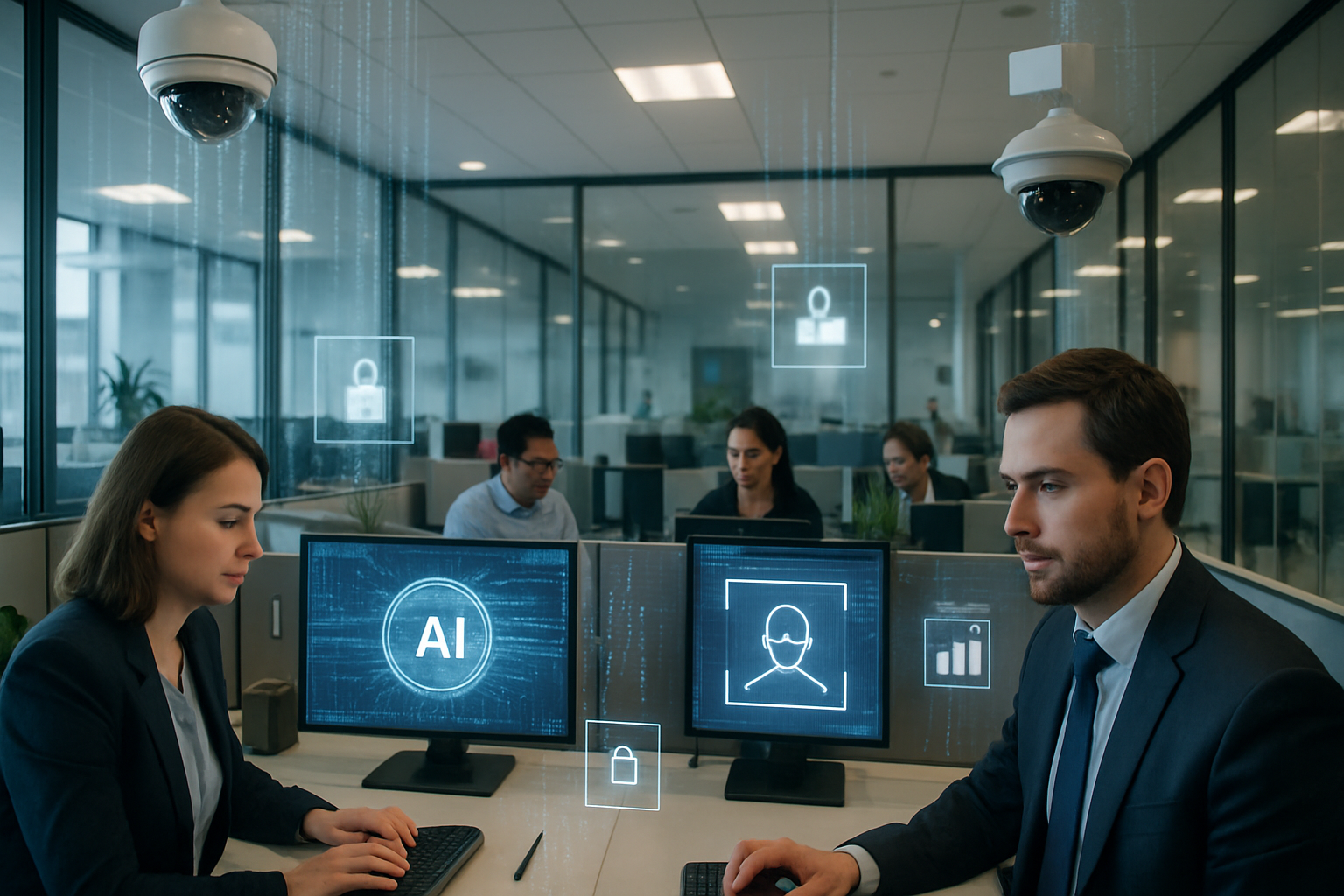
Meta Platforms has announced plans to install monitoring software on employee computers in the United States to record mouse movements, clicks, and keystrokes, with the collected data to be used for training artificial intelligence models, according to Reuters reports.
The controversial program represents a significant expansion of workplace surveillance technology, positioning Meta among a growing number of tech giants implementing comprehensive employee monitoring systems. The initiative comes at a critical juncture when workplace AI integration has reached what industry experts term a "civilizational choice point" - determining whether artificial intelligence serves human flourishing or becomes an exploitation tool.
Comprehensive Monitoring Infrastructure
Meta's surveillance system will capture detailed behavioral data including precise mouse movements, click patterns, keystroke timing, and keyboard usage habits. This granular monitoring goes far beyond traditional productivity metrics, creating comprehensive digital profiles of how employees interact with their workstations throughout the day.
The program builds on Meta's broader AI infrastructure investments, including a $21 billion cloud computing partnership with CoreWeave and the launch of "Muse Spark," the company's superintelligence model with multimodal reasoning capabilities. These investments demonstrate Meta's commitment to advancing AI development, despite growing concerns about data collection methods.
Global Workplace Surveillance Trend
Meta's announcement reflects a broader global trend toward AI-enhanced workplace monitoring that has accelerated dramatically in 2026. Recent investigations have revealed sophisticated surveillance systems across multiple industries:
- Burger King deployed OpenAI-powered systems across 500 restaurants to monitor employee speech patterns and generate "friendliness ratings" for management review
- Austrian companies are monitoring employee mood, speech patterns, and mobile data for wellness tracking purposes
- Chinese employers use Wi-Fi networks, cameras, and smart seats for comprehensive employee behavioral analysis
- Slovakia leads a "digital employees revolution" where AI systems supervise human workers and conduct algorithmic performance evaluations
"The productivity paradox is real - AI often creates a 'double workload effect' where employees perform their original responsibilities plus AI supervision and correction."
— Dr. Frank Bäumer, German Technology Research Institute
Privacy and Legal Concerns
The implementation raises significant questions under European privacy regulations, particularly the General Data Protection Regulation (GDPR), which requires explicit consent for personal data processing. Employment law experts note that workplace surveillance regulations remain largely untested in courts as AI monitoring becomes increasingly sophisticated.
Maria Christofidou, Cyprus Data Protection Commissioner, has emphasized that "personal data has become the currency of the digital age," highlighting the economic value driving these surveillance implementations. The lack of comprehensive legal frameworks governing AI-powered workplace monitoring creates uncertainty about employee rights and employer obligations.
Previous privacy concerns about Meta's smart glasses capturing intimate footage processed by digital workers for AI training demonstrate the company's pattern of expansive data collection practices that have drawn regulatory scrutiny.
Industry Context and Market Pressure
Meta's surveillance program emerges during what researchers have identified as the "SaaSpocalypse" - the elimination of hundreds of billions in traditional software market capitalization as AI systems replace conventional solutions. This market transformation creates intense pressure on companies to develop competitive AI capabilities rapidly.
The program coincides with Meta's preparation for significant workforce reductions, with reports suggesting 20%+ layoffs following AI infrastructure cost pressures. The company has pivoted toward AI-native business models, similar to other tech giants implementing AI-driven organizational changes.
Global Regulatory Response
International regulatory bodies are intensifying oversight of AI workplace deployment:
- Spain implemented the world's first criminal executive liability framework for tech platforms, creating imprisonment risks for executives
- France has conducted AI company cybercrime raids as part of increasing regulatory scrutiny
- The United Nations established an Independent Scientific Panel of 40 experts for comprehensive AI impact assessment
- European Union authorities are pursuing Digital Services Act violations with potential billion-dollar penalties
Alternative Approaches to Human-AI Collaboration
While Meta pursues comprehensive surveillance, other organizations have demonstrated successful human-AI collaboration models that enhance rather than monitor worker capabilities:
- Canadian universities use AI teaching assistants that maintain critical thinking standards while providing personalized support
- Malaysia pioneered the world's first AI-integrated Islamic school with a 97.82% teacher placement rate
- Singapore's WonderBot 2.0 heritage education program preserves cultural knowledge while leveraging advanced technology
These success models share common characteristics: treating AI as amplification tools rather than replacement mechanisms, maintaining sustained human development commitment, and preserving cultural sensitivity.
Infrastructure Constraints and Implementation Timeline
Meta's surveillance program faces significant technical challenges due to the ongoing global semiconductor crisis, which has driven memory chip prices to sixfold increases affecting Samsung, SK Hynix, and Micron suppliers through 2027. These constraints may force selective deployment rather than comprehensive monitoring implementation.
Despite infrastructure limitations, Meta has committed massive resources to AI development, with investments representing some of the largest corporate technology expenditures in history. The company's determination to proceed with employee monitoring despite these constraints demonstrates the strategic priority of AI training data collection.
Employee Rights and Workplace Democracy
The announcement raises fundamental questions about workplace democracy and employee agency in the AI age. Unlike traditional performance metrics that focus on outcomes, behavioral monitoring captures the process of work itself, potentially affecting how employees think and interact with their tools.
Psychological research indicates that constant surveillance can impact employee creativity, risk-taking, and innovation - precisely the human qualities that distinguish valuable workers in an AI-integrated economy. The "algorithmic performance evaluations" being implemented prioritize efficiency metrics over human considerations like collaboration, mentorship, and creative problem-solving.
Future Implications for Workplace Rights
Industry experts characterize 2026 as a critical juncture determining whether AI serves human flourishing or becomes an exploitation tool beyond democratic accountability. Meta's surveillance program represents a template that could influence workplace practices across industries for decades.
The success or failure of comprehensive employee monitoring will likely determine the trajectory of human-AI workplace relationships throughout the remainder of the century. Success requires unprecedented coordination between governments, companies, institutions, and civil society to balance innovation acceleration with human welfare protection.
"We're at a civilizational choice point where decisions about AI implementation will establish patterns that persist for decades. The question is whether we preserve human creativity, cultural understanding, and ethical reasoning while leveraging computational advantages."
— Technology Policy Institute Research Director
Looking Forward
As Meta moves forward with its employee surveillance program, the company joins a growing number of organizations implementing comprehensive workplace monitoring justified by AI training needs. The program's success or failure will likely influence global discussions about workplace rights, privacy protection, and the appropriate boundaries of corporate surveillance in the digital age.
The coming months will prove critical in determining whether democratic institutions can effectively regulate AI-powered workplace monitoring while preserving the benefits of technological innovation. The stakes extend beyond individual privacy concerns to fundamental questions about human agency and dignity in an increasingly automated workplace environment.