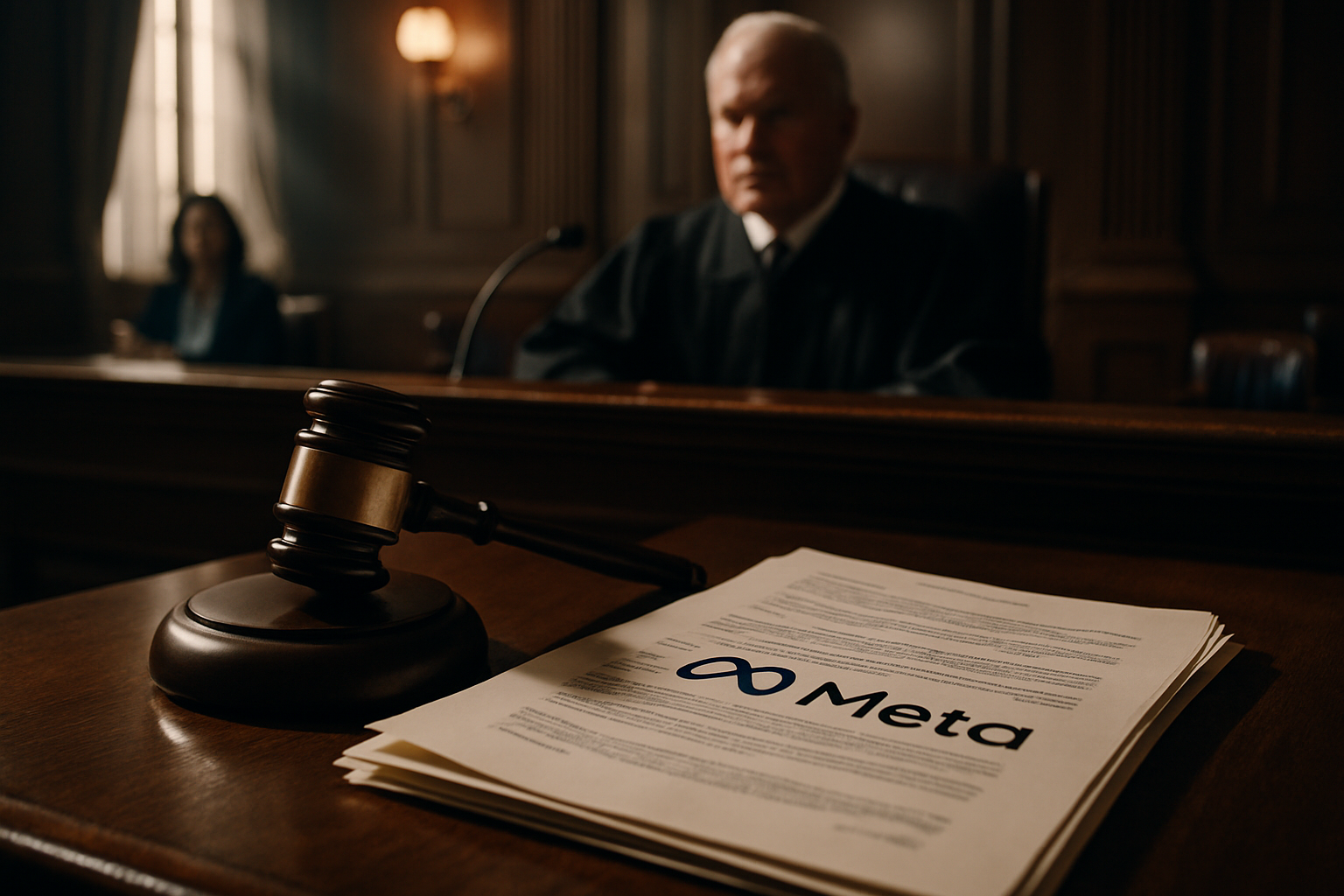
In a landmark decision that reverberates across the global tech industry, a New Mexico jury found Tuesday that Meta Platforms Inc. has harmed children's mental health and violated state consumer protection laws, ordering the social media giant to pay $375 million in damages.
The verdict, delivered after a nearly seven-week trial, represents the most significant legal victory against a major social media platform to date in the mounting battle over youth digital safety. Jurors sided decisively with state prosecutors who argued that Meta – which owns Instagram, Facebook and WhatsApp – systematically prioritized profits over the safety of young users.
The jury determined that Meta engaged in "unconscionable" trade practices that unfairly took advantage of children's vulnerabilities and inexperience. Prosecutors successfully demonstrated thousands of individual violations of New Mexico's Unfair Practices Act, with each violation counting separately toward the unprecedented $375 million penalty.
A Pattern of Knowing Harm
Central to the prosecution's case was evidence that Meta concealed what it knew about the dangers its platforms posed to young users. The company was accused of designing features specifically to maximize engagement time among children and teenagers, despite internal research showing the potential psychological harm.
The verdict comes amid mounting global pressure on social media platforms regarding child safety. Recent scientific research has established alarming connections between social media use and youth mental health crisis, with studies showing that 96% of children aged 10-15 use social media, 70% experience harmful content exposure, and over 50% encounter cyberbullying.
"Meta prioritized engagement over wellbeing, knowing full well the impact on developing minds."
— New Mexico Attorney General's Office
Dr. Ran Barzilay's research at the University of Pennsylvania has demonstrated that early smartphone exposure before age 5 causes persistent sleep disorders, cognitive decline, and weight problems that extend into adulthood. Children spending 4+ hours daily on screens face a 61% increased depression risk through sleep disruption and decreased physical activity.
Global Regulatory Revolution
The New Mexico verdict arrives during what experts are calling the most significant social media regulation wave in internet history. The case builds on momentum from Australia's successful under-16 social media ban, which eliminated 4.7 million teen accounts in December 2025, proving that comprehensive platform restrictions are technically feasible.
Spain has led the charge with the world's first criminal executive liability framework, creating personal imprisonment risks for tech executives whose platforms violate safety regulations. The European Union has coordinated restrictions across multiple countries, with Greece implementing Kids Wallet under-15 protections, while France, Denmark, and Austria conduct formal consultations on youth platform access.
The European Commission has also found TikTok in violation of the Digital Services Act for "addictive design" features including unlimited scrolling, autoplay, and personalized recommendations designed to maximize engagement over user wellbeing. TikTok faces potential penalties of 6% of global revenue – potentially billions of dollars.
Industry Resistance and Corporate Accountability
The tech industry has mounted fierce resistance to these regulatory efforts. Executives have characterized measures as "fascist totalitarian" overreach and warned of "surveillance state" implications. The so-called "SaaSpocalypse" of February 2026 eliminated hundreds of billions in tech market capitalization amid regulatory uncertainty.
However, the legal landscape is shifting decisively toward platform accountability. In a historic Los Angeles court appearance in February 2026, Meta CEO Mark Zuckerberg was confronted with internal documents from 2014-2015 showing explicit company goals to increase user engagement time, contradicting public statements about prioritizing user wellbeing.
When challenged about the accuracy of his congressional testimony, Zuckerberg responded: "If you are trying to say my testimony was not accurate, I strongly disagree with that." The testimony revealed internal documents suggesting children under 13 were a key demographic despite official age restrictions – contradicting Zuckerberg's congressional statements that Meta doesn't allow users under 13 on its platforms.
The Science Behind the Verdict
The New Mexico case was built on a growing body of scientific evidence documenting the harmful effects of social media on developing brains. University of Macau research has proven that short-form video consumption negatively impacts cognitive development, causing social anxiety and academic disengagement.
Neurological evidence shows that children's reward systems are extremely vulnerable to smartphone stimulation while impulse control remains underdeveloped until age 25 – creating what researchers call a "perfect storm" for addiction. Dopamine reward cycles interfere with the brain's natural motivation systems, while blue light disrupts sleep patterns crucial for brain development.
Instagram CEO Adam Mosseri has previously testified defending platforms against "social media addiction" claims, distinguishing between clinical addiction and "problematic use." However, the New Mexico jury rejected these distinctions, finding that Meta's platforms create harmful dependencies regardless of clinical classifications.
Implementation Challenges and Alternative Approaches
While regulatory momentum builds globally, implementation faces significant challenges. Age verification requires sophisticated authentication systems, potentially including biometric data, raising privacy and surveillance concerns. A recent data breach in the Netherlands affecting 6.2 million people demonstrates the vulnerabilities of centralized personal data repositories.
Cross-border enforcement requires unprecedented international cooperation, while a global semiconductor crisis with sixfold memory chip price increases constrains the technical infrastructure needed for comprehensive age verification until 2027.
Different regions are pursuing varied approaches to platform regulation. Malaysia emphasizes parental responsibility over regulatory bans through digital safety campaigns, while Oman has implemented "Smart tech, safe choices" education focusing on conscious digital awareness. This represents a philosophical divide between European regulatory enforcement models and Asian education-focused strategies.
Economic and Social Implications
The shift toward prevention-first mental healthcare strategies is showing measurable benefits beyond child protection. Countries implementing comprehensive prevention programs report substantial cost reductions through decreased crisis interventions, improved community resilience, and enhanced workplace productivity.
Montana's mobile crisis teams have achieved an 80% reduction in police mental health calls through proactive intervention. Healthcare providers report that patients experience relief when therapy acknowledges the complexity of their digital relationships versus simplistic solutions.
Mental health professionals have identified what they term the "wellness paradox" – where constant self-improvement pursuits create psychological exhaustion versus genuine healing. Successful interventions emphasize authentic community connections over performance metrics and sustainable wellness that accommodates human struggle and imperfection.
Looking Forward: The Therapeutic Revolution of 2026
The New Mexico verdict represents a critical juncture in what healthcare experts are calling the "Therapeutic Revolution of 2026" – a global paradigm shift from crisis-response to prevention-first mental healthcare strategies.
This transformation emphasizes treating mental wellness as essential community infrastructure rather than individual pathology, with digital age adaptation through evidence-based interventions becoming a priority. Finland's sustained success as the world's happiest country demonstrates that organizing societies around human flourishing versus purely treating illness is achievable through coordinated efforts.
The verdict also coincides with innovative international cooperation models emerging to address the crisis. Despite WHO funding challenges from major contributor withdrawals, bilateral partnerships and peer-to-peer knowledge sharing continue driving innovation. Countries are developing distributed cooperation models that allow culturally responsive approaches while maintaining evidence-based medical standards.
The Stakes for Democracy and Child Development
The New Mexico case represents more than corporate accountability – it's a fundamental test of whether democratic institutions can effectively regulate multinational technology platforms while preserving beneficial aspects of digital connectivity.
Success could trigger worldwide adoption of criminal liability frameworks for tech executives, while failure might strengthen anti-regulation arguments from an industry that has largely operated beyond meaningful governmental oversight. The stakes include fundamental questions about childhood development, human agency, and democratic accountability in the digital age.
Parliamentary approval is required across European nations throughout 2026 for coordinated year-end implementation of youth protection measures. This represents the most sophisticated international technology governance attempt in internet history, with outcomes establishing precedents that will affect platform design, age restrictions, and liability for user harm for decades to come.
Conclusion: A Watershed Moment
The New Mexico verdict against Meta marks a watershed moment in the relationship between technology companies and democratic societies. For the first time, a major platform has been held legally accountable for prioritizing engagement over child safety, with financial consequences that reflect the true scale of the harm alleged.
As governments worldwide grapple with the challenge of protecting children while preserving innovation and digital rights, the New Mexico case provides a template for how legal systems can address the documented harms of social media platforms. The $375 million judgment sends an unmistakable message that corporate profits cannot come at the expense of children's psychological wellbeing.
Whether this verdict catalyzes meaningful reform across the industry or becomes an isolated incident will depend on sustained political commitment to child protection, continued international cooperation, and the willingness of democratic societies to assert their authority over the digital spaces that have become integral to modern childhood.
The ultimate question raised by the New Mexico verdict is whether platforms designed to maximize engagement can coexist with the healthy development of young minds. The jury's answer was unequivocal: when corporate profits conflict with child welfare, the law must protect our most vulnerable citizens.