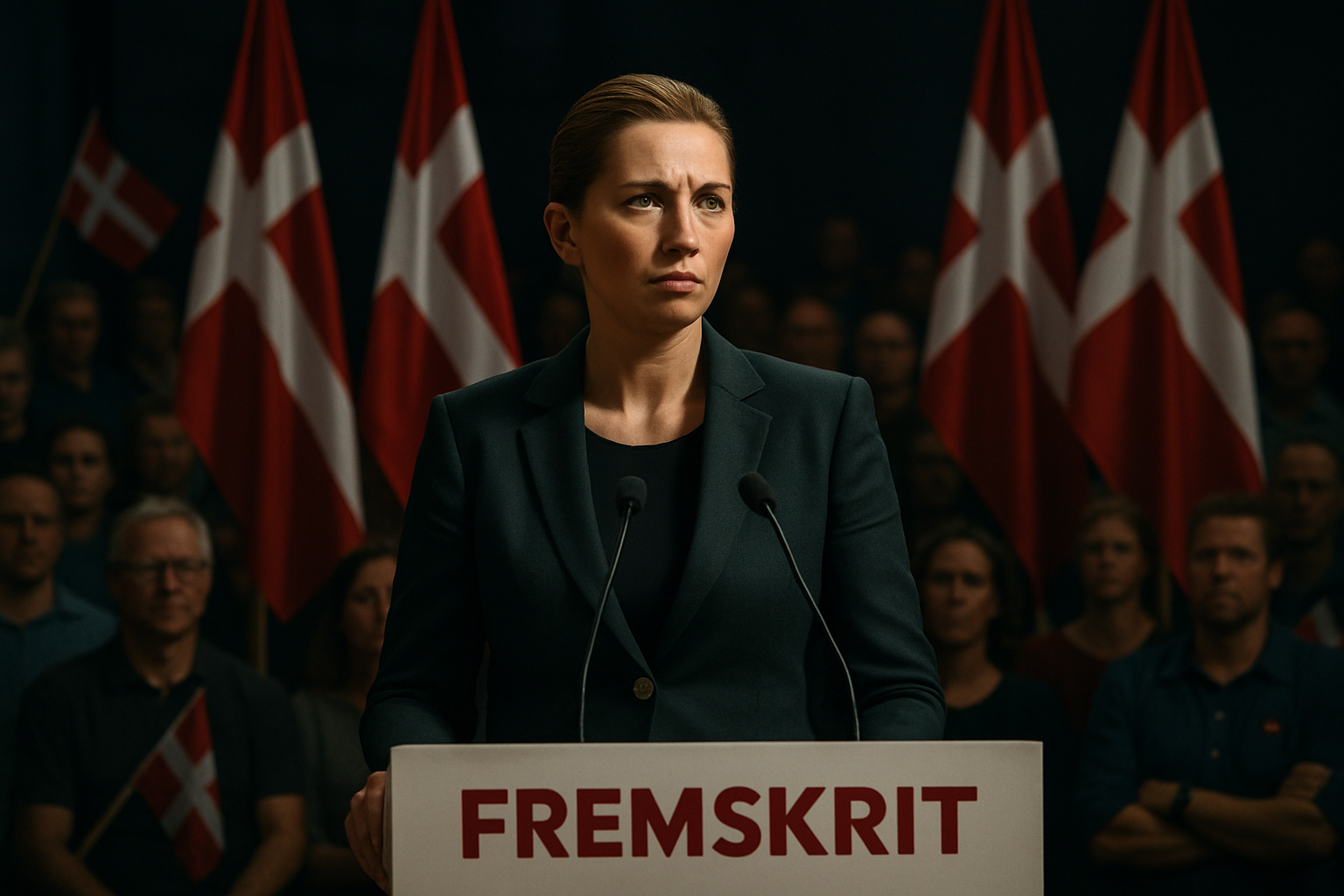
Prime Minister Mette Frederiksen's calculated gamble to call snap elections amid the Greenland sovereignty crisis has fundamentally transformed Danish politics, as her Social Democrats ride a wave of nationalist sentiment while facing criticism that her confrontational approach has divided voters ahead of Tuesday's parliamentary vote.
The French source Le Monde reports that while Frederiksen's unwavering stance against President Trump's territorial claims has earned her recognition across Europe, "her party is struggling in the polls" domestically. This contradiction between international acclaim and domestic uncertainty captures the essence of Denmark's most consequential election in decades.
The Swedish analysis from Dagens Nyheter reveals the central paradox of Frederiksen's campaign: she has gained international respect as the leader who "tamed Trump" during the Greenland crisis, yet now "struggles to show Danish voters that she is not harsh." This delicate balance between strength and accessibility has defined the final weeks of campaigning.
The Greenland Effect: From Crisis to Campaign
Frederiksen's decision to call snap elections for March 24, 2026, represented what political analysts term the "Greenland effect" - capitalizing on a surge in popularity following her firm resistance to American territorial pressure. The crisis, which began with renewed Trump administration interest in acquiring Greenland, provided an unexpected boost to the Social Democrats' standing.
The Prime Minister's position crystalized around the phrase "Greenland is neither for sale nor for purchase," a stance that resonated powerfully with Danish voters who viewed Trump's proposals as an attack on sovereignty. Working group meetings between US and Greenlandic representatives, ongoing since January 28, 2026, have continued despite public Danish rejection of territorial transfer.
International solidarity proved crucial to Frederiksen's narrative. France and Canada simultaneously opened the first consulates in Nuuk in February 2026, with Canadian Foreign Minister Anita Anand and Indigenous Governor General Mary Simon attending. This coordinated diplomatic opposition demonstrated that Denmark was not alone in resisting American territorial ambitions.
NATO's Arctic Response
The crisis prompted an unprecedented European-led NATO response through the Arctic Sentry mission. The UK doubled its Norway troop presence to 2,000, while Sweden deployed Gripen jets for Greenland exercises. This military solidarity provided concrete evidence that European allies supported Danish sovereignty, strengthening Frederiksen's domestic position.
The NATO response addressed broader Arctic security concerns beyond the immediate Greenland dispute, including Russian Cold War-era base reopening and Chinese Arctic expansion amid climate change opening new shipping routes and resource extraction opportunities.
Opposition Challenges in the Shadow of Crisis
Danish opposition parties have faced the delicate challenge of criticizing government policies without appearing unpatriotic during a sovereignty crisis. Some have attempted to frame the election as a choice between Frederiksen's "confrontational" approach and a more "diplomatic" alternative, though this risks appearing weak against sustained American pressure.
The compressed campaign timeline has benefited the incumbent, as Frederiksen can point to concrete international support while opposition parties struggle to articulate alternative approaches that don't compromise Danish sovereignty. The crisis has effectively nationalized what might otherwise have been fought on domestic issues like economic policy or social services.

Intelligence Warnings and Electoral Security
The election is being conducted under unprecedented security concerns, with Danish intelligence services warning that foreign states, particularly Russia, may attempt to influence the parliamentary vote. The Danish Security and Intelligence Service (PET) and Defence Intelligence Service (FE) jointly assessed it is "very likely" that Denmark is a prioritized target for Russian influence operations.
This warning reflects the broader international tensions surrounding the Greenland dispute and Denmark's prominent role in European resistance to Trump's territorial ambitions. The intelligence assessment adds another layer of complexity to an already charged electoral atmosphere.
Economic Undercurrents
Despite the dominance of sovereignty issues, underlying economic concerns remain relevant to Danish voters. The prolonged Greenland crisis has created uncertainty about Denmark's relationship with its largest trading partner, the United States, potentially affecting future economic cooperation and investment.
Frederiksen's government must balance the political benefits of the sovereignty stance against potential long-term economic costs. Critics argue that her confrontational approach may have strengthened her domestic position but at the expense of Denmark's broader international relationships.
International Precedent and Democratic Resilience
The Danish election represents a critical test case for democratic resistance to major power territorial pressure in the 21st century. Success in maintaining sovereignty while preserving democratic norms could provide a template for other small nations facing similar challenges from great powers.
The coordinated international response, including the unprecedented France-Canada consular openings and NATO's Arctic Sentry mission, demonstrates that collective diplomatic action can effectively support sovereignty defense. This model may influence how democratic nations respond to future territorial disputes.
The Stakes for European Democracy
Beyond Denmark's borders, this election carries significant implications for European unity and democratic governance. A strong showing for Frederiksen would validate the European approach of collective diplomatic opposition to unilateral territorial claims, potentially strengthening EU foreign policy coordination.
Conversely, electoral setbacks could be interpreted as a rejection of confrontational approaches, potentially weakening European resolve in future territorial disputes. The outcome will be closely watched by European partners as an indicator of democratic resilience under pressure.
"The stakes extend beyond Denmark's borders to fundamental sovereignty, democracy, and international law questions in the modern world."
— European Security Analysis, February 2026
Campaign's Final Days
As reported by Swedish media, Frederiksen's challenge in the campaign's final phase has been demonstrating that her strength in international affairs translates to domestic leadership that isn't "harsh" toward Danish voters. This balancing act between projecting strength abroad and warmth at home encapsulates the unique dynamics of this sovereignty-focused election.
The Prime Minister's campaign events have emphasized themes of national unity and democratic resilience, seeking to maintain the rally-around-the-flag effect that initially boosted her standing. However, the compressed timeline and crisis atmosphere have limited opportunities for detailed policy debates on domestic issues.
Looking Toward Tuesday
As Danes prepare to vote on March 24, the election represents far more than a typical parliamentary contest. It serves as a referendum on small-state sovereignty defense, democratic resistance to great power pressure, and the effectiveness of multilateral diplomatic coordination in the modern era.
The results will determine not only Denmark's political direction but also establish precedents for how democratic nations navigate territorial sovereignty challenges in an era of renewed great power competition. For Mette Frederiksen, the woman who "tamed Trump" on the international stage, Tuesday's vote will determine whether that achievement translates into domestic political success.
The election's outcome will resonate far beyond Denmark's borders, influencing approaches to sovereignty defense, alliance coordination, and democratic resilience in an increasingly contested world order. Whatever the result, the campaign has already demonstrated that small nations, when supported by allies and committed to democratic principles, can effectively resist territorial pressure from major powers.