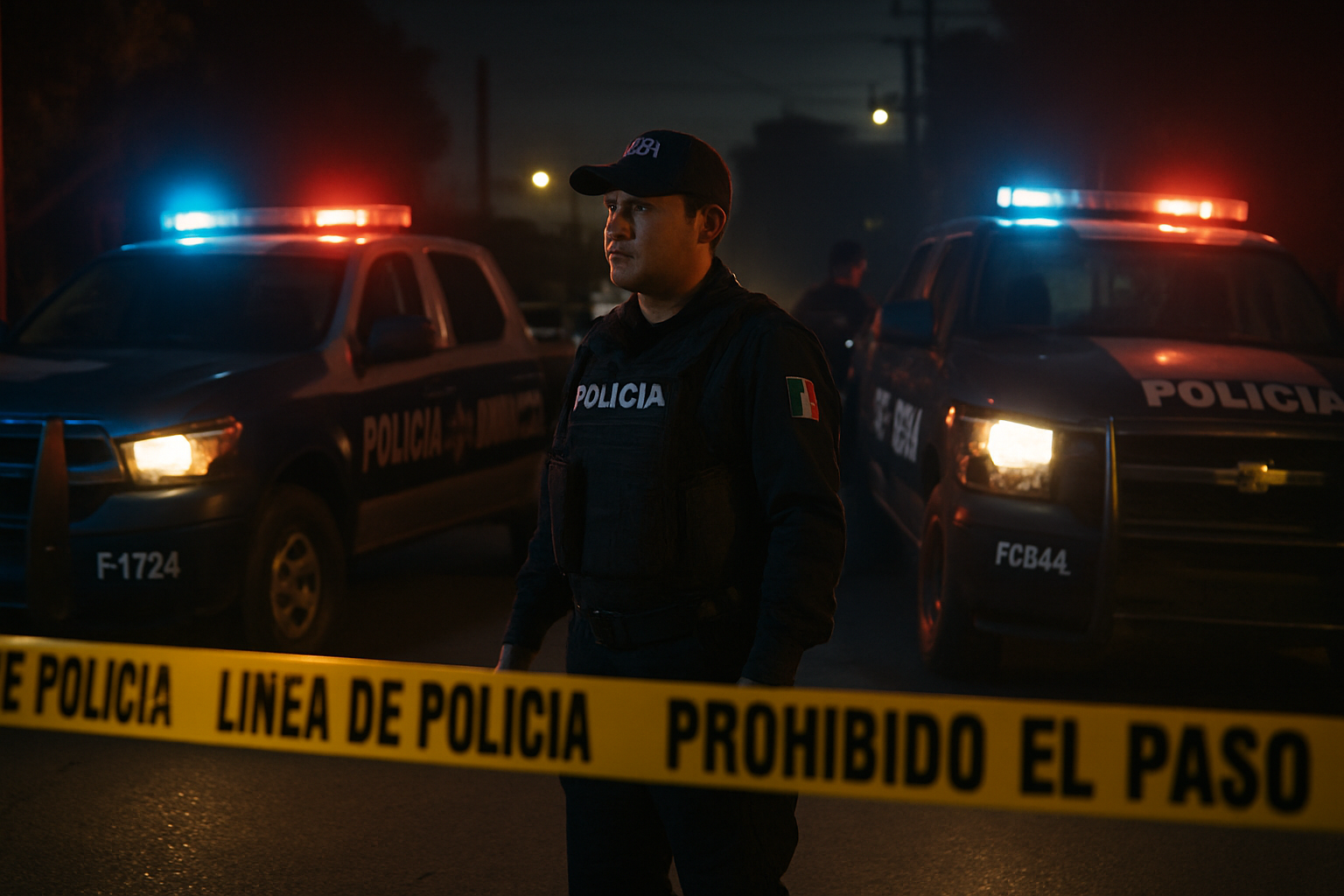
Mexican authorities are grappling with escalating cartel violence as FBI teams work alongside Mexican law enforcement in multiple high-stakes investigations, including the search for Nancy Guthrie, mother of American TV presenter Savannah Guthrie, who was allegedly kidnapped in late January.
The latest surge in criminal activity has highlighted the growing sophistication and brazenness of organized crime networks operating across Mexico, with incidents ranging from deadly public attacks affecting children to international kidnapping cases that have captured global attention.
Deadly Park Attack in Guanajuato Shocks Nation
In the most disturbing recent incident, an armed attack at a public park in Guanajuato state left one adult dead and eight minors wounded, sending shockwaves through a region already plagued by cartel violence. The attack, which occurred in broad daylight, has prompted state authorities to launch a comprehensive investigation while raising urgent questions about public safety in areas where criminal organizations maintain territorial control.
Guanajuato has emerged as one of Mexico's most violent states, serving as a critical battleground for rival cartels seeking control over lucrative drug trafficking routes and local criminal enterprises. The targeting of children in public spaces represents a particularly disturbing escalation that has alarmed both local communities and federal authorities.
"This attack crosses all red lines of what we consider acceptable in organized crime," said a Mexican security analyst who requested anonymity. "When children become casualties in public spaces, it signals a complete breakdown of the unwritten rules that even criminal organizations once respected."
— Mexican Security Expert
FBI-Mexican Cooperation in High-Profile Kidnapping Case
Simultaneously, FBI teams have been working within Mexico to coordinate with local authorities on the search for Nancy Guthrie, whose alleged kidnapping has drawn international attention due to her connection to NBC's "Today" show anchor Savannah Guthrie. According to reports from TMZ and confirmed by Mexican media outlets, the 70-year-old woman disappeared in late January under circumstances that suggest organized criminal involvement.
The FBI's presence in Mexico represents a significant escalation in cross-border law enforcement cooperation, highlighting the international dimensions of Mexico's security crisis. American law enforcement officials are reportedly seeking to establish contact channels with Mexican authorities to coordinate search efforts and intelligence sharing.
This case underscores how Mexico's criminal organizations increasingly target high-value individuals, including family members of prominent Americans, potentially viewing them as valuable leverage in broader criminal enterprises or ransom schemes.
Maduro Connection and International Criminal Networks
Adding complexity to Mexico's security landscape, recent revelations about Venezuelan leader Nicolás Maduro's connections to Mexican cartels have emerged through U.S. federal court proceedings. Documents indicate that during Maduro's upcoming March 26 court hearing, prosecutors will present evidence showing how the former Venezuelan president allegedly facilitated operations for both the Sinaloa Cartel and Los Zetas through preferential visa arrangements and territorial access.
These revelations, stemming from Maduro's detention at New York's Metropolitan Detention Center following his January capture, illustrate the transnational nature of organized crime networks that Mexican authorities must now confront. The evidence suggests systematic cooperation between state actors and criminal organizations, creating challenges that extend far beyond traditional law enforcement capabilities.
Historical Context and Pattern Recognition
The current wave of violence fits within a broader pattern of cartel evolution that security experts have been tracking throughout 2026. Recent incidents include the February drone attack on El Paso International Airport, which forced temporary airspace closure and demonstrated cartels' increasing technological sophistication and willingness to target civilian infrastructure.
Mining industry workers have also become frequent targets, as demonstrated by the tragic case of Canadian mining employees kidnapped and killed in Concordia, Sinaloa state. These attacks reflect criminal organizations' strategic targeting of high-value foreign nationals and economically significant operations.
Intelligence reports suggest that cartels have developed sophisticated surveillance networks capable of tracking government officials' movements, as evidenced by recent attempts on Colombian President Gustavo Petro's life that forced his helicopter to remain airborne for hours over the Caribbean Sea.
Law Enforcement Response and Challenges
Mexican authorities have deployed National Guard units to assist in search operations and have enhanced security protocols in regions experiencing elevated criminal activity. However, the scope and sophistication of current threats present unprecedented challenges for law enforcement agencies already stretched thin across multiple fronts.
The FBI's involvement in the Guthrie case represents part of broader U.S.-Mexico security cooperation that has intensified under the Trump administration's "Operation Southern Spear" framework. This cooperation includes both diplomatic coordination and, controversially, military strikes against suspected trafficking vessels in international waters.
Federal authorities on both sides of the border are grappling with criminal networks that now employ military-grade technology, including drones for surveillance and attacks, encrypted communications systems, and sophisticated intelligence-gathering operations that rival state capabilities.
Economic and Social Impact
The escalation in cartel violence carries significant economic implications for Mexico's tourism industry, international business investments, and mining operations. Foreign companies operating in high-risk regions are reassessing their security protocols and considering whether adequate protection can be guaranteed for their personnel.
The targeting of children in public spaces like the Guanajuato park attack represents a particularly destabilizing development that threatens basic social fabric and community life. Educational institutions, recreational facilities, and public gatherings now require enhanced security considerations in regions where criminal organizations maintain territorial presence.
International mining companies, already concerned following recent kidnapping and murder cases involving Canadian workers, are implementing comprehensive security planning as an essential component of their operations in Mexico. This includes coordination with local authorities, private security firms, and international law enforcement agencies.
International Cooperation and Future Outlook
The FBI's active presence in Mexico searching for Nancy Guthrie signals a new level of bilateral law enforcement cooperation that may serve as a template for addressing transnational criminal challenges. However, the success of such cooperation depends on sustained political commitment, adequate resources, and the ability to navigate complex jurisdictional and sovereignty considerations.
Recent intelligence suggests that Mexican cartels are increasingly viewing high-profile international targets as strategic assets, whether for ransom, political leverage, or as bargaining chips in broader criminal negotiations. This evolution requires corresponding adaptations in international security protocols and diplomatic frameworks.
The upcoming Maduro court proceedings in March may provide additional intelligence about the scope and structure of transnational criminal networks operating between Venezuela, Mexico, and other regional actors. This information could prove crucial for developing more effective counter-strategies against organized crime groups that operate across multiple countries.
Conclusion: A Critical Moment
As Mexican authorities investigate the Guanajuato park shooting and coordinate with FBI teams on the Guthrie kidnapping case, the nation faces a critical juncture in its ongoing struggle against organized crime. The simultaneity of these incidents, combined with broader patterns of cartel evolution and international cooperation, suggests that traditional approaches to combating criminal organizations may require fundamental reassessment.
The outcome of current investigations, particularly the FBI-Mexican cooperation in the Guthrie case, will likely influence future bilateral security arrangements and may establish precedents for addressing similar transnational criminal challenges. Success in these high-profile cases could strengthen international cooperation frameworks, while failures might expose the limitations of current law enforcement approaches against increasingly sophisticated criminal networks.
For the families affected by recent violence, including the children wounded in Guanajuato and the relatives of Nancy Guthrie, these investigations represent more than policy considerations—they are urgent humanitarian crises requiring immediate, effective responses from law enforcement agencies on both sides of the border.