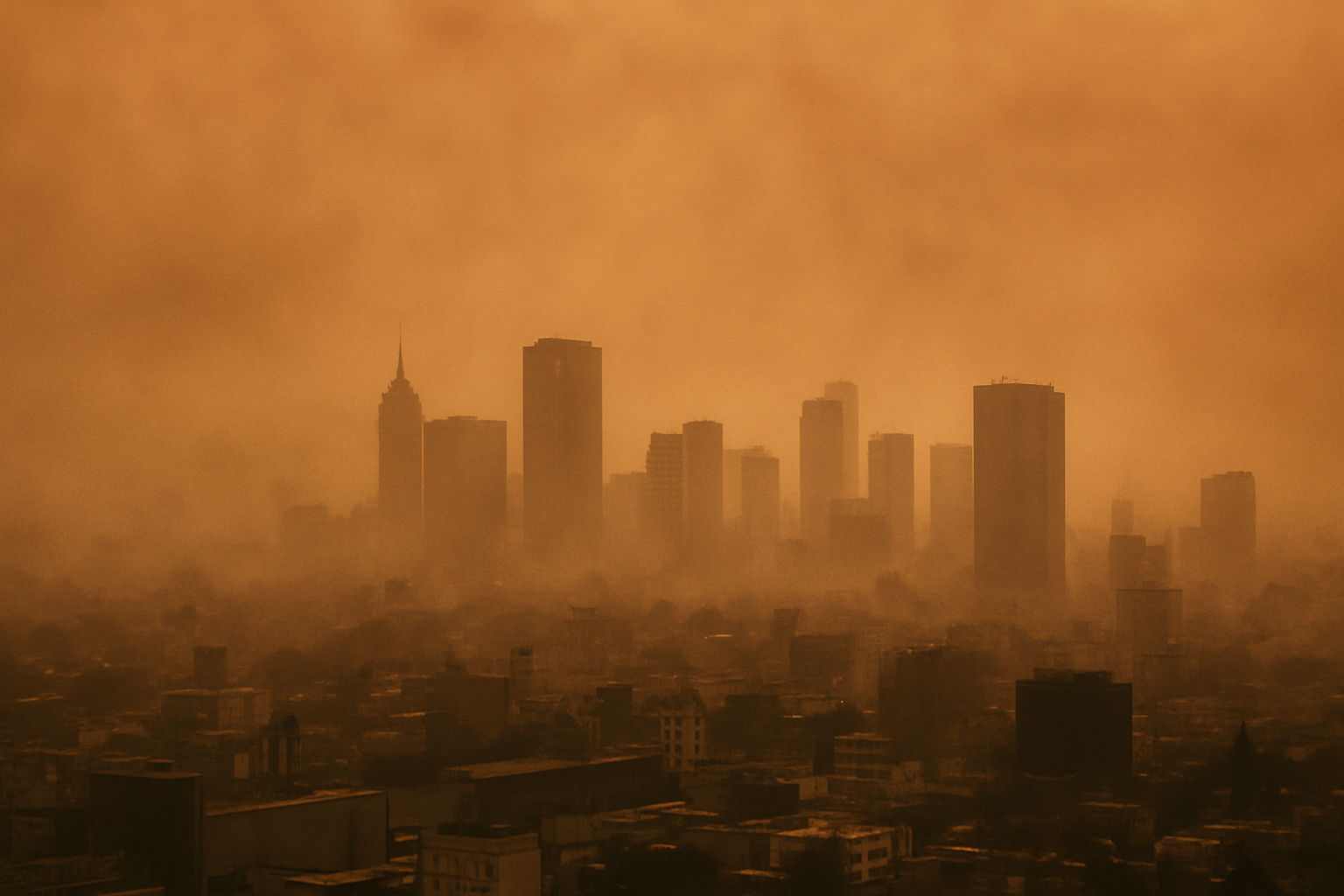
Mexico City authorities extended Phase I environmental contingency measures through Tuesday, February 17, as dangerous ozone levels continued to plague the world's fourth-largest metropolitan area for a fourth consecutive day, implementing unprecedented emergency protocols affecting more than 21 million residents across the Mexico Valley Metropolitan Zone (ZMVM).
The Environmental Commission of the Megalopolis (CAMe) confirmed that hazardous air quality readings exceeding safe limits across multiple monitoring stations prompted the continuation of the "Doble Hoy No Circula" vehicle restriction program and emergency work-from-home recommendations for Tuesday, as atmospheric conditions created a perfect storm of environmental dangers.
"The activation of environmental contingency has the objective of protecting the health of the population in the ZMVM and reducing exposure to high levels of contamination," CAMe officials stated in their latest emergency bulletin, emphasizing that the crisis represents the most severe air quality emergency since the devastating environmental episode of February 2026 that has now entered its second week.
Emergency Measures Expand Across Metropolitan Area
Mexican authorities recommended widespread implementation of remote work arrangements on Tuesday, specifically citing peak contamination periods between 1:00 PM and 7:00 PM when dangerous ozone concentrations reach their highest levels. The unprecedented work-from-home recommendation affects millions of workers across Mexico City and surrounding municipalities in the State of Mexico.
The "Doble Hoy No Circula" program continues to restrict vehicle circulation beyond normal parameters, with additional units required to suspend operations throughout CDMX and Estado de México. However, specific categories of vehicles remain exempt from the enhanced restrictions, including emergency services, public transportation, and vehicles meeting certain environmental standards.
Government authorities activated four-day work weeks for public employees while maintaining essential services, reflecting the severity of the atmospheric emergency that has persisted through mid-February despite typically favorable weather patterns for pollution dispersion.
Meteorological Conditions Exacerbate Crisis
Weather forecasting services predict continued high solar radiation and temperatures between 25-27 degrees Celsius through Tuesday, creating optimal conditions for ozone formation when combined with vehicle emissions and industrial pollutants. The combination of intense ultraviolet radiation, elevated temperatures, and atmospheric pressure patterns has trapped contaminated air masses over the metropolitan area.
Adding complexity to the environmental emergency, a major fire erupted this morning in the Bordo de Xochiaca pastizales in Nezahualcóyotl, Estado de México, sending additional particulate matter and smoke into an already compromised atmosphere. The fire represents an additional pollution source during a period when air quality monitoring stations are already registering dangerous levels of multiple contaminants.
"The high solar radiation, a fire in Estado de México, and temperatures between 25 and 27 degrees will cause the Phase I Environmental Contingency to persist in the Valley of Mexico."
— Environmental Commission of the Megalopolis (CAMe)
Health Warnings and Public Safety Measures
Mexican health authorities issued comprehensive public safety guidelines urging residents to avoid outdoor exposure during peak contamination hours, particularly between 1:00 PM and 7:00 PM when ozone concentrations reach hazardous levels. Vulnerable populations including children, elderly individuals, and those with respiratory conditions received specific warnings to remain indoors during high-pollution periods.
The sustained air quality crisis has prompted concerns about public health impacts across the metropolitan area, with medical facilities preparing for potential increases in respiratory-related emergency visits. Environmental health experts emphasize that prolonged exposure to elevated ozone levels can cause serious respiratory complications, particularly for vulnerable populations.
Authorities recommended that residents minimize outdoor activities, use public transportation when necessary, and consider postponing non-essential travel during peak contamination periods. Schools in affected areas received guidance on limiting outdoor activities and monitoring students for respiratory symptoms.
Historical Context and Regional Implications
The current environmental emergency builds upon a pattern of severe air quality challenges that have affected Mexico City throughout early 2026, representing the continuation of the most sustained air pollution crisis since the 1990s. Environmental monitoring data indicates that atmospheric conditions in February 2026 have created particularly dangerous scenarios for pollutant accumulation.
This latest emergency occurs within the broader context of global climate patterns, with January 2026 confirmed as the hottest month in recorded history - marking the 18th consecutive month of global temperatures exceeding 1.5°C above pre-industrial levels. These elevated global temperatures contribute to altered atmospheric circulation patterns that can trap pollutants closer to ground level in urban areas.
The Mexico City emergency represents one component of a broader pattern of environmental challenges affecting major metropolitan areas worldwide, demonstrating the urgent need for comprehensive air quality management strategies in rapidly growing urban centers.
Government Response and Coordination
Mexican government agencies have established monitoring and notification systems to provide real-time updates on environmental contingency measures through official websites and digital platforms. Citizens can access current air quality information and receive updates on emergency protocols through designated government portals.
The coordinated response involves multiple levels of government, from federal environmental agencies to local municipal authorities, working to implement comprehensive measures addressing both immediate health protection and longer-term air quality improvement strategies.
Transportation authorities continue managing the enhanced vehicle restriction program while ensuring essential services maintain operations. The balance between environmental protection and economic activity remains a critical consideration as authorities navigate the extended emergency period.
Long-term Environmental Challenges
The sustained nature of the current air quality emergency highlights systemic challenges facing one of the world's largest metropolitan areas. Mexico City's geographic location in a high-altitude valley, combined with population density exceeding 21 million residents, creates natural conditions conducive to air pollution accumulation during certain meteorological patterns.
Environmental scientists emphasize that addressing these recurring air quality emergencies requires comprehensive approaches combining emission reduction strategies, urban planning improvements, and enhanced public transportation systems. The current crisis underscores the urgent need for long-term environmental infrastructure investments.
International environmental cooperation and knowledge sharing with other major metropolitan areas facing similar challenges could provide valuable insights for developing more effective air quality management systems.
Economic and Social Impacts
The extended environmental emergency creates significant economic implications for the Mexico City metropolitan area, affecting business operations, transportation systems, and daily life for millions of residents. The work-from-home recommendations, while protecting public health, create operational challenges for businesses and services requiring physical presence.
Educational institutions face decisions regarding outdoor activities and student safety measures, while healthcare systems prepare for potential increases in pollution-related health issues. The comprehensive nature of the emergency response demonstrates the far-reaching impacts of severe air quality episodes on urban society.
Tourism and hospitality sectors monitoring the situation closely, as extended air quality emergencies can affect visitor confidence and outdoor recreational activities that form important components of the regional economy.
The current environmental contingency measures, while necessary for public health protection, highlight the critical importance of sustained investments in clean transportation infrastructure, emission reduction technologies, and comprehensive urban environmental management systems for one of the world's largest and most important metropolitan areas.