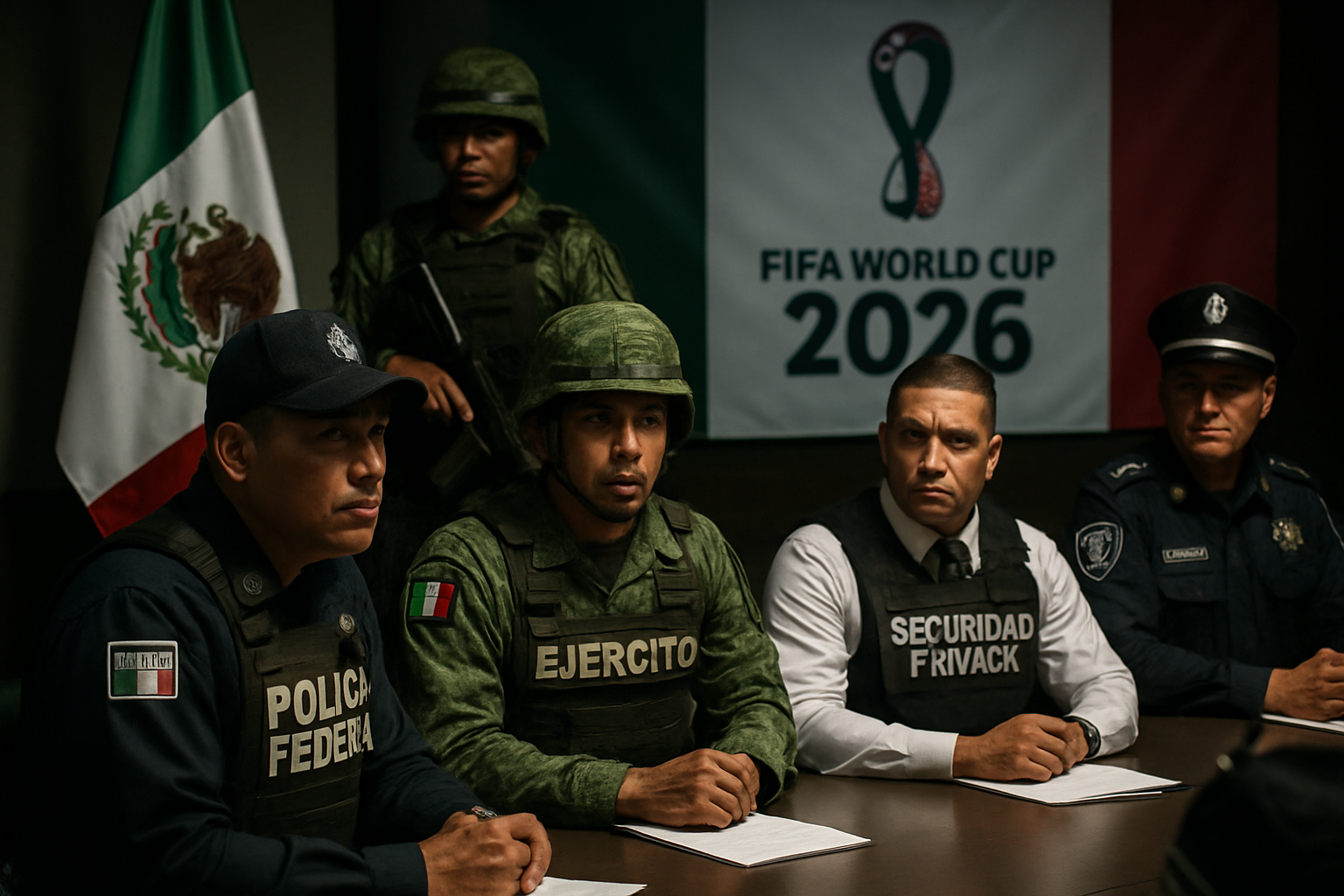
Mexico has announced the deployment of 100,000 security personnel to safeguard the 2026 FIFA World Cup, representing the largest security operation in the country's history as authorities work to ensure the safety of millions of international visitors, teams, and officials during the tournament.
The massive security deployment, announced Friday by Mexican government officials, will encompass military personnel, federal and local police forces, and private security agents across all 13 matches scheduled to take place on Mexican soil during the June-July 2026 tournament. The operation demonstrates Mexico's commitment to hosting a safe and successful World Cup despite recent security challenges that have raised international concerns.
Unprecedented Security Response
According to multiple government sources, the 100,000-person security force will include a mix of National Guard members, military troops, federal police, local law enforcement, and certified private security personnel. This deployment significantly exceeds the security arrangements of previous World Cups and represents a force larger than the entire Romanian military, which totals approximately 80,000 personnel.
The announcement comes in the wake of intensified security concerns following the February 2026 death of cartel leader Nemesio Oseguera Cervantes, known as "El Mencho," and the subsequent violent retaliation by the Jalisco New Generation Cartel (CJNG) that affected multiple states, including Guadalajara, a designated World Cup host city.
Romanian media noted the scale of Mexico's commitment, observing that the planned security force "is preparing an army larger than Romania's to ensure the security of teams and fans." This comparison underscores the extraordinary nature of Mexico's security preparations.
Strategic Response to Recent Challenges
The massive security deployment represents Mexico's response to a series of challenges that have tested the country's capacity to host international events safely. In February 2026, the death of El Mencho triggered a wave of retaliatory violence that resulted in 25 National Guard members killed, along with numerous civilian casualties, and prompted the deployment of 10,000 troops across western Mexico in what was then described as the largest security operation in years.
The violence particularly affected Guadalajara, one of Mexico's key World Cup host cities, leading to the declaration of a "red code" emergency and the suspension of schools across eight states. The crisis prompted FIFA to request detailed security reports from Mexican authorities and led several countries to issue travel advisories for Mexico.
Portuguese media confirmed that the enhanced security measures reflect Mexico's determination to demonstrate its hosting capabilities despite these challenges, with the country co-organizing the tournament alongside the United States and Canada.
International Confidence and Cooperation
Despite the security concerns, FIFA President Gianni Infantino has maintained confidence in Mexico's ability to host the tournament successfully. The organization's faith in Mexico's institutional capacity represents what analysts have described as a "calculated risk" based on the country's demonstrated ability to mobilize resources and implement comprehensive security measures.
The current security deployment builds on successful international cooperation, particularly the U.S.-Mexico intelligence sharing that led to the elimination of El Mencho. This collaboration demonstrates the bilateral security frameworks that will be crucial for protecting the millions of international visitors expected during the World Cup.
Italian sources confirmed that FIFA has received "all guarantees" for the tournament's completion, despite acknowledging that recent violence represented an unprecedented challenge for Mexican authorities in ensuring visitor safety.
Economic and Tourism Stakes
The World Cup represents a critical opportunity for Mexico's economic recovery, with tourism officials projecting the strongest performance since the pandemic. The tournament is expected to provide sustained infrastructure development and international marketing benefits extending well beyond the competition period.
However, recent security incidents severely disrupted the tourism industry, with major hotel chains temporarily closing facilities and transportation systems suspended in affected areas. The comprehensive security deployment aims to rebuild international confidence and ensure that the economic multiplier effects of hosting the World Cup can be fully realized.
The stakes are particularly high given Mexico's investment in World Cup preparations and the country's reliance on tourism as a key economic sector. Success in demonstrating security capabilities could provide a template for managing sophisticated security challenges while hosting major international events.
Comprehensive Security Framework
The 100,000-person security deployment will operate within a comprehensive framework that includes enhanced intelligence gathering, coordination between different security agencies, and integration with international partners. The operation will utilize the experience gained from Mexico's recent large-scale security responses, including the 10,000-troop deployment following the cartel violence.
According to government sources, the security personnel will be distributed across all World Cup venues and related infrastructure, including airports, transportation hubs, hotels, and fan zones. The operation will also include specialized units trained in crowd control, VIP protection, and counter-terrorism measures.
The deployment represents a significant evolution from traditional event security, incorporating lessons learned from managing complex security environments while maintaining Mexico's commitment to hosting international visitors safely and successfully.
Regional and Global Implications
Mexico's security response serves as a critical test of the country's capacity to manage sophisticated transnational security challenges while hosting global events. The success or failure of these measures will influence how other countries approach similar challenges and could provide a template for democratic responses to organized crime in the modern era.
The deployment also reflects the broader challenges facing the 2026 World Cup, which represents the largest tournament in history with 48 teams competing across three countries. The tri-national format requires unprecedented coordination and security cooperation between the United States, Canada, and Mexico.
With just months remaining before the tournament begins, Mexico's announcement of the 100,000-person security force demonstrates the country's determination to ensure that security concerns do not overshadow what promises to be a transformative sporting event for North America.
Looking Ahead
As the World Cup approaches, the effectiveness of Mexico's security deployment will be closely monitored by international observers, FIFA officials, and potential visitors. The operation represents not just a security measure but a statement of Mexico's commitment to international cooperation and its capacity to overcome complex challenges.
The success of the security operation could help restore international confidence in Mexico as a destination for major events and demonstrate the country's institutional resilience. For FIFA and the global football community, Mexico's comprehensive approach provides reassurance that the 2026 World Cup can proceed safely despite the security challenges that have marked the preparation period.
With the tournament set to begin in just a few months, Mexico's historic security deployment represents a decisive moment in the country's efforts to demonstrate that it can successfully balance public safety requirements with the ambition to host one of the world's most prestigious sporting events.