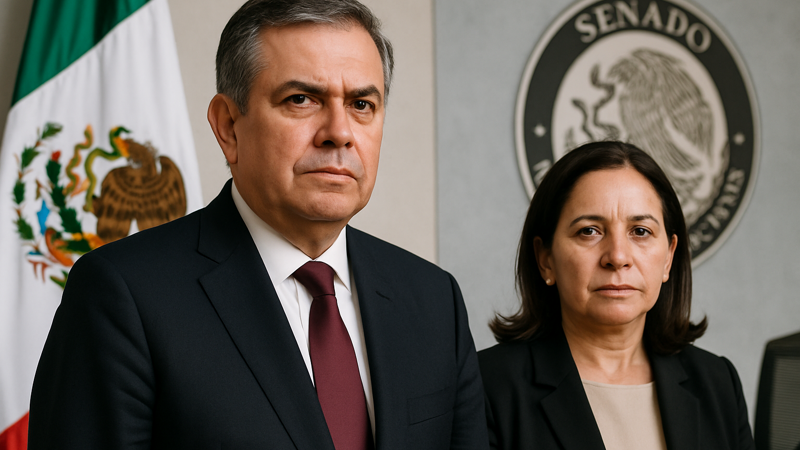
The Mexican government announced a series of major administrative changes across key departments in February 2026, with new leadership appointments in education and controversial reforms in Senate facilities highlighting ongoing institutional modernization efforts under President Claudia Sheinbaum's administration.
New Education Leadership Takes Charge
The most significant appointment came with the designation of Nadia López García as the new head of the Dirección General de Materiales Educativos (DGME), the General Directorate of Educational Materials within the Ministry of Education (SEP). Education Secretary Mario Delgado Carrillo announced the appointment following internal restructuring that saw the departure of Marx Arriaga Navarro, who had reportedly "entrenched himself" in his office to resist replacement.
López García, a poet and educator, brings a strong focus on inclusive education to her new role. According to official announcements, her leadership will prioritize incorporating more books in indigenous languages into the national curriculum and ensuring educational materials are available in large print and Braille formats for students with visual impairments.
"With the arrival of the new director, more books in indigenous languages will be incorporated and formats in large print and Braille will be guaranteed"
— Official SEP Statement
The SEP outlined comprehensive plans for reforming Mexico's free textbook program under López García's direction. The initiative represents a broader commitment to educational inclusivity, specifically targeting indigenous communities and students with disabilities who have historically been underserved by traditional educational materials.
Controversial Federal Prosecutorial Appointment
In Baja California, the potential appointment of Aníbal Castro Borbón to the state's Federal Prosecutor's Office (FGE) has reignited debates about judicial integrity and law enforcement credibility. Castro Borbón, a former federal judge, was previously criticized by Security Secretary Omar García Harfuch in 2025 for allegedly issuing rulings that favored suspected criminals.
The controversy surrounding Castro Borbón's potential appointment stems from accusations that his judicial decisions during his time as a federal judge showed undue leniency toward individuals accused of serious crimes. García Harfuch had specifically called out what he characterized as judicial decisions that "defended delinquents" rather than upholding justice.
Castro Borbón also participated in Mexico's recent judicial elections, where he was unsuccessful in his bid to retain his position. His potential appointment to the FGE has raised questions about the vetting process for senior prosecutorial positions and the government's commitment to judicial reform.
Senate Facility Reforms and Modernization
The Mexican Senate announced the definitive closure of a beauty salon that had operated within the Senate building, as confirmed by Ignacio Mier Velazco, coordinator of the ruling MORENA party and president of the Political Coordination Board. The facility, which operated twice weekly in the commission tower, had become a symbol of perceived institutional excess.
Mier Velazco emphasized that the closure was part of broader institutional modernization efforts, noting that the salon had only basic equipment including a single chair, mirror, and hair washing station. He stressed that no public resources were used to maintain the facility and that it generated no rental income for the Senate.
"It is definitively closed... My colleagues who were going to groom themselves there, well, they can't anymore"
— Ignacio Mier Velazco, MORENA Coordinator
The closure reflects the current administration's emphasis on austerity and eliminating perceived luxury amenities in government facilities. This move aligns with President Sheinbaum's broader agenda of reducing government expenditures and presenting a more austere image of public administration.
Educational Policy Modernization Context
The appointment of López García occurs within Mexico's broader educational transformation efforts, which have gained increased urgency following the country's measles outbreak and preparations for hosting FIFA World Cup 2026 matches. Health authorities have implemented enhanced vaccination campaigns and digital platforms to locate vaccination centers, with 28 million doses available nationwide.
The educational reforms under López García's leadership are expected to address longstanding inequalities in Mexico's education system. The emphasis on indigenous languages and accessibility formats represents a significant shift toward recognizing Mexico's linguistic and cultural diversity within formal education structures.
Mexico's educational challenges have been compounded by infrastructure limitations and resource constraints, particularly in rural and indigenous communities where access to quality educational materials has remained limited. The new DGME leadership signals the government's commitment to addressing these disparities through systematic policy changes.
Institutional Reform Implications
These administrative changes reflect broader trends in Mexican governance under President Sheinbaum's administration, which has emphasized institutional modernization, transparency, and social inclusion. The education sector reforms particularly align with constitutional requirements to respect indigenous rights and ensure equal educational opportunities.
The controversial nature of the Castro Borbón appointment highlights ongoing tensions between political expedience and judicial credibility in Mexico's criminal justice system. His potential role in Baja California's prosecutorial operations could significantly impact the state's law enforcement effectiveness and public trust in the justice system.
The Senate facility reforms, while seemingly minor, represent symbolic changes that demonstrate the government's commitment to eliminating perceived excesses in public administration. These moves resonate with broader public demands for government austerity and accountability.
International and Regional Context
Mexico's administrative changes occur within a complex regional political environment, with neighboring countries also undergoing significant governmental transitions. The emphasis on educational inclusion and indigenous rights aligns with broader Latin American trends toward recognizing cultural diversity and historical marginalization.
The timing of these reforms, particularly in education, coincides with Mexico's preparations for major international events, including FIFA World Cup 2026, which will showcase the country's educational and institutional capacity on a global stage.
Looking Ahead
The success of these administrative changes will largely depend on implementation effectiveness and sustained political commitment. López García's educational reforms will require significant coordination across Mexico's complex federal education system, involving state-level cooperation and community engagement.
The resolution of the Castro Borbón appointment controversy will serve as an indicator of the Sheinbaum administration's approach to balancing political considerations with institutional integrity demands. Public and legislative responses to this appointment may influence future prosecutorial and judicial appointments.
As Mexico continues its institutional modernization efforts, these February 2026 administrative changes represent important test cases for the government's ability to implement meaningful reform while maintaining political stability and public support. The outcomes will likely influence the broader trajectory of Mexican governance and institutional development throughout President Sheinbaum's term.