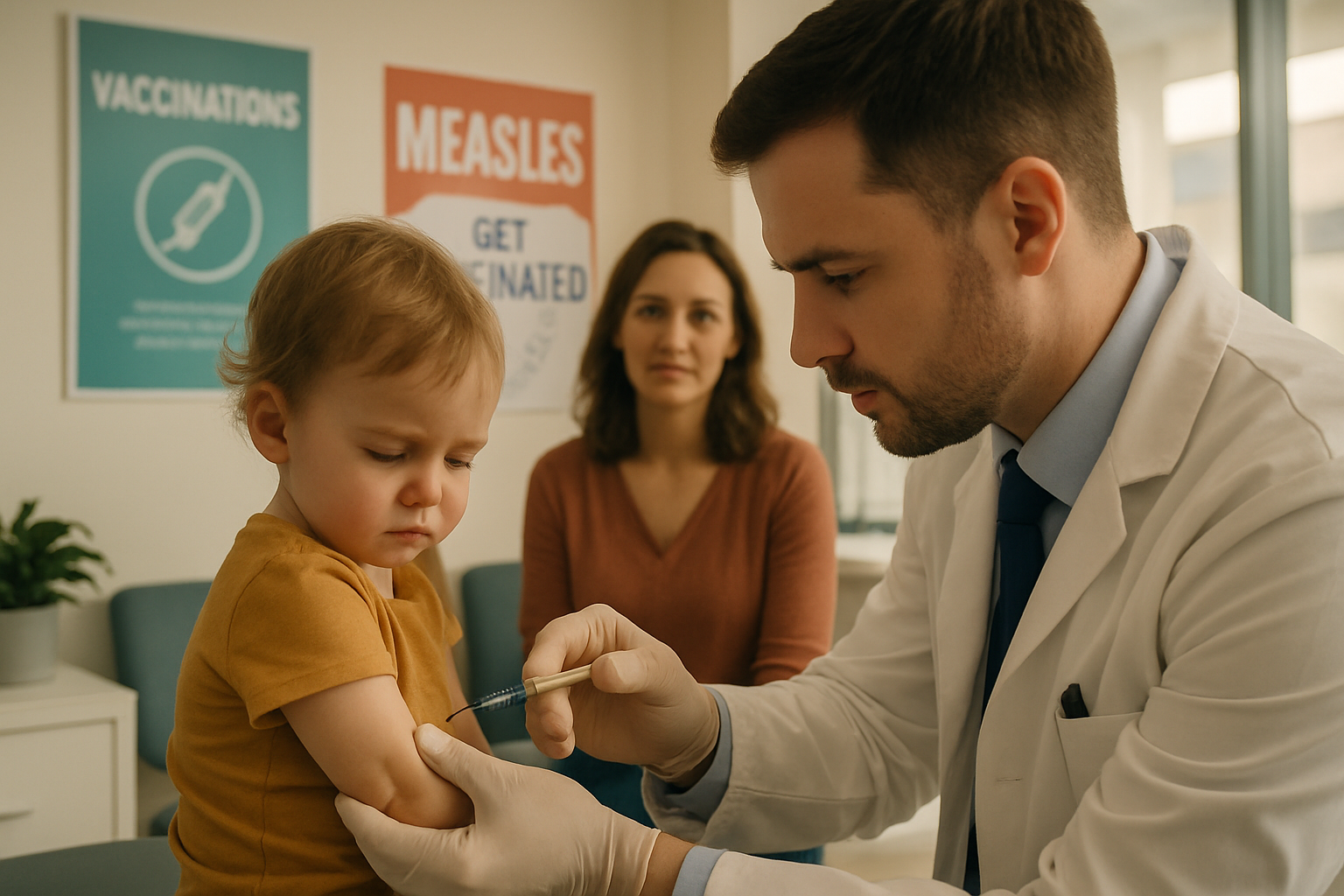
Health authorities across Mexico have intensified vaccination campaigns and implemented emergency protective measures as the country grapples with a major measles outbreak, with officials confirming that 90% of infected individuals lack vaccination protection against the highly contagious virus.
The outbreak has prompted several Mexican states to mandate face masks in schools, while health officials have launched a comprehensive response including the establishment of a nationwide digital platform to help citizens locate vaccination centers. According to El Informador reports, the current outbreak represents one of the most significant measles emergencies in recent years, affecting thousands of individuals across the country.
Vaccination Campaign Expansion
Quintana Roo has joined the nationwide measles vaccination campaign, with 28 million doses now available across Mexico. Local health authorities are prioritizing schools and rural communities to prevent further outbreaks, while Governor Mara Lezama has urged parents to ensure their children receive vaccinations, emphasizing that immunization remains the only effective method to contain the disease.
A newly launched digital platform has been introduced to help citizens locate vaccination modules throughout the country, serving as an auxiliary tool in the campaign to contain the current outbreak. This technological approach aims to improve accessibility and streamline the vaccination process for Mexican families.
Emergency Protective Measures
Several states have implemented mandatory face mask requirements in educational institutions as a precautionary measure against the highly transmissible virus. Health authorities note that measles is among the most contagious viral diseases, with one infected person capable of transmitting the virus to up to 18 others.
"Measles is one of the viral diseases with the highest transmission rate, as an infected person can infect up to 18 others."
— Health authorities quoted in El Informador
The virus can remain airborne for extended periods, significantly increasing transmission risks in crowded spaces such as schools and public transportation systems. This characteristic has prompted authorities to implement comprehensive monitoring and preventive measures across affected regions.
Outbreak Statistics and Demographics
Current reports indicate thousands of measles cases have been documented nationwide, with health officials confirming that approximately 90% of those infected had not received vaccination against the virus. This statistic underscores the critical importance of vaccination coverage in preventing outbreak spread.
The outbreak has generated significant concern among health professionals due to measles' rapid transmission characteristics and potential for serious complications, particularly among vulnerable populations including young children and individuals with compromised immune systems.
Transmission Patterns and Risk Factors
Health authorities have identified key transmission factors contributing to the outbreak's spread. Population mobility, frequent use of public transportation, and work activities outside the home have been recognized as primary vectors for virus transmission. The airborne nature of measles allows it to persist in enclosed spaces for extended periods, creating heightened transmission risks in urban environments.
According to health officials, the virus typically manifests symptoms several days after initial exposure, making early detection and isolation challenging. This delayed symptom onset contributes to community spread as infected individuals may unknowingly transmit the virus before becoming aware of their infection.
Historical Context and Regional Impact
The current outbreak continues a concerning trend that has affected Mexico throughout 2025 and into 2026. Previous reports from Planet News archives indicate the outbreak had already reached significant proportions by early February 2026, with confirmed cases numbering in the thousands and affecting multiple states including Jalisco, where health alerts were issued and school mask mandates implemented.
Guadalajara, a key FIFA World Cup 2026 host city, has been particularly affected by the outbreak, raising concerns about international health security just months before the tournament. The timing of the outbreak has added urgency to vaccination efforts as Mexico prepares to welcome thousands of international visitors.
International and Regional Response
The measles outbreak in Mexico occurs within a broader regional health emergency affecting the Americas. The Pan American Health Organization (PAHO) has confirmed that Mexico currently leads the region in measles case numbers, with the country reporting not only confirmed cases but also thousands of suspected cases under investigation.
This regional context underscores the importance of coordinated international health responses and the critical need for sustained vaccination coverage to maintain population immunity. Health experts emphasize that achieving 95% vaccination coverage is essential for establishing herd immunity and preventing future outbreaks.
Public Health Response Strategy
Mexican health authorities have implemented a multi-pronged approach to combat the outbreak, combining immediate protective measures with long-term prevention strategies. The response includes enhanced surveillance protocols, targeted vaccination campaigns, public education initiatives, and coordination between federal and state health agencies.
The digital platform for locating vaccination centers represents an innovative approach to improving healthcare accessibility, particularly important in a country with diverse geographic and socioeconomic challenges. This technology-enabled response demonstrates how public health campaigns can leverage digital tools to reach broader populations more effectively.
Looking Forward: Prevention and Preparedness
As Mexico continues to battle the current outbreak, health officials stress that vaccination remains the most effective tool for both individual protection and community health security. The campaign targeting 95% vaccination coverage represents a critical threshold for achieving population-level immunity.
The outbreak has highlighted the importance of maintaining robust immunization systems and the consequences of declining vaccination rates. Public health experts emphasize that sustained political commitment, adequate resources, and community engagement are essential for preventing future outbreaks and protecting public health.
With the FIFA World Cup 2026 approaching and Mexico's role as a major international destination, the successful containment of this outbreak carries implications beyond national borders, demonstrating the interconnected nature of global health security in an increasingly mobile world.