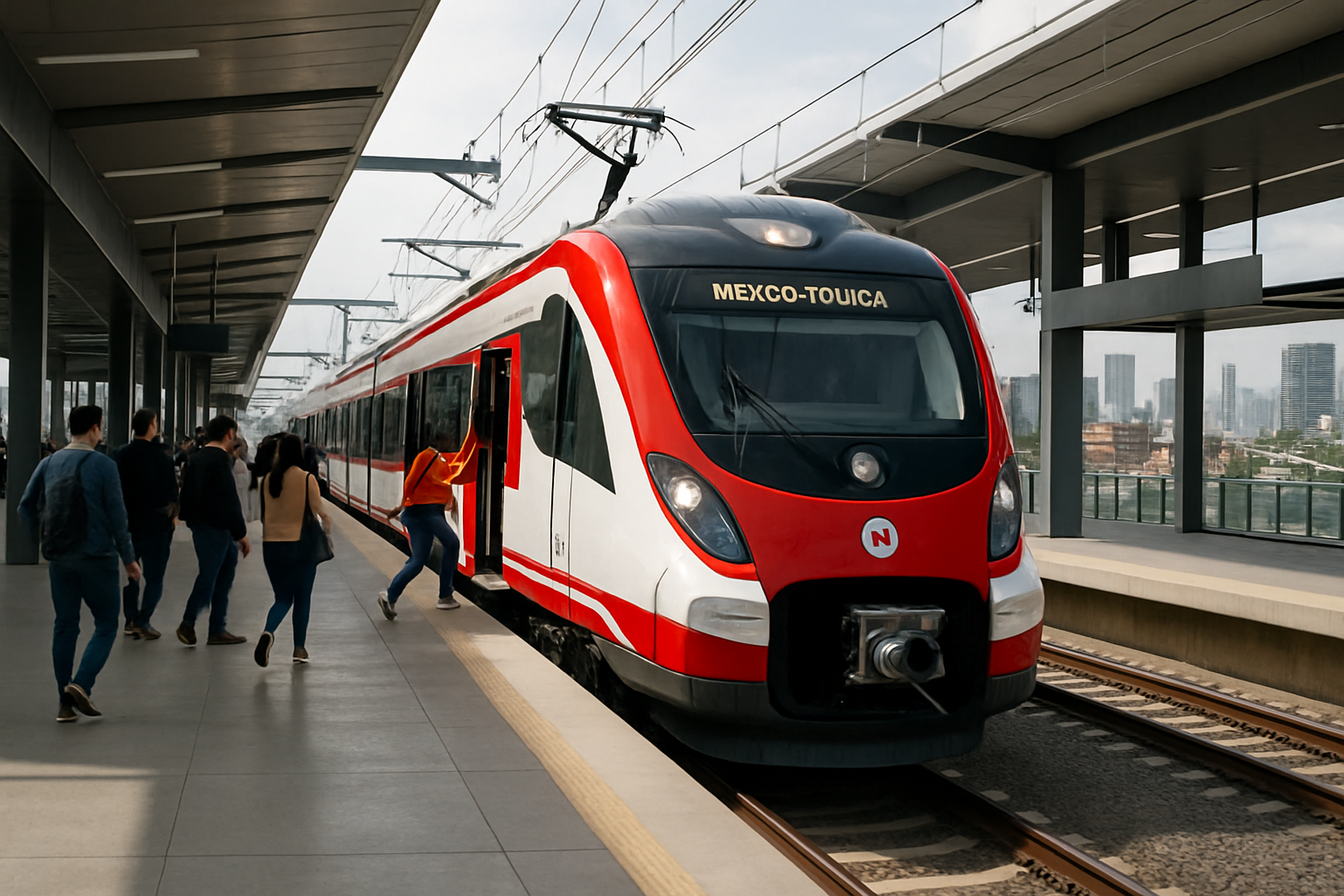
Mexico has officially completed its ambitious Mexico-Toluca interurban train project, with President Claudia Sheinbaum inaugurating the final section on February 2, 2026, marking the end of a 12-year construction journey that cost 100 billion pesos ($5.56 billion USD).
The completion of "El Insurgente," as the interurban train is known, represents a major milestone in Mexico's infrastructure development. The project, originally initiated by former President Enrique Peña Nieto in 2014, has faced numerous delays and cost overruns throughout its construction period.
Historic Completion After Prolonged Development
President Sheinbaum gave the ceremonial green flag to launch the final stage of the interurban train system, which now fully connects Mexico City with Toluca, the capital of the State of Mexico. The complete railway system spans 58 kilometers and features seven stations strategically distributed along the route.
The final section includes the crucial connection to Terminal Observatorio, one of Mexico City's key transportation hubs, as well as the Vasco de Quiroga station. This completion allows passengers to travel the entire distance from Toluca to Mexico City using the modern rail system.
"Today is a very good day because we are finally inaugurating the complete route of the interurban train," President Sheinbaum stated during the inauguration ceremony.
— Claudia Sheinbaum, President of Mexico
Infrastructure Investment and Regional Impact
The massive 100 billion peso investment represents one of Mexico's most significant transportation infrastructure projects in recent decades. The State of Mexico, with a population of over 2 million residents in the Toluca metropolitan area, is expected to benefit substantially from improved connectivity to the national capital.
Governor Delfina Gómez of the State of Mexico praised the project's completion as "historic," emphasizing its potential to improve quality of life for residents through reduced travel times and decreased environmental impact.
"This historic inauguration of the final stage of the Insurgente Interurban Train will improve the quality of life of the inhabitants of the State of Mexico by reducing travel times and reducing the emission of pollutants."
— Delfina Gómez, Governor of State of Mexico
Operational Readiness and Safety Certification
According to the director general of the National Bank of Public Works and Services (Banobras), all operational personnel have been thoroughly trained and certified for the train's operation. This certification process was a critical component in ensuring the system's readiness for public use.
The project's completion comes with comprehensive safety measures and operational protocols in place. The modern electric train system is designed to provide efficient, environmentally friendly transportation between the two major urban centers.
Connectivity and Integration
The new interurban train system is designed to integrate with existing transportation networks in both Mexico City and Toluca. Key stations will provide connections to Mexico City's Metro system and the Cablebús cable car network, creating a comprehensive public transportation ecosystem.
The Terminal Observatorio connection is particularly significant, as it serves as a major transportation hub that connects various Metro lines and bus routes throughout Mexico City. This integration allows passengers from Toluca to seamlessly continue their journeys throughout the capital's extensive public transport network.
Passenger Services and Accessibility
The train system offers modern passenger amenities and is designed to accommodate the daily commuting needs of thousands of residents who travel between Toluca and Mexico City for work, education, and business purposes. The service aims to provide a reliable alternative to road transportation, which has been congested along this corridor.
Ticket pricing information has been made available to the public, though specific fare details vary by distance and station pairs along the 58-kilometer route. The pricing structure is designed to make the service accessible to regular commuters while ensuring operational sustainability.
Economic and Environmental Benefits
Beyond transportation convenience, the completed train system is expected to deliver significant economic benefits to the region. The improved connectivity between Toluca and Mexico City could stimulate economic development, facilitate business growth, and create new employment opportunities along the corridor.
Environmental benefits include reduced vehicle traffic on highways between the two cities, leading to lower carbon emissions and improved air quality. The electric train system represents a more sustainable transportation option compared to individual vehicle travel or bus transportation.
Overcoming Construction Challenges
The 12-year construction period was marked by various technical, financial, and logistical challenges that contributed to delays and budget increases. The project's completion under the Sheinbaum administration represents the successful resolution of these long-standing issues.
The extended timeline allowed for thorough testing of all systems, comprehensive safety certifications, and proper training of operational staff. Despite the delays, the final product meets international standards for modern rail transportation.
Future Implications for Mexican Infrastructure
The successful completion of the Mexico-Toluca interurban train could serve as a model for future rail projects throughout Mexico. The experience gained from this project's development provides valuable lessons for planning and executing similar infrastructure investments.
The project demonstrates Mexico's commitment to modernizing its transportation infrastructure and reducing dependence on road-based transportation systems. This aligns with broader national goals of sustainable development and improved urban mobility.