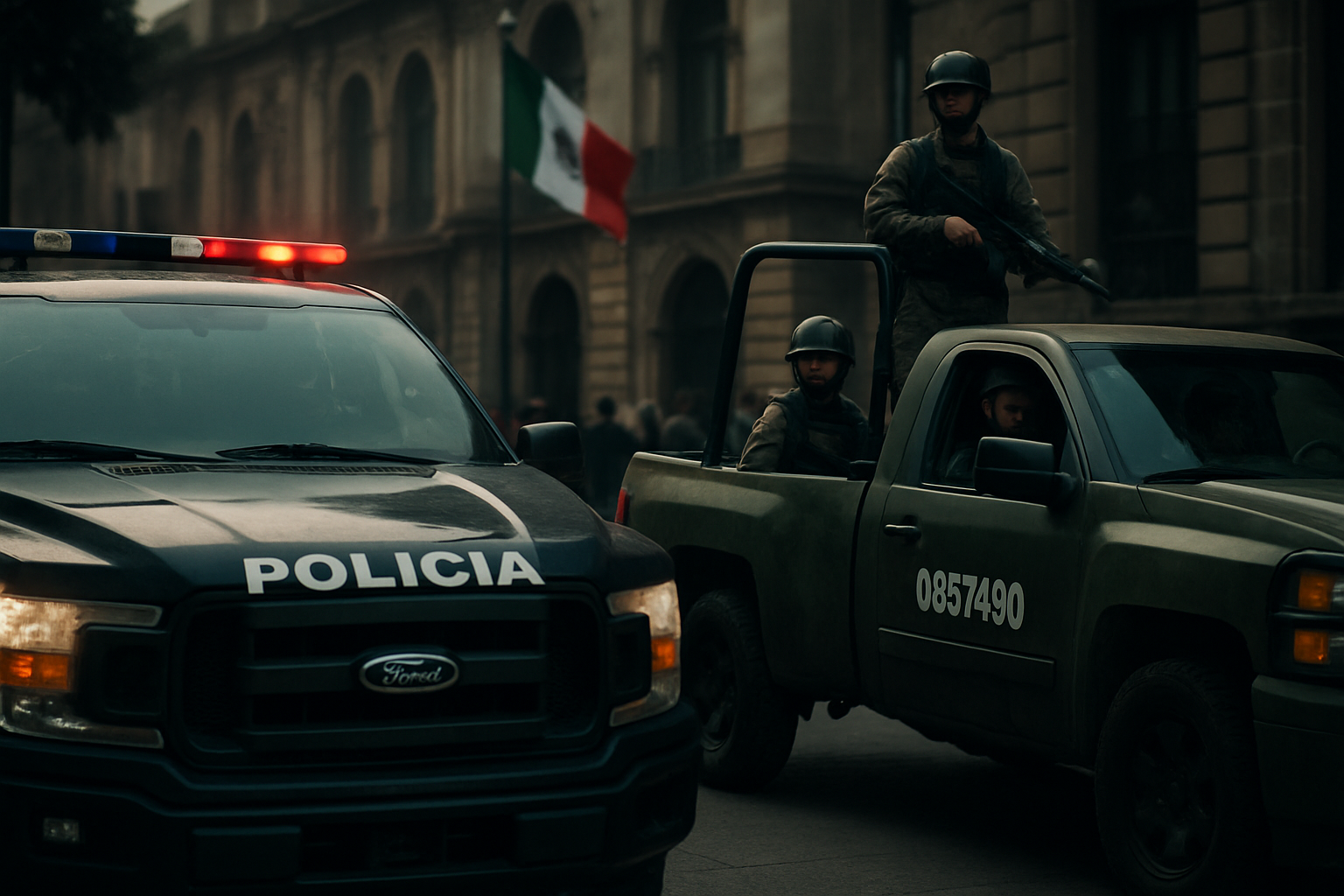
Mexico has deployed 10,000 troops across western regions to quell violent clashes sparked by the death of the country's most wanted drug lord, as international airlines suspend flights and governments issue urgent travel warnings just months before the FIFA World Cup 2026.
Nemesio "El Mencho" Oseguera, leader of the Jalisco New Generation Cartel (CJNG), was wounded on February 22 in a shootout with soldiers in the town of Tapalpa in Jalisco state and died while being flown to Mexico City, the army confirmed. His death has triggered the most severe wave of cartel violence in recent memory, with coordinated attacks across multiple states threatening both domestic stability and international tourism.
Unprecedented Security Response
President Claudia Sheinbaum has ordered the largest military deployment in years, with 10,000 troops mobilized across western Mexico to contain the escalating violence. The operation represents a massive coordinated response to what authorities describe as systematic retaliation by CJNG members following their leader's elimination.
The violence has been particularly severe in Jalisco state, where Governor Pablo Lemus declared a "red code" emergency and suspended schools in eight states on Monday. The unrest has directly impacted Guadalajara, one of Mexico's designated host cities for the 2026 World Cup, raising serious questions about the country's security preparations for the tournament.
"The government has deployed all necessary resources to restore order and protect civilian populations. We will not allow criminal organizations to terrorize our communities."
— Mexican Defense Secretary Ricardo Trevilla
According to official reports, at least 25 members of the National Guard have been killed in retaliatory attacks, along with one police officer and one judicial employee. Mexican forces have eliminated approximately 70 CJNG members during the ongoing operations.
International Travel Warnings Multiply
The violence has prompted a wave of international travel advisories as governments rush to protect their citizens. Australia has urged travelers to exercise a "high degree of caution" when considering travel to Mexico, while Canada's government is closely monitoring the situation with thousands of Canadians currently in the country.
Air Canada and WestJet have reportedly been forced to resume flights after temporary disruptions, with thousands of Canadian tourists stranded in popular resort areas like Puerto Vallarta, where vehicles and buildings have been set ablaze by criminal groups.
Belize has taken particularly strong action, with Ambassador Oscar Arnold advising Belizean nationals to reconsider or delay travel into Mexico entirely. The embassy has been placed on high alert and is maintaining close communication with Belizean citizens currently in the country.
"The embassy has been closely tracking the situation and maintaining communication with Belizean nationals," Ambassador Arnold stated, noting that the advisory comes amid reports of heightened tensions in several Mexican states.
Economic and Tourism Impact
The violence has devastated Mexico's crucial tourism industry, with major hotel chains closing facilities and popular destinations like Puerto Vallarta experiencing significant disruptions. A Costco store in Puerto Vallarta was reportedly burned during the violence, highlighting how criminal groups are targeting civilian infrastructure.
The timing is particularly concerning for Mexico's economy, as the country prepares to co-host the FIFA World Cup 2026 alongside the United States and Canada. Tourism officials had projected the tournament would provide the strongest performance since the pandemic, but the current security crisis threatens these optimistic forecasts.
Malaysia's Foreign Ministry, through its Embassy in Mexico City, has issued advisories urging Malaysians in the country to "remain vigilant, exercise caution and remain circumspect at all times, particularly in areas where security operations are taking place."
The Dominican Republic's Ministry of Foreign Affairs has specifically advised citizens to avoid non-essential travel to Jalisco state as a preventive measure, noting that recommendations also apply to other areas that could be affected until greater stability and security are restored.
CJNG's Criminal Enterprise
The Jalisco New Generation Cartel, under El Mencho's leadership, had become Mexico's most sophisticated criminal organization since 2011. The group evolved from remnants of the Milenio Cartel and was notable for its military-style tactics, including the 2015 downing of a military helicopter with rocket-propelled grenades.
El Mencho carried a $15 million bounty from the U.S. Drug Enforcement Administration, making him the world's most wanted drug criminal. The cartel controlled significant fentanyl trafficking routes to the United States and maintained international networks across Latin America and Asia.
Security analyst Victor Manuel Sánchez Valdés warned that the magnitude of CJNG's territorial control and financial resources, combined with the lack of clear succession, could create internal disputes and focused violence episodes as various factions compete for control.
World Cup Security Concerns
FIFA has requested detailed security reports from the Mexican government following the violence in Guadalajara, one of the tournament's host cities. The international football organization is closely monitoring the situation as it prepares for the world's most-watched sporting event.
Italian government officials have assured that there are "all the guarantees" for the tournament's successful completion, though the current violence represents an unprecedented challenge for Mexican authorities tasked with ensuring the safety of millions of international visitors expected for the World Cup.
The tournament is scheduled to begin in June 2026, giving Mexican authorities just four months to restore stability and rebuild international confidence in the country's security capabilities.
International Cooperation and Response
The operation that led to El Mencho's death represented successful U.S.-Mexico intelligence cooperation, with American agencies providing crucial support in tracking the cartel leader to his luxury mountain hideout. U.S. intelligence helped locate El Mencho through surveillance of a romantic partner visiting the compound.
However, the aftermath has tested international relationships as countries balance diplomatic cooperation with the need to protect their citizens. The violence has forced regional governments to choose between maintaining normal relations with Mexico and issuing strong travel warnings that could damage bilateral ties.
European media outlets have characterized the situation as a critical test of Mexico's ability to manage major criminal organizations while minimizing civilian impact. The success or failure of current operations will have implications far beyond Mexico's borders, potentially influencing how other countries approach organized crime challenges.
Path Forward
Mexican authorities face the challenge of preventing the CJNG from splintering into multiple competing organizations, which could potentially create even more violence. Historical patterns suggest that eliminating cartel leadership often causes organizational fragmentation rather than decreased criminal activity.
The Mexican government has prioritized "defense of internal order" with no clear timeline for when restrictions or enhanced security measures might be lifted. President Sheinbaum has maintained real-time communication with her security cabinet throughout the crisis, demonstrating the high-level attention being given to the situation.
As Mexico prepares to host one of the world's largest sporting events, the current crisis represents both a test of the country's security capabilities and a potential template for how modern democracies respond to sophisticated transnational criminal organizations. The coming months will determine whether Mexico can successfully balance its World Cup preparations with the urgent need to restore public safety and international confidence.
The international community continues to monitor developments closely, with several countries preparing contingency plans for their citizens and reconsidering travel policies based on Mexico's ability to contain the ongoing violence and prevent its spread to other regions.