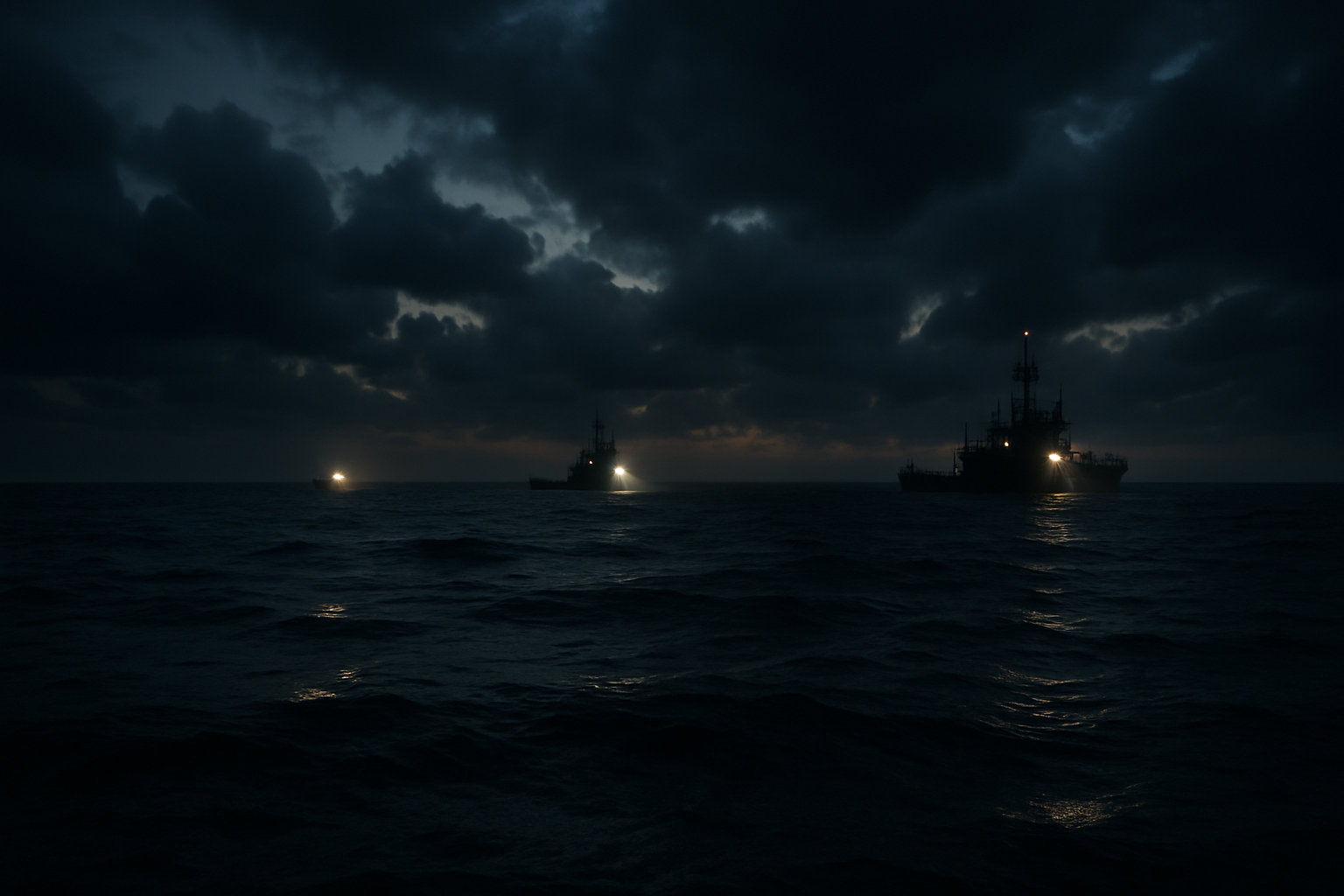
The latest search for Malaysia Airlines Flight MH370, which vanished 12 years ago in one of aviation's most enduring mysteries, concluded in January 2026 without yielding any significant findings, Malaysia's transport ministry announced on Sunday, leaving families of the 239 people aboard still without answers.
The deep-sea search operation, which began in December 2025, represented the most recent attempt to locate the Boeing 777 aircraft that disappeared on March 8, 2014, while en route from Kuala Lumpur to Beijing. Despite employing advanced underwater technology and covering previously unsearched areas of the southern Indian Ocean, the operation failed to provide any breakthrough in the case that has captivated the world for over a decade.
Latest Search Operation Details
According to Malaysia's transport ministry statement, the search operation that concluded in January 2026 utilized cutting-edge autonomous underwater vehicles (AUVs) and sophisticated sonar mapping technology. The effort focused on areas of the southern Indian Ocean that had not been thoroughly explored during previous search campaigns between 2014 and 2017.
Ocean Infinity, the company that has been leading recent search efforts, deployed their advanced fleet of underwater robots capable of operating at extreme depths. The technology represents a significant advancement from the equipment available during the initial multinational search operation that ended in January 2017 after covering 120,000 square kilometers of ocean floor.
The search area was selected based on new analysis of satellite data and debris patterns, with investigators hoping that technological advances in deep-sea exploration would finally provide answers to what happened to Flight MH370. However, the complex terrain of the southern Indian Ocean and the vast search area continue to present formidable challenges for recovery efforts.
Families Continue to Seek Answers
The conclusion of the latest search has left families of the 227 passengers and 12 crew members aboard MH370 devastated but not defeated in their quest for answers. Many family members have continued to advocate for extended search operations, urging the Malaysian government to maintain its contract with Ocean Infinity for additional deep-sea exploration.
"We refuse to give up hope. Our loved ones deserve to be found, and their families deserve to know what happened on that terrible night 12 years ago."
— Family representative speaking at March 8, 2026 memorial service
On the 12th anniversary of the disappearance in March 2026, families gathered to commemorate their lost relatives and renewed their calls for continued search efforts. Their persistence reflects a belief that ongoing technological progress will eventually provide the breakthrough that has eluded investigators for more than a decade.
International Support and Collaboration
The MH370 search has involved unprecedented international cooperation, with contributions from Australia, China, France, and the United States. The Australian Transport Safety Bureau led the initial coordinated search effort, which became the largest maritime search operation in history at the time.
The investigation has highlighted the critical importance of satellite data in modern aviation investigations. Inmarsat, the satellite communications company, provided crucial data that helped investigators determine the aircraft's approximate final location in the southern Indian Ocean, though this analysis has not yet led to the discovery of the main wreckage.
Impact on Aviation Safety
The MH370 disappearance has fundamentally transformed aviation safety protocols and tracking requirements worldwide. The International Civil Aviation Organization (ICAO) implemented enhanced tracking requirements, including mandatory position reporting at 15-minute intervals for aircraft flying over oceanic airspace where radar coverage is limited.
These changes represent one of the most significant advances in aviation safety protocols in decades, ensuring that no commercial aircraft can simply vanish without a trace as MH370 did. Modern aircraft are now equipped with multiple tracking systems that provide real-time location data to air traffic controllers and airlines.
The case has also improved international cooperation mechanisms for aviation emergencies and search-and-rescue operations. The lessons learned from the MH370 search have been applied to subsequent aviation incidents, enabling more coordinated and effective response efforts.
Debris Recovery and Analysis
While the main wreckage remains elusive, several pieces of confirmed MH370 debris have been recovered along coastlines of the western Indian Ocean. These fragments, found on beaches in Mauritius, Madagascar, Tanzania, and other locations, have provided some insights into the aircraft's final moments but have not resolved the fundamental questions about why the plane diverted from its planned flight path.
Analysis of the recovered debris has confirmed that the aircraft broke up upon impact with the ocean surface, consistent with a high-speed collision. However, investigators still lack access to the crucial flight data recorders that could provide definitive answers about what occurred in the cockpit during the aircraft's final hours.
Satellite Data Analysis
The investigation has relied heavily on satellite communication records from Inmarsat, which tracked automatic "handshakes" between the aircraft and satellite until approximately 8:19 AM Malaysian time on March 8, 2014. This data suggests the aircraft continued flying for several hours after losing contact with air traffic control, ultimately ending somewhere in the remote southern Indian Ocean.
The analysis of this satellite data has been refined multiple times using increasingly sophisticated mathematical models, but the margin of error remains significant given the vast expanse of the search area and the depth of the ocean floor in the region.
The Search Continues
Despite the conclusion of the latest formal search operation, private efforts and government commitments to finding MH370 continue. Malaysia maintains that the investigation remains officially active, though practical search activities are limited by the absence of new credible leads and the enormous costs associated with deep-sea exploration.
Ocean Infinity has expressed willingness to continue search efforts under a "no find, no fee" arrangement, but requires government authorization and support for any future operations. The company's advanced autonomous underwater vehicles represent the most promising technology currently available for deep-ocean searches.
The decision on whether to extend search contracts and authorize additional exploration efforts remains crucial for families' hopes of finally achieving resolution and closure. The persistence of family advocacy groups demonstrates the enduring human impact of aviation's greatest unsolved mystery.
Legacy of MH370
The disappearance of Malaysia Airlines Flight MH370 has become more than an aviation mystery—it represents a watershed moment that exposed critical gaps in aircraft tracking and international coordination during emergencies. The case continues to influence aviation safety protocols, tracking requirements, and search-and-rescue operations worldwide.
For the aviation industry, MH370 serves as a constant reminder of the importance of robust tracking systems and transparent international cooperation. The enhanced safety measures implemented in response to the disappearance have likely prevented similar incidents, though the cost of this progress has been measured in the ongoing anguish of families who still await answers.
As technological capabilities continue to advance, particularly in deep-sea exploration and satellite tracking, there remains cautious optimism that the mystery of MH370 will eventually be solved. Until then, it stands as both a tragedy and a catalyst for aviation safety improvements that continue to protect millions of travelers worldwide.