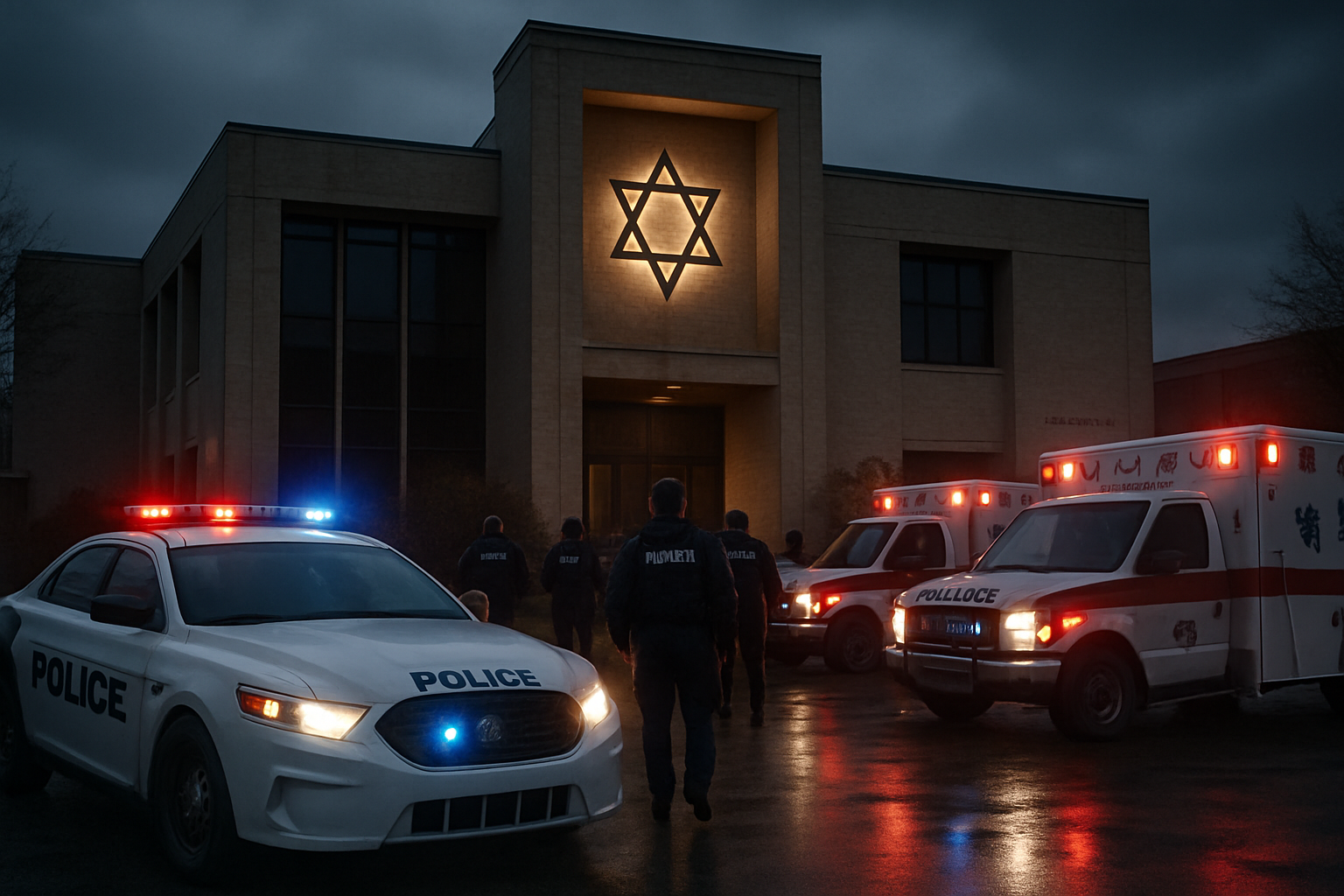
A truck-ramming attack at Temple Israel synagogue in West Bloomfield, Michigan, has prompted a federal terrorism investigation after the gunman was shot dead by security personnel on Thursday afternoon, marking the latest in a disturbing wave of antisemitic attacks targeting Jewish communities worldwide.
The attack occurred at approximately 12:30 PM at the Detroit-area synagogue, which also houses a Jewish preschool with children present at the time. According to Oakland County Sheriff Mike Bouchard, security officers at the facility "engaged with the suspect" after the attacker drove his vehicle through the synagogue doors and into the hallway.
FBI officials confirmed during an evening press conference that the incident is being treated as "an act of targeted violence against the Jewish community," elevating the investigation to federal terrorism protocols. One security officer was struck by the vehicle and hospitalized, but no other serious injuries were reported among congregants or staff.
International Context of Rising Antisemitic Violence
The Michigan attack represents at least the seventh synagogue targeted in the diaspora this month alone, according to reports from The Times of Israel. This disturbing pattern follows multiple recent incidents across several countries, including attacks in Canada, a foiled plot in Azerbaijan, an explosion at a synagogue in Belgium, and vandalization in Maryland.
The timing of the attack occurs within a broader international surge of antisemitic incidents. Ireland's Jewish Council recently documented 143 antisemitic incidents over a six-month period from September 2025 to February 2026, while European security services have reported sophisticated Iranian intelligence operations targeting Jewish communities across the continent.
"The antisemitism doesn't know borders,"
— Israeli Prime Minister Benjamin Netanyahu, statement following the attack
Netanyahu expressed gratitude to the synagogue security agents and praised what he called President Trump's "firm position" on combating antisemitism. The Israeli leader's statement reflects growing international concern about the coordinated nature of recent attacks targeting Jewish institutions.
Suspect Background and Investigation Details
Multiple sources have identified the gunman as a naturalized U.S. citizen from Lebanon who arrived in the United States in 2011. Italian media reports suggest the attacker's family may have been killed in an Israeli raid in Lebanon, with photos of children allegedly posted on social media before the attack, though these details remain under investigation.
CNN reports that a large quantity of explosives was found in the suspect's vehicle, indicating significant premeditation and sophisticated planning that could have resulted in a far deadlier outcome. The presence of explosive materials has intensified the federal investigation and raised questions about potential connections to extremist networks.
The FBI's designation of the incident as terrorism reflects the deliberate targeting of a religious institution and the apparent planning involved. Federal investigators are examining the suspect's background, social media activity, potential extremist connections, and how he acquired the explosive materials.
Security Response and Community Impact
The effectiveness of the synagogue's security personnel prevented what could have been a catastrophic mass casualty event. The Jewish Federation of Detroit implemented a precautionary lockdown of affiliated agencies following the attack, which was lifted several hours later after authorities determined there were no additional threats.
Michigan Governor Gretchen Whitmer condemned the attack and emphasized the Jewish community's right to worship safely. The incident has prompted renewed discussions about security measures at religious institutions nationwide, with many Jewish organizations reviewing their protective protocols.
The attack methodology—combining vehicle ramming with explosive devices—demonstrates the sophisticated tactics employed by extremists and highlights the critical importance of professional security at vulnerable religious sites. The trained personnel's rapid response undoubtedly saved lives and prevented the attacker from achieving his apparent objectives.
Broader Pattern of Global Antisemitic Attacks
The Michigan incident fits into a troubling international pattern that has seen a dramatic escalation in antisemitic violence. Recent attacks include the devastating December 14, 2025, Bondi Beach Hanukkah festival attack that killed 15 people, and the February 21, 2026, Brisbane synagogue ramming attack involving a 32-year-old suspect using a Toyota Hilux.
European intelligence agencies have documented sophisticated Iranian surveillance networks targeting Jewish communities, with British counter-terrorism police recently arresting four men suspected of spying for Iranian intelligence services and conducting surveillance of Jewish community locations in London.
The frequency and coordination of these attacks have led security experts to warn of organized campaigns designed to terrorize Jewish communities globally. The systematic targeting demonstrates a level of planning and international coordination that extends beyond isolated incidents of hate.
Law Enforcement Response and Investigation
Federal, state, and local law enforcement agencies have launched a comprehensive investigation into the attack. The FBI's Joint Terrorism Task Force is leading the probe, examining potential connections to domestic and international extremist networks.
Michigan State Police and local authorities are examining hate crime and terrorism angles while reviewing security footage from the area and conducting extensive background checks on the suspect. The investigation will also focus on how the attacker acquired the explosive materials and whether he received assistance from others.
Enhanced security measures have been implemented at Jewish institutions throughout Michigan and other states as a precautionary measure. Intelligence-led patrols have been increased in areas with significant Jewish populations, and federal authorities are coordinating with community leaders to assess ongoing threats.
Community Resilience and Response
Despite the traumatic nature of the attack, the Jewish community and interfaith allies have demonstrated remarkable resilience and solidarity. Religious leaders across denominations have condemned the attack and expressed support for the affected congregation.
The community's determination to maintain religious activities with enhanced security protocols reflects the broader principle that terrorism will not succeed in intimidating democratic societies or preventing religious freedom. Mental health services have been made available to those affected by the traumatic incident.
This attack, like others targeting religious minorities globally, serves as a stark reminder of the ongoing need for vigilance, community cooperation, and robust security measures to protect vulnerable institutions from extremist violence while preserving the open and welcoming nature that defines democratic societies.