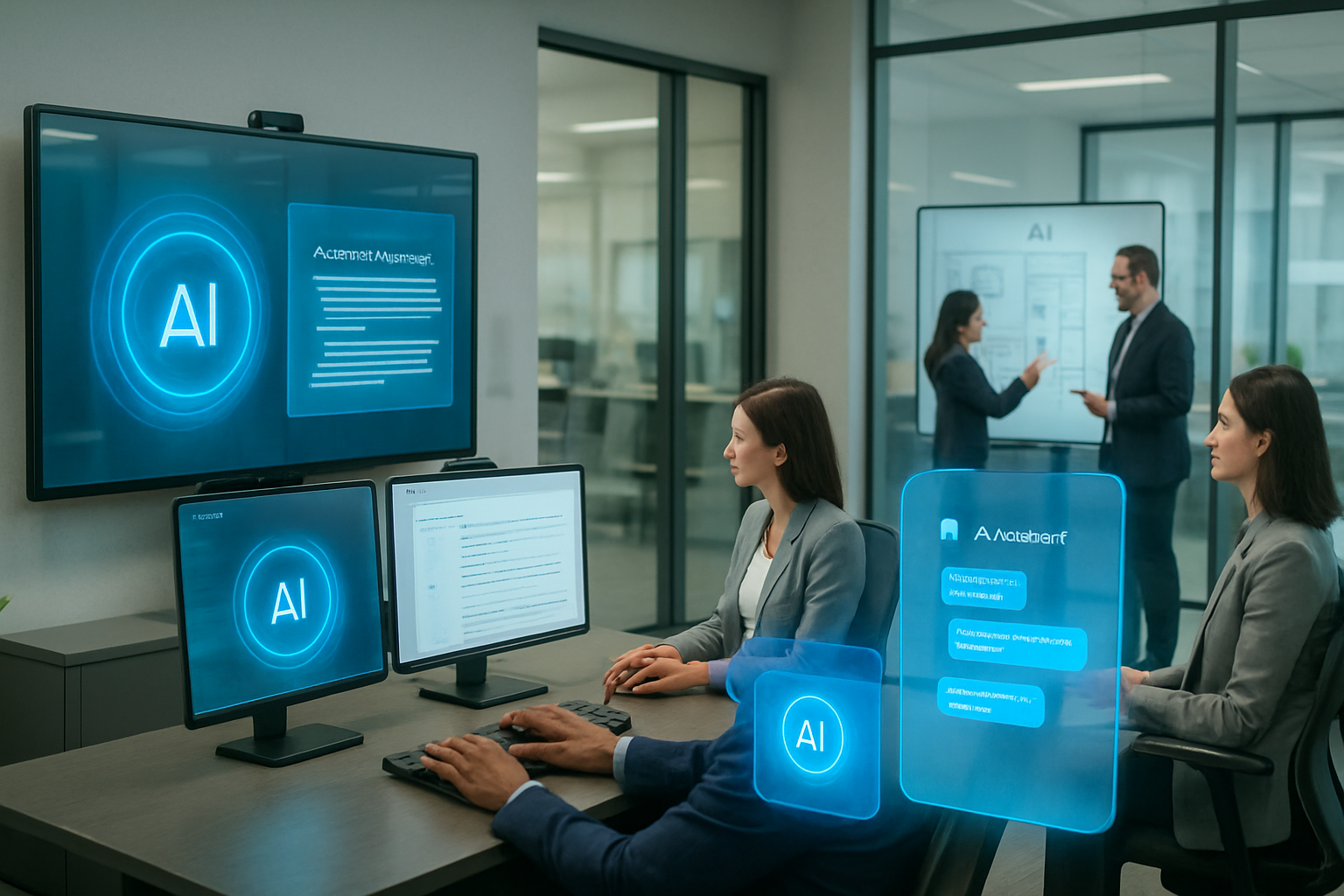
Microsoft has unveiled Copilot Cowork, a revolutionary AI agent designed to perform complex tasks on behalf of users within the Microsoft 365 ecosystem, marking a significant advancement in workplace artificial intelligence through a strategic collaboration with Anthropic.
The announcement comes during a critical period for technology companies, as they navigate an increasingly complex landscape of security threats, competitive pressures, and regulatory challenges while racing to establish dominance in the rapidly evolving AI market.
Copilot Cowork: A New Era of AI Workplace Integration
According to reports from AzerNEWS, Microsoft's Copilot Cowork represents a fundamental shift in how AI agents operate within enterprise environments. Unlike traditional AI assistants that respond to user queries, this new system is designed to autonomously handle complex, multi-step workflows within Microsoft's comprehensive productivity suite.
The collaboration with Anthropic, the AI safety company founded by former OpenAI researchers, signals Microsoft's commitment to developing responsible AI systems that can operate with greater autonomy while maintaining safety standards. This partnership comes at a time when the industry is grappling with questions about AI governance and the need for safety-conscious development approaches.
Security Threats Emerge as Major Industry Challenge
The technology sector faces unprecedented security challenges, with Iran declaring US tech giants as "legitimate targets" for attack and publishing what New Zealand sources describe as a "hit list" of company offices and data centers in the Middle East. This development underscores the geopolitical tensions surrounding technology infrastructure and the vulnerability of major tech companies to state-sponsored threats.
The targeting of Microsoft, along with Google and Amazon, highlights the critical importance these companies now play in global digital infrastructure and their position at the center of international technological competition.
"The threats against technology infrastructure represent a new frontier in geopolitical conflict, where digital assets become strategic targets."
— Security Industry Analyst
Pentagon's AI Military Integration Accelerates
Meanwhile, the integration of AI into military applications continues to advance rapidly. Reports from Bosnia and Herzegovina indicate that Google is supplying Gemini AI agents for more than three million civilian and military employees of the US Department of Defense. Initially, these agents will operate on unclassified networks, with discussions underway about expansion to classified and highly confidential systems.
This military adoption of consumer AI technologies represents a significant shift in how defense organizations approach artificial intelligence, moving from specialized military AI systems to adaptation of commercial platforms for security applications.
Competitive Landscape Intensifies
The technology sector is experiencing what industry observers have termed the "SaaSpocalypse" - a massive disruption where AI systems replace traditional software-as-a-service models, eliminating hundreds of billions in market capitalization. Microsoft's Copilot Cowork announcement comes as the company seeks to maintain its competitive edge against rivals like Elon Musk's latest venture, "Macrohard," which aims to disrupt software markets through Tesla-xAI collaboration.
Singapore reports from Channel News Asia detail Musk's ambitious project to challenge established software paradigms, adding another layer of competition to an already crowded AI marketplace. The emergence of new players and technologies continues to reshape the industry landscape at an unprecedented pace.
Infrastructure and Regulatory Challenges
The AI industry faces significant infrastructure constraints, with a global memory semiconductor crisis driving prices up sixfold. Companies like Samsung, SK Hynix, and Micron continue to struggle with supply shortages expected to persist until 2027 when new fabrication facilities come online. Despite these constraints, major investments continue, with Alphabet committing $185 billion to AI infrastructure in 2026 and Amazon planning over $1 trillion in AI development.
Regulatory pressure is also intensifying globally. Spain has implemented the world's first criminal executive liability framework for tech platforms, while France has conducted cybercrime raids on AI companies. The UN has established an Independent Scientific Panel with 40 experts to provide the first fully independent global AI assessment, representing unprecedented coordination in technology governance.
Educational AI Integration Shows Promise
Successful AI integration models are emerging across various sectors. Canada has implemented AI teaching assistants that maintain critical thinking standards, while Malaysia operates the world's first AI-integrated Islamic school combining artificial intelligence with traditional religious and academic learning. Singapore's WonderBot 2.0 has achieved success in heritage education, demonstrating that thoughtful AI implementation can enhance rather than replace human-centered approaches.
Looking Ahead: The March 2026 Inflection Point
Industry experts are describing March 2026 as a critical inflection point in the transition of AI from experimental technology to essential business infrastructure. The success of Microsoft's Copilot Cowork and similar initiatives will likely determine whether AI serves to enhance human capabilities or creates systemic disruptions requiring significant corrections.
The convergence of infrastructure constraints, regulatory intensification, massive investments, and security challenges creates an environment where unprecedented coordination between governments, technology companies, educational institutions, and civil society becomes essential. The decisions made during this period will likely shape the trajectory of human-AI relationships for decades to come.
As Microsoft and Anthropic push forward with Copilot Cowork, the technology industry finds itself at a crossroads where innovation must be balanced with safety, commercial interests with human welfare, and national competitiveness with international cooperation. The ultimate success will depend on whether these powerful AI systems can be developed and deployed in ways that serve human flourishing while preserving the creativity, empathy, and wisdom that define human potential.