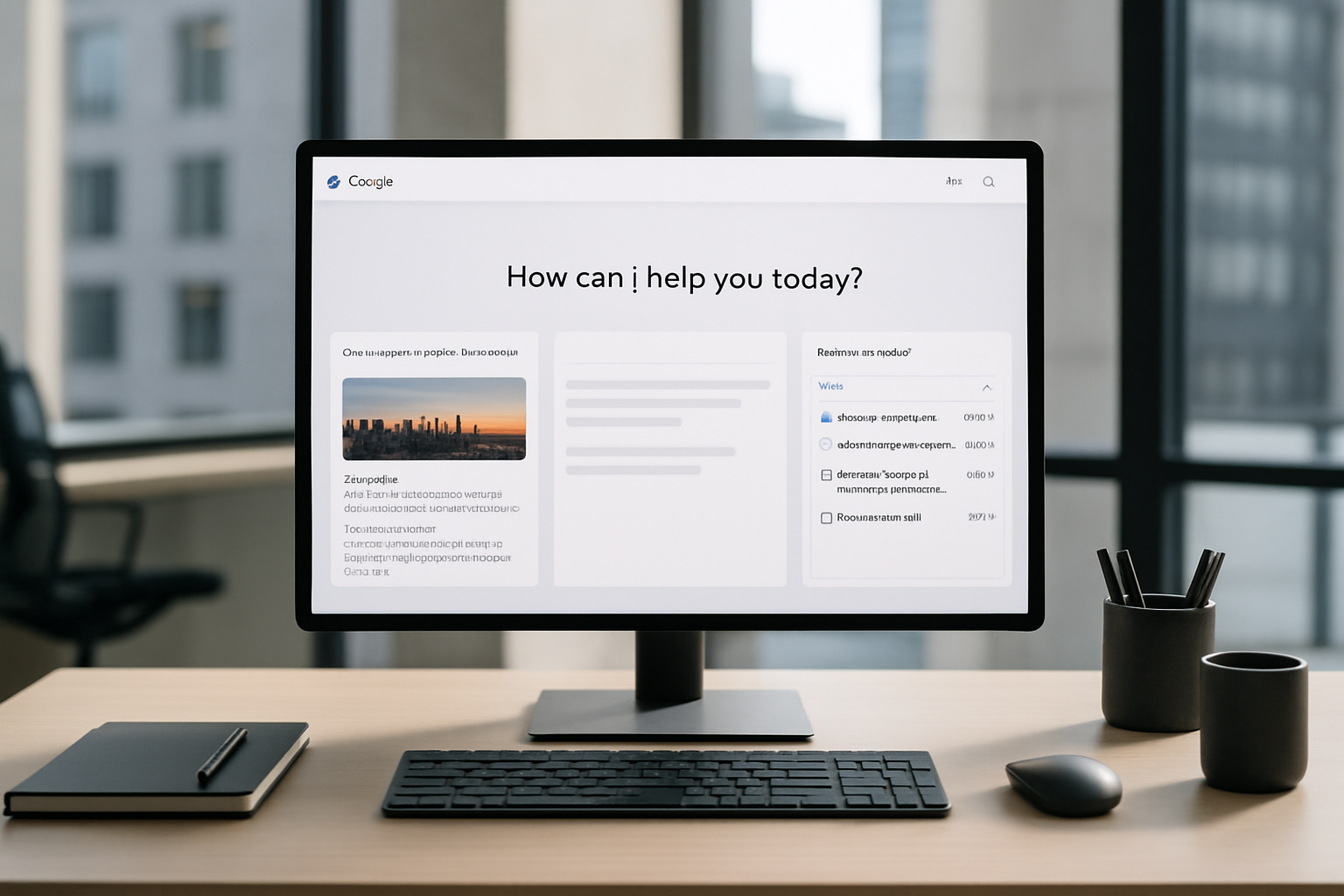
Microsoft has announced substantial updates to its Copilot AI application, introducing enhanced task management capabilities and seamless navigation features designed to improve user productivity and workflow integration. The updates include integrated sidebar panels that display web content directly within conversations and advanced password synchronization functionality.
The technology giant's latest improvements to Copilot represent a significant evolution in how users interact with AI-powered productivity tools. According to the company's announcement on March 5, 2026, the new features address longstanding user requests for more streamlined task management and better integration between AI assistance and web-based resources.
Revolutionary Sidebar Integration
The most notable enhancement involves a complete redesign of how Copilot handles external links and web content. Previously, when users clicked on links within Copilot responses, content would open in separate browser windows, disrupting the conversational flow and forcing users to switch between multiple applications.
The new integrated sidebar solution eliminates this friction by displaying web content directly within a dedicated panel alongside the ongoing AI conversation. This unified approach allows users to maintain context while accessing relevant information, significantly improving the overall user experience.
"This enhancement facilitates following the flow of information and context from within the application itself in a unified manner, without needing to leave the conversation environment," Microsoft explained in their official statement.
— Microsoft Corporation, Official Announcement
The sidebar functionality extends beyond simple web browsing, incorporating intelligent content parsing and contextual integration that allows Copilot to reference and discuss the displayed content within the ongoing conversation thread.
Enhanced Security and Synchronization
Alongside navigation improvements, Microsoft has introduced advanced password synchronization capabilities and enhanced form data management. These security-focused features enable seamless integration with existing Microsoft ecosystem services while maintaining enterprise-grade security standards.
The password synchronization feature leverages Microsoft's existing security infrastructure, allowing users to access their stored credentials across different platforms and devices without compromising security protocols. This development addresses growing enterprise demands for secure, integrated productivity solutions.
Form data synchronization represents another significant advancement, enabling users to maintain consistent information across various web services while working within the Copilot environment. This feature is particularly valuable for professionals managing multiple client interactions or complex project workflows.
Global AI Competition Context
These Copilot enhancements come during an unprecedented period of AI industry transformation and international competition. Microsoft's updates occur amid what analysts describe as the "2026 AI inflection point," where artificial intelligence transitions from experimental applications to essential business infrastructure globally.
Recent developments across the industry include China's strategic AI Plus initiative elevation to top national priority, emphasizing "safe and orderly development," while European nations implement revolutionary regulatory frameworks including Spain's world-first criminal executive liability for tech platforms.
The global semiconductor crisis continues to impact AI development, with memory chip prices surging sixfold affecting major manufacturers Samsung, SK Hynix, and Micron. Despite these infrastructure constraints, technology giants are making unprecedented investments, with Alphabet committing $185 billion and Amazon exceeding $1 trillion in AI development plans for 2026.
Market Disruption and Employment Implications
Microsoft's Copilot improvements arrive during what industry experts term the "SaaSpocalypse" – a systematic disruption of traditional software-as-a-service business models by AI systems. This phenomenon has eliminated over $400 billion in software sector value since early 2026, as AI tools demonstrate capabilities to replace rather than merely complement existing software functions.
Microsoft's own executives have made bold predictions about AI's employment impact. Mustafa Suleyman, the company's AI chief, has forecasted that AI could replace the majority of office workers within two years, with lawyers and auditors facing automation within 18 months.
However, successful AI integration models from around the world demonstrate the potential for human-centered approaches. Canadian universities have successfully implemented AI teaching assistants while maintaining critical thinking standards, and Malaysia operates the world's first AI-integrated Islamic school, combining technology with traditional learning methods.
Technical Innovation and Infrastructure
The new Copilot features represent significant technical achievements in user interface design and AI-human interaction. The sidebar integration required developing sophisticated content rendering capabilities that can seamlessly integrate external web resources while maintaining the conversational context that makes AI assistants valuable.
Microsoft's approach addresses a fundamental challenge in AI productivity tools: maintaining workflow continuity while accessing diverse information sources. The solution demonstrates the company's understanding that effective AI assistance requires not just intelligent responses but also intelligent interface design.
The password synchronization and form data features showcase Microsoft's commitment to security-first design principles. In an era where cybersecurity threats increasingly target AI systems and their data handling capabilities, Microsoft's emphasis on secure integration reflects industry best practices and regulatory requirements.
International Regulatory Environment
Microsoft's Copilot updates come amid intensifying international regulatory scrutiny of AI systems and their deployment. The United Nations has established an Independent International Scientific Panel with 40 experts to conduct the first fully independent global AI impact assessment, while European authorities have implemented unprecedented oversight measures.
Spain's implementation of criminal executive liability for social media platforms represents a paradigm shift toward personal accountability for tech executives, while France has conducted cybercrime raids on AI companies. This regulatory environment demands that AI features like those in Copilot meet stringent safety and privacy standards.
The European Commission's investigations into platforms like TikTok for Digital Services Act violations, potentially resulting in billions in penalties, demonstrate the high stakes for technology companies operating in the current regulatory landscape.
Future Productivity Paradigms
The enhanced Copilot features signal Microsoft's vision for the future of AI-assisted productivity. Rather than replacing human decision-making entirely, the updates focus on augmenting human capabilities through better information integration and workflow optimization.
This approach aligns with successful AI integration models worldwide that prioritize human-AI collaboration over replacement. The sidebar functionality exemplifies this philosophy by maintaining human agency in information consumption while leveraging AI to enhance contextual understanding and task management.
As the AI industry transitions from experimental applications to essential business infrastructure, Microsoft's Copilot updates represent a mature approach to AI integration that balances technological advancement with practical usability and security requirements.
Looking Ahead
Microsoft's latest Copilot enhancements mark a significant milestone in the evolution of AI productivity tools. The integration of sidebar panels and advanced synchronization capabilities addresses real-world workflow challenges while maintaining the conversational interface that makes AI assistants accessible to diverse user bases.
As we enter what many analysts consider the most critical period in AI development since the technology boom began, Microsoft's focus on practical productivity improvements rather than revolutionary capabilities suggests a maturing industry that prioritizes user needs over technological spectacle.
The success of these updates will likely influence how other AI productivity tools evolve, potentially establishing new standards for seamless integration between artificial intelligence and human workflow management. In an era where AI capabilities are rapidly advancing, Microsoft's emphasis on thoughtful interface design and security integration provides a model for responsible AI development that serves human productivity rather than replacing human agency.