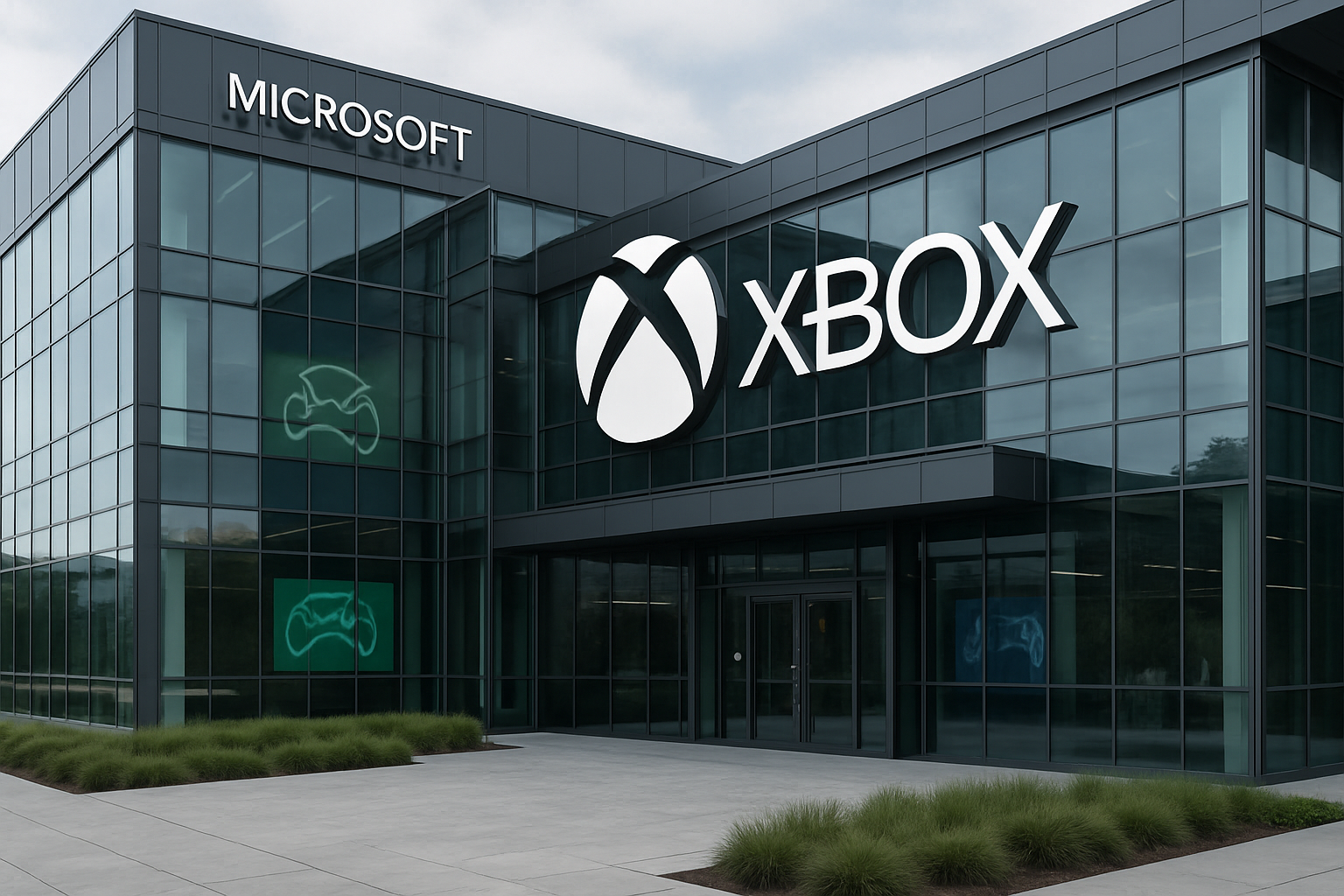
Microsoft Gaming undergoes its most dramatic transformation since the Xbox division's creation as new head Asha Sharma announces major strategic pivots, including immediate Game Pass price reductions and a complete rebranding away from the "Microsoft Gaming" identity back to the core Xbox brand.
The Austrian media reports reveal that Sharma, who replaced retiring gaming legend Phil Spencer in February 2026, has moved swiftly to address what she characterizes as "strategic errors" in Microsoft's gaming approach. The boldly titled restructuring—"Microsoft Gaming is dead, long live Xbox"—signals a fundamental shift in how the technology giant positions its gaming division within the broader AI and cloud computing ecosystem.
Historical Context of Leadership Change
Sharma's appointment represents a dramatic departure from Microsoft's traditional gaming leadership pipeline. Unlike Spencer, who spent decades within the Xbox ecosystem, Sharma brings an outsider's perspective from her previous role as Instacart's Chief Operating Officer. This transition occurred during what industry observers have termed the "SaaSpocalypse"—a period where AI systems have directly replaced traditional software functions, eliminating hundreds of billions in market capitalization from software companies.
Spencer's February 2026 retirement marked the end of an era that saw Xbox through cloud gaming expansion, the Game Pass subscription revolution, and the massive $68.7 billion Activision Blizzard acquisition. His departure came as gaming evolved from a specialized vertical into an integral component of companies' AI and cloud strategies, reflecting broader industry transformation where traditional business models face unprecedented disruption.
Immediate Strategic Changes
Sharma's most visible early move has been making Game Pass more affordable as a "sofort-maßnahme" (immediate measure), directly addressing consumer concerns about subscription fatigue in an increasingly competitive market. This price adjustment comes as Microsoft faces intensifying competition from Sony's PlayStation services, Nintendo's continued hardware success, and emerging cloud gaming platforms.
The decision to abandon the "Microsoft Gaming" branding in favor of returning to the Xbox identity suggests a strategic recognition that the gaming division's strength lies in its unique brand equity rather than generic corporate association. Industry analysts interpret this as Sharma's attempt to recapture the gaming community's enthusiasm while distinguishing Xbox from Microsoft's enterprise-focused AI initiatives.
"The new gaming chief wants to correct strategic errors and give fans what they want."
— Austrian Media Report, derStandard.at
Broader Industry Context
Sharma's restructuring occurs amid one of the most significant technology sector transformations since the internet's emergence. The global memory crisis—with semiconductor prices surging sixfold due to AI development demand—has created infrastructure constraints affecting the entire gaming industry until 2027 when new fabrication facilities come online.
This hardware bottleneck coincides with the "SaaSpocalypse," where German analysts describe an "apocalypse for software houses" as AI demonstrates direct replacement capabilities rather than complementary functions. While some Indian IT companies have adapted through worker transition programs, many traditional software companies have resorted to mass layoffs, creating an environment where gaming divisions must prove their distinct value proposition.
Gaming's Role in Microsoft's AI Strategy
Under Spencer's leadership, gaming became increasingly central to Microsoft's consumer ambition, particularly as the company invested heavily in OpenAI and cloud computing infrastructure. Satya Nadella has repeatedly emphasized gaming's importance during Xbox's 25th anniversary year, but Sharma's approach suggests a more nuanced positioning that leverages gaming's unique community engagement while avoiding cannibalization of Microsoft's enterprise AI products.
The timing of Sharma's appointment—coinciding with unprecedented international regulatory pressure on Microsoft amid aggressive AI expansion and OpenAI partnership integration—highlights the complexity of managing a gaming division within a company facing antitrust scrutiny across multiple jurisdictions.
Market Competition and Consumer Response
The gaming industry faces a critical inflection point as February 2026 represents what analysts call the transition from experimental AI to essential business infrastructure. Companies with existing capabilities and supply relationships are positioning advantageously, while those dependent purely on technological innovation without established customer relationships face greater challenges.
Sharma's focus on "giving fans what they want" represents a return to customer-centric strategy after a period where Microsoft Gaming's direction seemed increasingly influenced by corporate AI initiatives. The Game Pass price reduction specifically addresses subscription market saturation, where consumers face mounting monthly charges across entertainment platforms.
International Implications
Microsoft's gaming restructuring comes as the company faces its most intensive international regulatory scrutiny in recent memory. The Japan Fair Trade Commission's investigation into potential Antimonopoly Act violations, combined with enhanced regulatory coordination across Spain, France, and the EU, creates a complex environment where gaming strategy must balance consumer appeal with regulatory compliance.
The establishment of the UN's Independent International Scientific Panel with 40 experts for global AI impact assessment further emphasizes how gaming divisions operate within broader technological governance frameworks that extend far beyond entertainment.
Strategic Implications
Sharma's declaration that "Microsoft Gaming is dead" while reviving the Xbox brand identity reflects sophisticated understanding of brand equity in the modern technology landscape. By returning to Xbox's core identity, she acknowledges that gaming success requires authentic community connection rather than generic corporate positioning.
The immediate Game Pass pricing adjustment demonstrates responsiveness to market feedback while positioning Xbox competitively against emerging gaming platforms. This pricing strategy could prove crucial as the industry navigates the transition from traditional software licensing to subscription-based entertainment models.
Future Outlook
Sharma inherits a gaming division at a pivotal moment when entertainment, AI, and cloud computing converge. Her success will depend on maintaining Xbox's distinct identity while leveraging Microsoft's technological infrastructure advantages. The return to Xbox branding suggests confidence in gaming's independent value proposition rather than its role as merely another Microsoft technology vertical.
As the gaming industry adapts to post-pandemic consumption patterns, supply chain constraints, and AI disruption, Sharma's approach of correcting "strategic errors" while focusing on fan satisfaction could provide a template for how traditional gaming companies navigate unprecedented technological transformation.
The broader question remains whether Sharma's restructuring represents a temporary adjustment to market conditions or a fundamental reimagining of how gaming fits within one of the world's largest technology companies. Early indicators suggest her strategy prioritizes gaming community authenticity over corporate integration—a potentially prescient approach as the industry faces its most significant transformation since the original console wars.