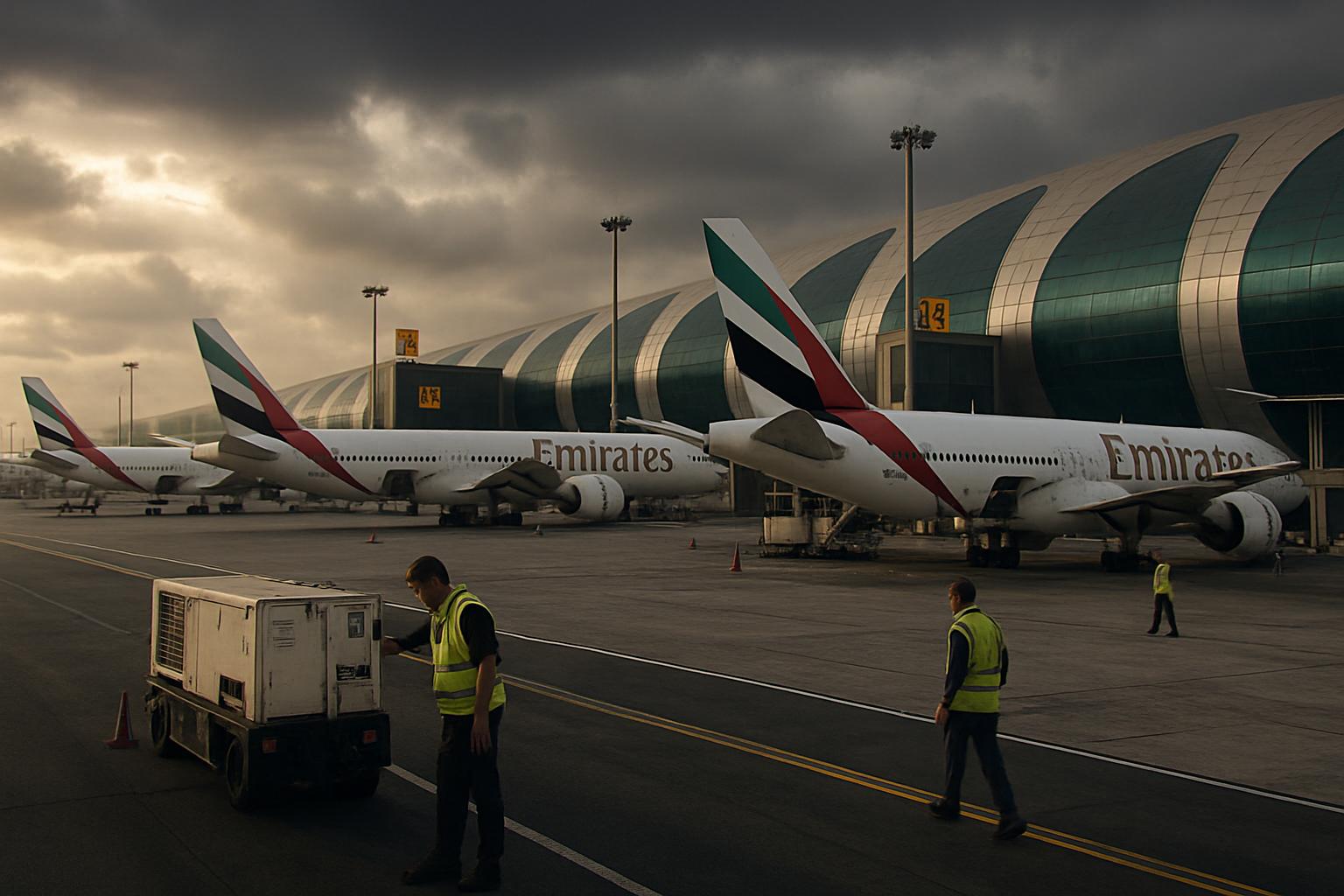
Major airlines across the Middle East are beginning a cautious and complex resumption of flights after widespread airspace closures linked to regional tensions temporarily grounded the global aviation hub, though operations in Qatar remain severely restricted and the situation continues to evolve.
Key carriers including Emirates, Etihad Airways, and flydubai have started operating limited schedules from the United Arab Emirates, while Saudia has announced partial resumption of flights to Dubai. However, the recovery remains fragmented, with significant cancellations still in effect and airlines universally advising passengers not to travel to airports without confirmed and valid bookings.
Regional Hub Operations Slowly Restart
Emirates and Etihad are leading the restart efforts from the UAE, with Dubai's two major airports gradually reopening after being completely shut down earlier this month. The resumption comes after Dubai International Airport, the world's busiest with over 86 million passengers annually, was forced to close due to missile damage during regional conflicts.
Saudia has begun a partial resumption of key Dubai flights, including routes from Riyadh and Jeddah to Dubai starting March 7, though with limited schedules and gradual expansion planned. The airline continues to suspend flights to other regional destinations including Amman, Kuwait City, Abu Dhabi, Doha, and Bahrain until at least March 8.
Qatar remains the most severely affected, with Hamad International Airport announcing that the temporary closure of Qatari airspace continues due to the current security situation. Any flight operations are limited to emergency evacuations through temporary air corridors that require authorization from the Qatar Civil Aviation Authority.
Industry-Wide Disruptions and Cancellations
The aviation crisis has created the most comprehensive disruption since the COVID-19 pandemic, with over 18,000 flights cancelled worldwide. Eight Middle Eastern countries simultaneously closed their airspace including Iran, Iraq, Israel, UAE, Qatar, Syria, Kuwait, and Bahrain - representing the most extensive regional closure in modern aviation history.
Several airlines have announced continued suspensions: Oman Air, SalamAir, and Gulf Air have declared widespread cancellations. Many international carriers including Air France-KLM, Wizz Air, and Bulgaria Air continue to suspend Middle East operations indefinitely, affecting hundreds of thousands of passengers globally.
King Khalid International Airport in Riyadh has urged passengers traveling to destinations affected by current regional developments to check with their airlines for the latest flight updates before heading to the airport, relying on official communication channels for accurate information.
Complex Recovery Timeline
Unlike weather-related disruptions with predictable recovery timelines, the current crisis depends entirely on the resolution of military operations and diplomatic tensions. Airlines are conducting daily operational reviews but cannot make long-term scheduling decisions due to the volatile security environment.
The disruption stems from a broader regional crisis that began in late February with the breakdown of nuclear negotiations and subsequent military escalations. The conflict has affected not only aviation but also global energy markets, with Iran's closure of the Strait of Hormuz affecting 40% of global oil transit.
Qatar Civil Aviation Authority was the first to announce partial resumption through designated contingency routes, coordinated with Qatari Armed Forces. However, regular flight operations will only resume after authorities officially announce the safe reopening of the region's airspaces.
Massive International Impact
The crisis has triggered the largest coordinated international evacuation since the Arab Spring in 2011, with over 500,000 citizens being extracted from Middle East conflict zones. Australia alone has 115,000 trapped nationals, while Germany is coordinating the return of 30,000 tourists through specialized charter flights.
European nations have activated unprecedented coordination mechanisms, with Cyprus implementing its ESTIA evacuation plan for the first time in history to coordinate the return of over 2,000 EU nationals from the UAE. Multiple governments including Sweden, Serbia, and several Baltic states have ordered immediate evacuations citing "extremely uncertain" security conditions.
The economic impact extends far beyond aviation, with oil prices surging over $80 per barrel and natural gas prices increasing 24% in Europe and 78% in the United States. Major shipping companies including Maersk and MSC have suspended operations in the Persian Gulf, with over 150 tankers stranded representing billions in cargo value.
Long-term Industry Implications
The crisis has exposed the vulnerability of modern transportation networks to geopolitical instability, particularly the aviation industry's over-dependence on Middle Eastern hubs for Europe-Asia connectivity. With Russian and Ukrainian airspace already closed due to ongoing conflicts, airlines are being forced to implement complex alternative routing strategies.
Airlines are implementing emergency protocols including enhanced fuel loading to avoid refueling in affected zones, Caribbean stopovers for trans-Pacific routes, and dramatically increased operational costs. The industry is accelerating discussions about route diversification and enhanced contingency planning to reduce dependency on single regional hubs.
This crisis represents a template-setting moment for 21st-century aviation crisis management during geopolitical conflicts. The success or failure of current recovery efforts will influence international aviation policies, emergency planning frameworks, and international cooperation mechanisms for decades to come.
Passenger Safety and Ongoing Precautions
Despite the gradual resumption of some flights, airlines continue to advise extreme caution. Transit passengers through Dubai are only permitted with confirmed onward connections, and many evacuation flights are departing only half-full due to safety concerns from passengers and families.
Air traffic has been affected by ongoing security incidents, with flights occasionally placed in holding patterns during security alerts. Kuwait's Armed Forces successfully intercepted 12 missiles and 12 drones during recent incidents, preventing civilian casualties and infrastructure damage.
The recovery timeline remains uncertain as it depends entirely on military operations resolution and diplomatic normalization - unlike natural disasters or technical failures with predictable restoration schedules. Even when full operations resume, clearing the massive passenger backlogs could take weeks, fundamentally reshaping how the aviation industry approaches geopolitical risk management in an increasingly volatile world.