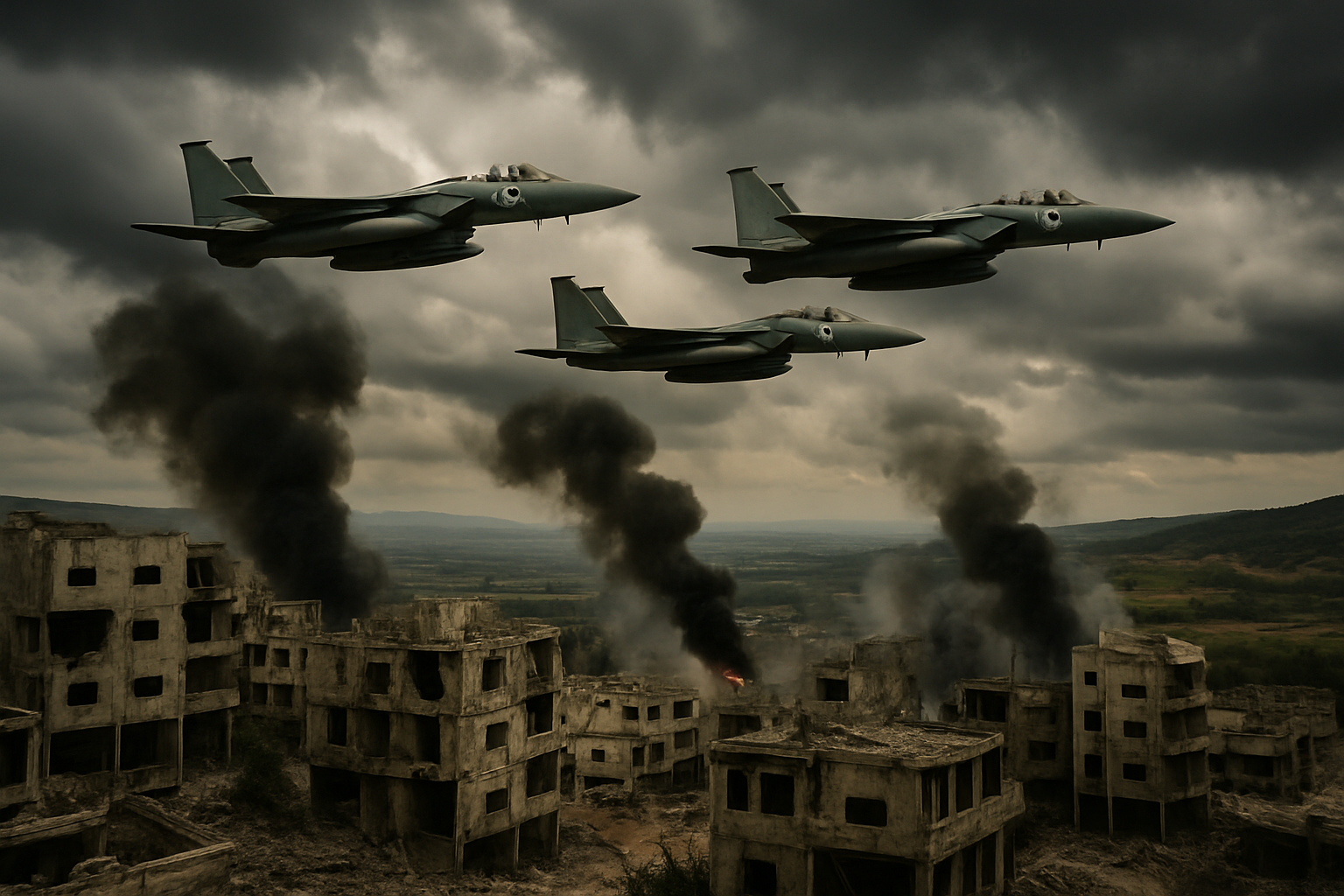
A deadly Israeli airstrike on the southern Lebanese city of Nabatiyeh killed at least 13 State Security personnel on Friday, marking another devastating escalation in the ongoing Middle East conflict as international mediators prepare for historic direct negotiations between Israeli and Lebanese representatives in Washington next week.
The strike hit the State Security office near the government complex in Nabatiyeh, according to Lebanon's state-run National News Agency (NNA), which reported that "enemy warplanes launched a series of heavy strikes" on the city. An AFP photographer at the scene documented extensive damage and fires that continued burning hours after the attack.
Historic Washington Talks Amid Escalating Violence
The deadly strike comes as Lebanese and Israeli ambassadors to the United States are preparing for direct negotiations at the State Department on Tuesday, April 15, 2026 – the first formal diplomatic engagement since the complete collapse of the November 2024 ceasefire agreement. These talks represent a critical diplomatic intervention amid an unprecedented humanitarian crisis that has displaced over 1.2 million Lebanese civilians.
The Lebanese President's office confirmed that the first direct telephone communication between the ambassadors occurred Friday, with participation from the US Ambassador to Lebanon. The scheduled State Department talks will focus on establishing a lasting ceasefire framework, security arrangements, and addressing the enforcement gaps that led to the failure of the previous agreement.
"These negotiations represent our last, best hope for preventing a broader regional war that could engulf the entire Middle East."
— Senior US State Department Official
Parallel Hezbollah Retaliation Strikes
As Israeli forces continued their bombardment of southern Lebanon, Hezbollah responded with rocket barrages targeting northern Israel. The Iran-backed militant group fired rockets that damaged a 1,500-year-old Byzantine church in Nahariya, underscoring how the conflict is destroying cultural heritage sites alongside the mounting civilian casualties.
Air raid sirens wailed across northern Israeli communities as Hezbollah demonstrated its continued capacity to strike deep into Israeli territory despite months of intensive Israeli military operations aimed at degrading the group's capabilities.
Catastrophic Humanitarian Crisis
The current escalation has created what UN officials describe as the worst humanitarian crisis in the region since the end of the Cold War. Over 1.2 million Lebanese – representing 25% of the country's population – have been displaced from their homes. The death toll has reached approximately 1,200 civilians since the March 2026 escalation began.
Emergency shelters across Lebanon have reached breaking point, with thousands of displaced families forced to sleep on the streets of Beirut. The systematic targeting of medical personnel has created additional humanitarian challenges, with 26 paramedics killed and 51 wounded since March 2, according to Lebanese health authorities.
The deadliest single attack on medical infrastructure occurred at the Burj Qalaouiyah healthcare center, where Israeli strikes killed 12 medical workers including doctors, nurses, and paramedics. These attacks have raised serious concerns about potential violations of the Geneva Conventions, which explicitly protect medical personnel and facilities during armed conflict.
The November 2024 Ceasefire Collapse
The current crisis stems from the complete breakdown of a US-French brokered ceasefire agreement that had held for over a year. The November 2024 accord required both Israeli forces and Hezbollah to withdraw from southern Lebanon, creating a buffer zone patrolled by the Lebanese army and UN peacekeepers.
The ceasefire collapsed in March 2026 following the death of Iranian Supreme Leader Ali Khamenei. Hezbollah, facing what officials described as an "impossible choice" between maintaining the ceasefire and responding to Iranian pressure for retaliation, ultimately chose what they termed "Iranian solidarity over Lebanese sovereignty."
This decision marked a fundamental shift for Hezbollah, which had maintained relative restraint for over a year despite periodic violations by both sides. The organization, estimated to command 20,000 fighters, has since conducted over 40 military operations targeting Israeli sites as far north as Haifa.
Critical Diplomatic Window
The upcoming Washington talks occur against the backdrop of Pakistan's successful mediation of a broader US-Iran ceasefire known as the "Islamabad Accord." However, a critical loophole has emerged as Israeli Prime Minister Benjamin Netanyahu explicitly excluded Lebanon from this broader ceasefire framework, creating a dangerous gap that threatens the entire regional peace process.
Iran has threatened to withdraw from the broader ceasefire talks unless comprehensive enforcement mechanisms are established across all conflict fronts, including Lebanon. French President Emmanuel Macron and Spanish leaders have insisted that Lebanon must be included for any ceasefire to be "credible and durable."
The negotiation framework is expected to address immediate ceasefire establishment, force withdrawal and buffer zone creation, deployment of Lebanese army and UN peacekeeping forces, and long-term security guarantees for both sides. Critically, the talks must address the enforcement gaps and external pressure mechanisms that led to the previous agreement's failure.
Global Implications
The Middle East crisis has created ripple effects across the global economy and international security architecture. Over 18,000 flights have been cancelled worldwide, creating the worst aviation crisis since the COVID-19 pandemic. Oil prices have surged past $100 per barrel for the first time since 2014, while Iran's closure of the Strait of Hormuz has affected 40% of global oil transit.
The International Energy Agency has conducted its largest strategic petroleum reserve release in 50 years, releasing 400 million barrels in an attempt to stabilize global energy markets. Major shipping companies have suspended operations in the Persian Gulf, leaving over 150 tankers stranded with billions of dollars in cargo.
European Security Concerns
For the first time since World War II, European territory has come under direct attack in this conflict, with Iranian drones striking RAF Akrotiri in Cyprus. This unprecedented escalation prompted the formation of a naval coalition including HMS Dragon and vessels from Spain, Italy, France, Netherlands, and Greece.
The European Union activated its ESTIA evacuation protocol for the first time in the bloc's history, fundamentally altering the conflict's scope from a regional Middle Eastern crisis to one with direct European security implications.
UN Peacekeepers Under Fire
The conflict has also taken a tragic toll on international peacekeeping efforts. Multiple attacks on UNIFIL positions have resulted in peacekeeper casualties, including strikes on bases near Mais al-Jabal. UNIFIL spokeswoman Kandice Ardiel described the situation as "precarious and volatile," highlighting the challenges facing international peacekeepers in the current environment.
These attacks represent the first major breaches of peacekeeping arrangements since the November 2024 ceasefire implementation, raising questions about the safety and effectiveness of international monitoring mechanisms in the region.
Looking Ahead
As diplomats prepare for Tuesday's historic talks in Washington, the stakes could not be higher. UN Secretary-General António Guterres has described the current situation as "the greatest test of multilateral cooperation in the modern era," emphasizing the template-setting implications for 21st-century conflict resolution.
The success or failure of these negotiations will determine not only the immediate fate of millions of civilians in Lebanon and northern Israel but also establish critical precedents for diplomatic versus military solutions to international conflicts in an increasingly multipolar world.
The international community faces a critical window of opportunity to prevent the current crisis from escalating into a broader regional war that could destabilize the entire Middle East for decades to come. The Washington talks represent what many observers consider the last, best hope for a negotiated solution to a conflict that has already claimed too many innocent lives.