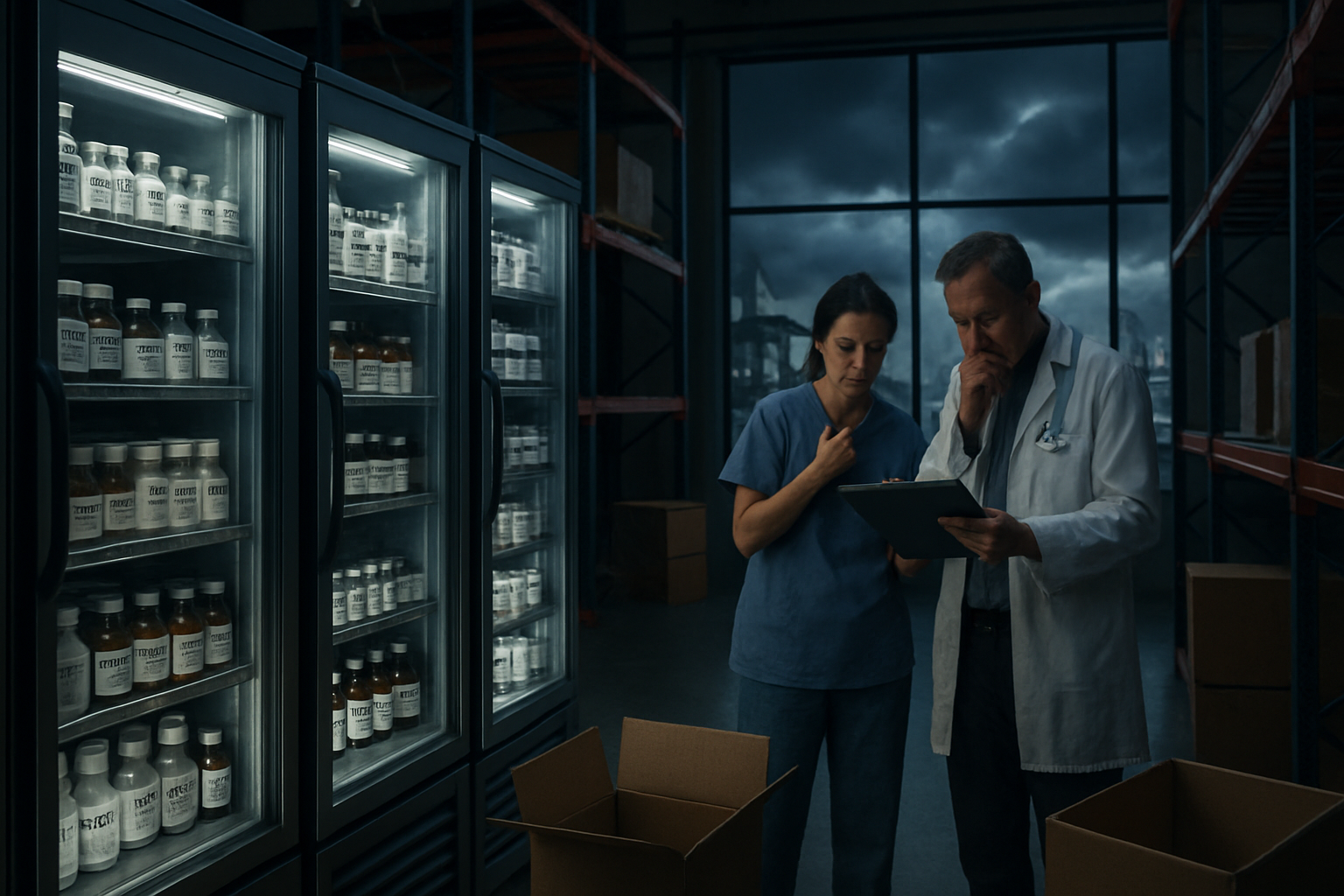
The escalating Middle East conflict has triggered a critical global shortage of cancer drugs and other life-saving pharmaceuticals, as disrupted supply chains threaten to leave patients without essential treatments. With traditional shipping routes compromised and air transportation severely limited, pharmaceutical companies are scrambling to find alternative delivery methods for temperature-sensitive medications.
The crisis stems from the ongoing conflict that has effectively closed the Strait of Hormuz, through which 40% of global oil transit normally flows, creating unprecedented disruptions to international trade and logistics networks. According to reports from AzerNEWS, the conflict is "beginning to disrupt the supply of vital medicines to countries in the Persian Gulf, putting at risk the delivery of life-saving treatments such as anti-cancer drugs and other pharmaceuticals that require constant refrigeration."
Supply Chain Disruptions Reach Crisis Level
The pharmaceutical industry faces its most severe logistical challenge in decades as the conflict has simultaneously disrupted multiple critical pathways for drug distribution. With over 18,000 flights cancelled worldwide—the most extensive aviation disruption since COVID-19—and major shipping companies Maersk and MSC suspending Persian Gulf operations, pharmaceutical companies are being forced to reroute shipments through longer, more expensive corridors.
The situation has been compounded by the closure of Dubai International Airport, the world's busiest passenger hub handling 86 million passengers annually, which serves as a crucial pharmaceutical distribution center for the region. Emirates, Air France-KLM, Wizz Air, and Bulgaria Air have suspended operations indefinitely, affecting hundreds of thousands of passengers and cargo shipments globally.
Cancer Patients Face Immediate Risk
Oncologists and pharmaceutical experts warn that cancer patients are among the most vulnerable to supply chain disruptions. Many cancer treatments, including chemotherapy drugs and immunotherapy agents, require strict temperature control during transport and have limited shelf lives. The current crisis threatens to create gaps in treatment schedules that could prove life-threatening for patients undergoing active therapy.
The disruption comes at a particularly concerning time, as the pharmaceutical industry has been experiencing a revolution in cancer treatment. Recent breakthroughs in precision medicine and immunotherapy have improved outcomes for many patients, but these advanced treatments often require complex supply chains and specialized handling procedures.
Regional Impact and Alternative Routes
Countries in the Persian Gulf region are experiencing the most immediate impact, but the ripple effects are being felt globally. Pharmaceutical companies are now being forced to explore alternative land transport options and longer sea routes around Africa, significantly increasing both delivery times and costs.
The Iran Revolutionary Guard's declaration that the Strait of Hormuz is "unsafe," effectively blocking this critical chokepoint, has forced a fundamental reassessment of pharmaceutical distribution strategies. Industry experts note that the 21-mile strait represents a single-point failure in modern medical logistics, with no realistic alternatives offering the same capacity and efficiency.
Energy Crisis Compounds Challenges
The pharmaceutical supply crisis is being exacerbated by a parallel energy emergency, with oil prices surging past $100 per barrel for the first time since 2022. Natural gas prices have exploded by 24% in Europe and 78% in the United States, reaching €47.32/MWh—the highest since February 2025. These energy cost increases are driving up transportation and manufacturing expenses across the pharmaceutical industry.
The situation has prompted Qatar to halt LNG production at its Ras Laffan and Mesaid facilities, which account for approximately 20% of global LNG exports. With Qatar Energy Minister Saad Al Kaabi warning that Gulf states may declare force majeure "within weeks," the industrial foundation supporting pharmaceutical manufacturing faces unprecedented pressure.
Government and Industry Response
Governments worldwide are implementing emergency measures to address the crisis. The International Energy Agency has announced its largest strategic petroleum reserve release in its 50-year history, deploying 400 million barrels from 32 countries. Japan is releasing 80 million barrels for the first time since the 2011 Fukushima disaster, recognizing its 95% dependence on Middle East oil, with 70% transiting through the now-blocked Hormuz strait.
Pharmaceutical companies are activating emergency protocols, including enhanced stockpiling of critical medications and exploration of alternative manufacturing sites outside the affected region. Industry leaders are coordinating with regulatory agencies to expedite approval for temporary supply chain modifications that could help maintain drug availability.
Historical Context and Broader Implications
The current crisis represents the most dangerous international situation since the end of the Cold War, with implications extending far beyond pharmaceutical supply chains. The conflict stems from the complete breakdown of US-Iran nuclear diplomacy, despite Geneva talks achieving "broad agreement on guiding principles"—the most progress since the JCPOA collapse in 2018.
This pharmaceutical emergency occurs against the backdrop of what experts are calling the "Therapeutic Revolution of 2026," characterized by breakthrough treatments in cancer care, including new prevention strategies and advanced drug delivery systems. The supply disruption threatens to derail progress in global health improvements just as new treatments were becoming widely available.
Long-term Implications for Medical Supply Security
The crisis has exposed critical vulnerabilities in global pharmaceutical supply chains, particularly the over-dependence on strategic chokepoints like the Strait of Hormuz. Industry analysts are calling for fundamental restructuring of medical supply networks to reduce dependence on volatile geopolitical regions.
Samuel Ciszuk, an energy analyst, described this as "the most severe energy security crisis in decades, exposing single-chokepoint vulnerabilities." The same vulnerabilities that affect energy markets also impact pharmaceutical logistics, as both industries rely heavily on the same transportation infrastructure.
Patient Advocacy and Medical Response
Medical organizations worldwide are urging healthcare systems to implement contingency planning for potential drug shortages. Cancer centers are prioritizing critical treatments and exploring alternative therapeutic protocols where possible. Patient advocacy groups are calling for increased transparency from pharmaceutical companies about supply status and emergency stockpiles.
The situation has highlighted the critical importance of maintaining strategic pharmaceutical reserves, similar to strategic petroleum reserves, to ensure continuity of care during international crises. Healthcare systems are being forced to balance immediate patient needs with the uncertainty of when normal supply chains might be restored.
Looking Forward: Recovery Timeline Uncertain
Unlike weather-related disruptions, the recovery timeline for pharmaceutical supply chains depends entirely on diplomatic resolution or military de-escalation of the Middle East conflict. Aviation industries cannot provide long-term scheduling while critical airspace remains closed, and shipping companies face the ongoing risk of operations in contested waters.
The template-setting nature of this crisis will likely influence international approaches to pharmaceutical supply security for decades to come. Success in maintaining drug availability despite the disruption could provide a framework for future crisis management, while failure may accelerate efforts toward pharmaceutical production diversification and regional supply chain independence.
As the situation continues to evolve, the global healthcare community faces its greatest test of multilateral cooperation in crisis management in the modern era. The outcome will reverberate through international health policy, affecting how nations approach medical supply security, pharmaceutical manufacturing location decisions, and emergency response protocols for years to come.