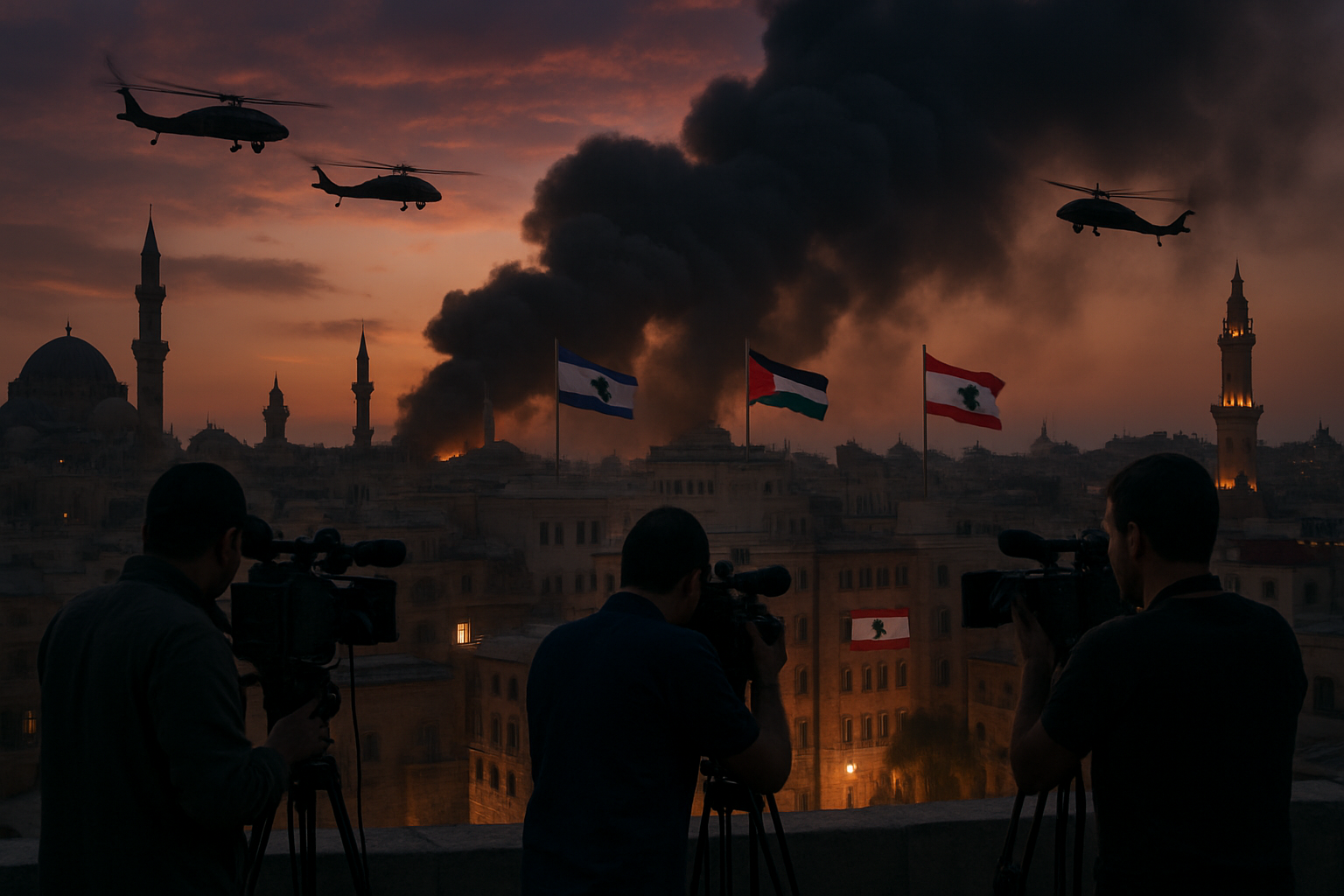
Multiple flashpoints across the Middle East have ignited simultaneously this week, creating a complex web of conflicts that threatens to further destabilize an already volatile region as existing wars continue to rage and new tensions emerge from controversial legislative actions.
Palestinian Resistance to Death Penalty Legislation
West Bank Palestinians have launched widespread strikes and protests against Israel's newly enacted death penalty law, which specifically targets Palestinians convicted of deadly terrorism. The controversial legislation, passed 62-48 in the Knesset with personal votes from Prime Minister Netanyahu and National Security Minister Ben-Gvir, mandates death by hanging for Palestinians in military courts while explicitly exempting Israeli citizens and residents.
The Palestinian Authority called the general strike in response to what critics denounce as an unjust dual justice system. Shops shuttered and universities closed across the West Bank as Palestinians demonstrated against the law, which represents a dramatic departure from Israeli legal precedent and has drawn unprecedented international condemnation from 85+ UN member states.
"This dangerous law represents a clear violation of international law and creates an ethnic-based justice system unprecedented in Israeli legal history."
— Palestinian Authority Statement
The timing of the protests coincides with ongoing ceasefire violations in Gaza, where over 1,600 documented breaches since October 2025 have resulted in more than 680 Palestinian deaths during what was supposed to be a truce period.
Houthis Issue Strategic Threat to Red Sea Shipping
In a significant escalation of regional tensions, Yemen's Houthi rebels have threatened to close the strategic Bab el-Mandeb strait in the Red Sea if Gulf states join the ongoing Iran-Israel conflict. A senior Houthi official warned that Iranian proxies could move to close the critical waterway "should the aggression against Iran and Lebanon escalate savagely."
This threat carries enormous global economic implications, as the Bab el-Mandeb strait serves as a crucial chokepoint for international shipping routes connecting Europe and Asia. Combined with existing disruptions to the Strait of Hormuz, such an action could severely impact global trade flows and energy markets already strained by the ongoing regional conflicts.
The Houthis' warning reflects the expanding scope of the Middle East crisis, as Iranian proxy groups across the region face pressure to demonstrate solidarity amid the broader confrontation between Iran and its regional adversaries.
Hamas Diplomatic Outreach Amid Regional Upheaval
Hamas leadership has engaged in significant diplomatic activity, with the movement's Political Bureau Chief Mohammed Darwish sending condolences to Algerian President Abdelmadjid Tebboune on the death of former President Zeroual. The gesture highlighted continued support for Palestinian statehood from traditional Arab allies.
Separately, Hamas spokesperson Abu Obeida issued statements praising Syrian popular movements in support of Al-Aqsa Mosque and Palestinian prisoners, calling for escalated popular activities across the region. These communications reflect Hamas's efforts to maintain regional solidarity networks despite the organization's isolation from much of the international community.
The movement has also condemned what it terms "systematic harassment" of Palestinian returnees at the Rafah crossing, where only 27 Palestinians are crossing daily versus a quota of 200, while approximately 20,000 Palestinians await medical evacuation.
Escalating Violence in Occupied Territories
Violent confrontations erupted between Palestinian youth and Israeli occupation forces in the Aroub refugee camp north of Hebron in the southern West Bank. According to local sources, Israeli forces stormed the camp and established positions in multiple areas, leading to sustained clashes with residents.
Israeli forces also conducted raids in the Qalandia and Hizma areas near Jerusalem, continuing a pattern of military operations that have intensified since the outbreak of broader regional conflicts in early 2026.
International Calls for Immediate Ceasefire
International pressure for de-escalation has intensified, with Haitian legal expert Me Jodel Coupet appealing directly to UN Secretary-General António Guterres for an immediate ceasefire and comprehensive reform of the UN Security Council. In a letter from Boston dated March 28, Coupet called for structural changes to the international security system to address what he termed the ongoing "conflict involving Iran, the United States, and the State of Israel."
The appeal reflects growing international frustration with the UN's inability to effectively mediate the expanding Middle East crisis, which has now affected global aviation, energy markets, and international shipping routes.
Broader Regional Context
These developments unfold against the backdrop of the most dangerous Middle East crisis since the Cold War, featuring the ongoing Iran-Israel conflict that began in February 2026 following the collapse of nuclear negotiations in Geneva. The war has already claimed thousands of lives, displaced hundreds of thousands of people, and created unprecedented global economic disruptions.
The convergence of Palestinian protests, Houthi threats, ongoing military operations, and diplomatic tensions illustrates how individual conflicts have begun feeding into a broader regional conflagration. Each incident carries the potential to trigger wider escalation in an already volatile environment.
Global Economic and Security Implications
The cumulative effect of these regional tensions continues to reverberate globally. Oil prices remain elevated above $100 per barrel, with energy markets remaining sensitive to any potential disruption of additional shipping routes. The aviation industry continues to grapple with airspace restrictions across multiple Middle Eastern countries, affecting hundreds of thousands of passengers.
International shipping companies are closely monitoring Houthi rhetoric regarding the Red Sea, as any closure of the Bab el-Mandeb strait would force costly rerouting around Africa and further strain already disrupted global supply chains.
Looking Ahead
The international community faces unprecedented challenges in managing multiple simultaneous crises across the Middle East. Traditional diplomatic frameworks appear inadequate for addressing the complex web of conflicts now spanning from the Palestinian territories to Yemen, Lebanon, and beyond.
The coming weeks will prove critical in determining whether regional actors can step back from further escalation or whether the Middle East will continue its trajectory toward even broader conflict. The stakes extend far beyond regional boundaries, with global economic stability, international law, and the effectiveness of multilateral institutions all hanging in the balance.
As these conflicts continue to evolve and intersect, the need for comprehensive diplomatic intervention becomes increasingly urgent, even as the space for such initiatives continues to narrow amid escalating violence and hardening positions across the region.