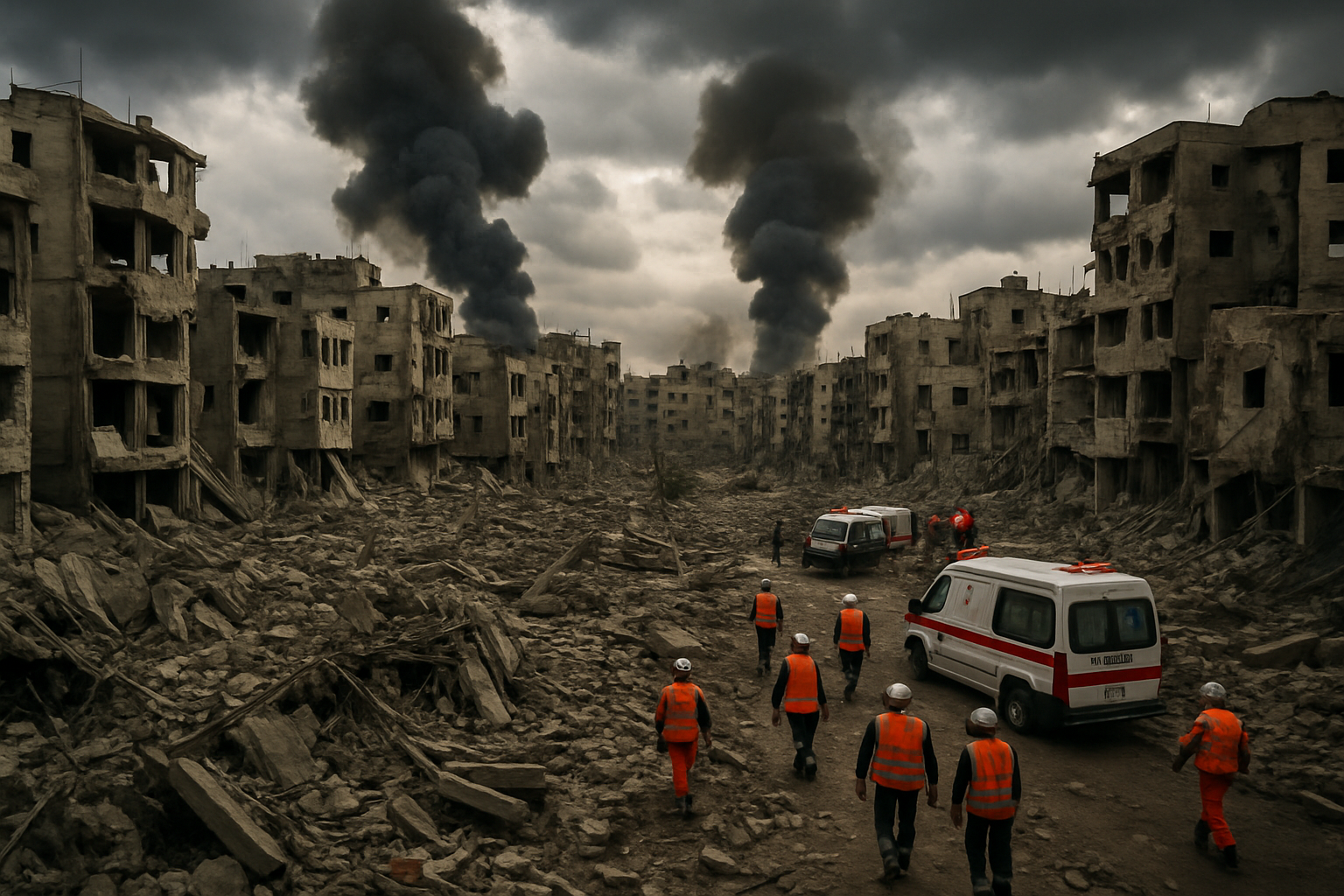
Israeli military operations intensified dramatically across multiple fronts on March 16, 2026, as forces killed 16 Palestinians in Gaza amid systematic ceasefire violations while simultaneously launching ground operations in southern Lebanon, marking the most dangerous escalation in the region since the broader Iran-Israel conflict began.
The deaths in Gaza occurred over a 24-hour period, according to local authorities, as Israeli forces continued what they describe as targeted operations against Hamas positions despite the 158-day-old ceasefire agreement. The Palestinian casualties come amid over 1,600 documented violations of the October 2025 truce, which have resulted in more than 614 Palestinian deaths during what was supposed to be a period of peace.
Lebanon Ground Invasion Marks Critical Escalation
In a parallel and potentially more significant development, Israeli Defense Forces officially announced the launch of ground operations targeting Hezbollah positions in southern Lebanon. The operations, described by military officials as "limited and targeted," represent a dramatic escalation from the aerial bombardment campaign to direct ground engagement.
The Lebanese Health Ministry reports that over 800 Lebanese have been killed and more than 800,000 displaced since the conflict escalated, with systematic targeting of medical personnel raising serious international humanitarian law concerns. Twenty-six paramedics have been killed and 51 wounded since March 2, according to official figures.
"For the first time since 1967, Israeli occupation authorities have prevented worshippers from performing prayers and religious rituals at the Al-Aqsa Mosque."
— Yemen Press Agency Report
Al-Aqsa Mosque Closure Enters Historic Territory
Adding to the regional tensions, Israeli authorities have continued the unprecedented closure of the Al-Aqsa Mosque compound in occupied Jerusalem to Muslim worshippers for the 17th consecutive day. This marks the first time since Israel's 1967 occupation that authorities have completely prevented Muslim prayers at the holy site, citing unspecified security concerns.
The closure has drawn condemnation from across the Muslim world, with many viewing it as a deliberate provocation during an already volatile period. The move comes as Israeli forces have implemented severe restrictions across occupied territories, including the systematic harassment of Palestinians attempting to cross the Rafah border.
Ceasefire Framework Collapses Amid Systematic Violations
The October 2025 ceasefire agreement, once hailed as a breakthrough in Gaza conflict resolution, now lies in tatters after months of systematic violations. Gaza's Civil Defense has been completely shut down due to fuel shortages, hampering emergency response capabilities precisely when they are most needed.
The Rafah crossing, a critical lifeline for Gaza's 2.3 million residents, operates at severely reduced capacity with only 27 Palestinians crossing daily versus the agreed quota of 200. Hamas officials condemn what they call "systematic harassment" by Israeli security forces, who have reportedly denied passage to 38 of 50 planned returnees.
Dr. Mohamed Abu Selmiya, Director of Al-Shifa Hospital, has repeatedly questioned "Where is the ceasefire?" as medical facilities struggle to cope with mounting casualties and infrastructure damage. Over 20,000 Palestinians currently await medical evacuation, highlighting the humanitarian catastrophe unfolding despite international peace efforts.
Regional Context: Broader Iran-Israel Conflict
These developments occur within the context of the broader Middle East crisis following the March 1 death of Iranian Supreme Leader Ali Khamenei and the subsequent regional conflict. The November 2024 US-French brokered ceasefire between Israel and Hezbollah, which had held for over a year despite minor violations, has completely collapsed as Lebanon was drawn into the wider Iran-Israel confrontation.
Hezbollah, with an estimated 20,000 fighters, faced what sources describe as an "impossible choice" between maintaining ceasefire commitments and responding to Iranian pressure for retaliation following Khamenei's death. The organization ultimately chose solidarity with Iran, declaring that "resistance is the only option."
International Response and Diplomatic Efforts
The international community has struggled to respond effectively to the multi-front crisis. French President Emmanuel Macron has offered to host direct Israel-Lebanon talks in Paris - the first such negotiations since the ceasefire collapse. UN Secretary-General António Guterres, who visited Beirut to urge diplomatic solutions, has called the situation the "greatest test of multilateral cooperation in the modern era."
Turkey has warned that Israel is committing a "new genocide" under the pretext of fighting Hezbollah, while Sweden has provided 65 million kronor in humanitarian aid responding to UN appeals for the 800,000 displaced Lebanese. Multiple countries have issued evacuation orders and travel warnings as the situation deteriorates.
The crisis has also affected UN peacekeeping operations, with a UNIFIL base near Mais al-Jabal struck and one peacekeeper wounded. UNIFIL spokeswoman Kandice Ardiel described the situation as "precarious and volatile," affecting both peacekeepers and civilians forced to evacuate southern Lebanon.
Humanitarian Crisis Reaches Breaking Point
Emergency shelters across Lebanon are at breaking point, with thousands sleeping on Beirut streets as traditional support systems - schools, religious institutions, and community centers - reach capacity. The targeting of medical facilities has compromised Lebanon's healthcare system, with the systematic attacks on ambulances and medical personnel potentially constituting war crimes under international humanitarian law.
Israeli military spokesman Avichai Adraee has threatened strikes against ambulances and medical facilities, claiming Hezbollah uses them for military purposes - allegations that Hezbollah categorically denies. The Geneva Conventions explicitly protect medical personnel and facilities during armed conflict.
Gaza Humanitarian Collapse Continues
Meanwhile, in Gaza, the humanitarian situation continues to deteriorate despite international reconstruction pledges. The Euro-Mediterranean Human Rights Observatory has accused Israel of exploiting international focus on the Iran war to intensify civilian starvation policies in Gaza.
Amjad al-Shawa, Director of the Palestinian NGO Network in Gaza, has warned of a sharp decline in aid that threatens renewed famine affecting the territory's 2.3 million residents. Critical infrastructure has collapsed, with cooking gas supplies suspended and transportation systems paralyzed.
International Law and Accountability Concerns
Legal experts point to serious violations of international humanitarian law across multiple fronts. The systematic targeting of medical personnel in Lebanon, the unprecedented closure of Al-Aqsa Mosque, and the continued civilian casualties in Gaza despite ceasefire agreements all raise questions about accountability mechanisms.
The crisis represents a template-setting moment for international humanitarian law enforcement and civilian protection frameworks during modern conflicts. The failure to maintain ceasefire agreements and protect civilian populations tests the credibility of international legal institutions and conflict resolution mechanisms.
Economic and Global Implications
The escalation occurs amid the broader Iran-Israel conflict that has already caused massive global disruption, including the cancellation of over 18,000 flights worldwide and oil prices surging past $100 per barrel. The closure of the Strait of Hormuz has affected 40% of global oil transit, while regional aviation networks remain severely compromised.
The Trump administration's "Board of Peace" initiative, which secured $17 billion in Gaza reconstruction pledges from 27 nations, faces serious implementation obstacles due to ongoing violations and the fundamental breakdown of security arrangements.
Looking Forward: Diplomatic Challenges
The coming days and weeks are crucial for determining whether the crisis can be contained through renewed diplomatic efforts or will escalate into a broader regional war with devastating humanitarian consequences. International mediators, already stretched managing the Iran crisis and succession issues following Khamenei's death, now face the additional challenge of containing the Lebanon escalation.
The template-setting nature of this crisis extends far beyond the Middle East, with implications for how the international community responds to systematic violations of humanitarian law and the breakdown of negotiated peace agreements in an increasingly multipolar world.
As emergency shelters overflow and civilian casualties mount, the international community faces a critical test of its commitment to upholding humanitarian norms and protecting civilian populations during armed conflicts. The outcome will likely influence approaches to conflict resolution and international law enforcement for decades to come.