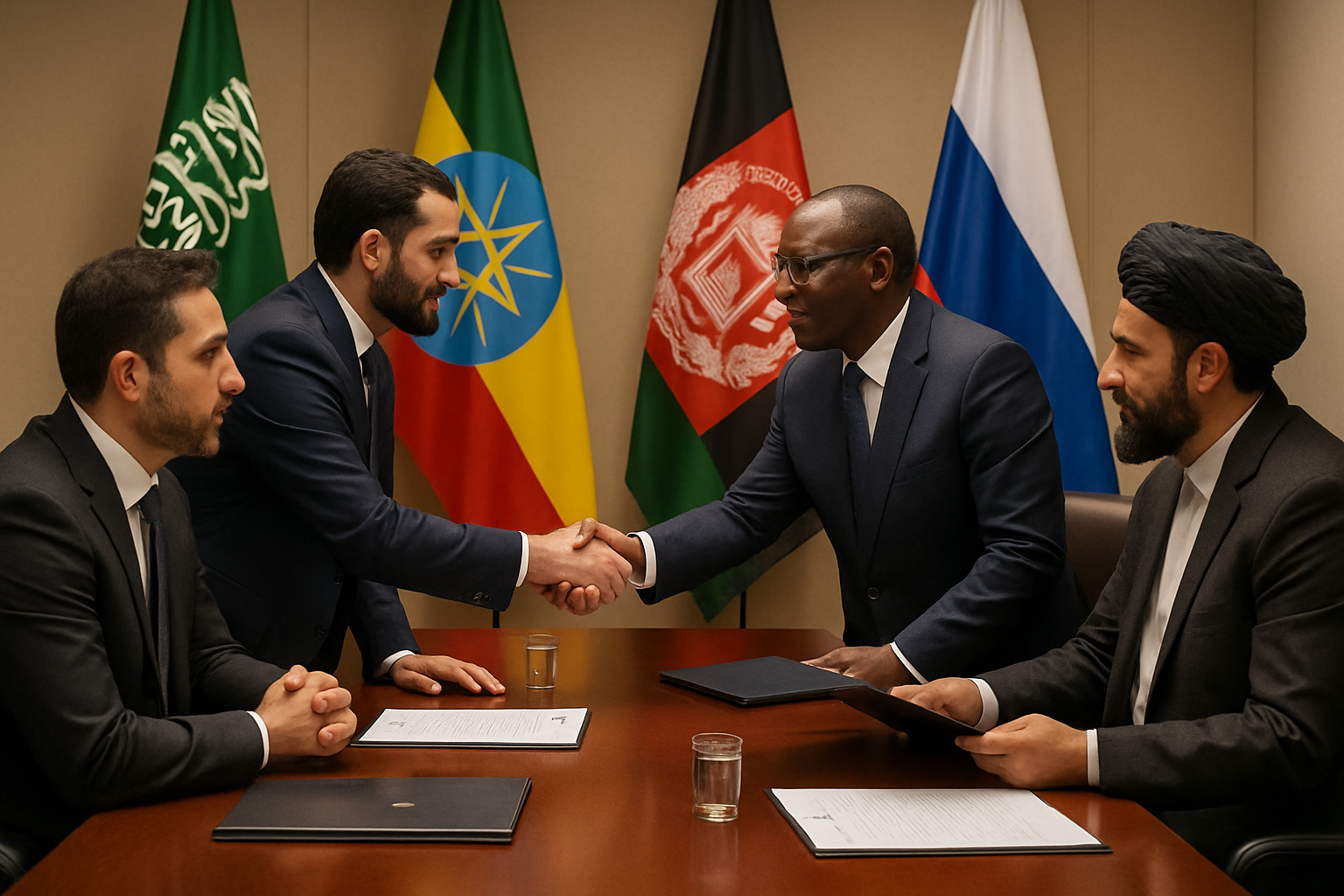
Middle Eastern diplomatic activities intensified on February 3, 2026, as Ethiopia and Saudi Arabia agreed to deepen their strategic partnership following high-level bilateral talks, while regional security concerns over Afghanistan remained at the forefront of international discussions involving Russia and the Collective Security Treaty Organization.
Ethiopia-Saudi Arabia Strategic Partnership Advancement
Senior officials from Ethiopia and Saudi Arabia concluded successful high-level talks aimed at elevating their longstanding bilateral relationship to new strategic heights. The discussions, conducted between high-ranking representatives of both nations, focused on deepening cooperation across multiple sectors and strengthening diplomatic ties that have developed over decades of engagement.
The agreement to enhance the Ethiopia-Saudi Arabia partnership comes at a crucial time for the Horn of Africa region, where both nations play significant roles in maintaining regional stability and economic development. Saudi Arabia's growing influence in the Red Sea region and Ethiopia's strategic position as a gateway to East Africa make this partnership particularly significant for broader Middle Eastern and African geopolitics.
Ethiopia's engagement with Saudi Arabia reflects the kingdom's Vision 2030 initiatives, which emphasize diversifying regional partnerships and expanding diplomatic influence beyond traditional Gulf boundaries. For Ethiopia, the strengthened ties with Saudi Arabia represent opportunities for enhanced economic cooperation, investment flows, and diplomatic support in regional forums.
Regional Security Framework Discussions
Simultaneously, Russian Foreign Minister Sergei Lavrov emphasized that security developments in Afghanistan remain central concerns for the Collective Security Treaty Organization (CSTO) during talks in Moscow with CSTO Secretary General Imangali Tasmagambetov. These discussions highlighted the evolving nature of regional threats and the continued importance of Afghanistan in regional security calculations.
Lavrov's statements underscore Russia's ongoing concerns about stability in Central Asia and the broader implications of Afghanistan's situation for CSTO member states. The organization, which includes Russia, Kazakhstan, Kyrgyzstan, Tajikistan, Armenia, and Belarus, has consistently identified Afghanistan as a key security priority since the Taliban's return to power.
The Russian emphasis on Afghanistan security concerns reflects broader regional anxieties about potential spillover effects, including terrorism, drug trafficking, and refugee flows that could destabilize neighboring countries. These concerns have become increasingly prominent as regional powers assess the long-term implications of Afghanistan's current governance structure.
Context of Broader Middle Eastern Diplomacy
These diplomatic developments occur within a broader context of intensified Middle Eastern diplomatic activity. Recent weeks have witnessed significant diplomatic initiatives, including ongoing Iran-US nuclear negotiations scheduled for Turkey, coordinated responses to Gaza ceasefire violations by multiple Arab and Muslim nations, and various bilateral partnerships across the region.
The Ethiopia-Saudi partnership advancement represents part of a larger pattern of Gulf states expanding their diplomatic and economic engagement with African nations. This trend reflects both strategic interests in securing trade routes through the Red Sea and Horn of Africa, as well as broader competition for influence in a region increasingly important for global trade and energy security.
Regional analysts note that these diplomatic activities demonstrate the dynamic nature of Middle Eastern geopolitics, where traditional alliances are being supplemented by new partnerships that cross geographical and sectoral boundaries. The involvement of non-Arab nations like Ethiopia in Middle Eastern diplomatic frameworks illustrates this evolution.
Security and Economic Implications
The dual focus on partnership building and security concerns reflects the complex challenges facing the Middle East and adjacent regions. While Ethiopia and Saudi Arabia work to enhance cooperation, the continued emphasis on Afghanistan's security implications demonstrates the persistent nature of regional threats that require multilateral coordination.
For Ethiopia, strengthened ties with Saudi Arabia could provide crucial economic benefits, including potential investment in infrastructure, energy projects, and agricultural development. Saudi Arabia's growing interest in food security and agricultural investment makes Ethiopia, with its significant agricultural potential, an attractive partner.
The security discussions involving Russia and the CSTO highlight the interconnected nature of regional stability challenges. Afghanistan's situation continues to influence security planning across Central Asia, with implications extending to Middle Eastern nations through various economic and security linkages.
Looking Forward
These diplomatic developments suggest that February 2026 may mark a significant period for Middle Eastern and regional diplomacy. The combination of partnership advancement and security coordination demonstrates the multifaceted approach required to address contemporary regional challenges.
As Ethiopia and Saudi Arabia work to implement their enhanced partnership agreements, the success of their cooperation could serve as a model for other cross-regional diplomatic initiatives. Similarly, the ongoing focus on Afghanistan security concerns within the CSTO framework indicates that regional security organizations will continue to play crucial roles in addressing transnational challenges.
The convergence of these diplomatic activities reflects the increasingly complex nature of modern Middle Eastern geopolitics, where economic partnerships, security cooperation, and diplomatic innovation must work together to address evolving regional challenges and opportunities.